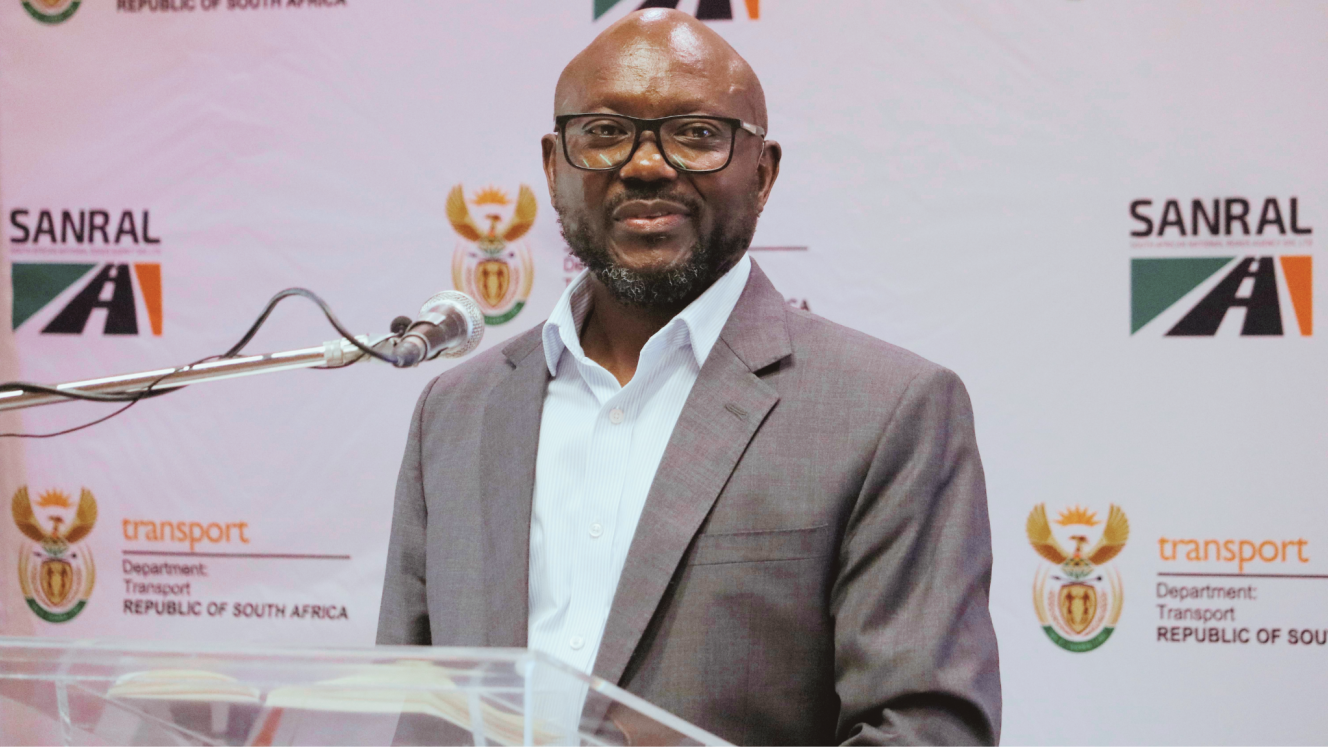
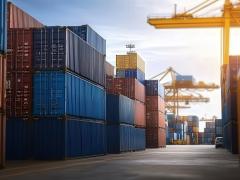
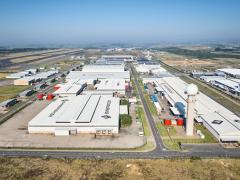
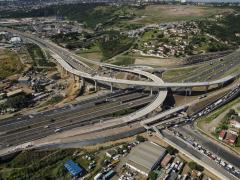
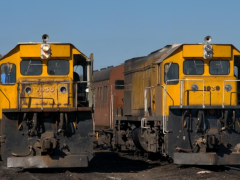
More inland port terminals are needed if government is to successfully introduce a more intermodal transport system in the country, according to Deputy President Kgalema Motlanthe. “To this end the Department of Transport is doing feasibility studies on intermodal facilities along the N3 Durban- Free State-Gauteng Corridor to establish what the needs and possibilities are,” he said at the annual Road Freight Association (RFA) conference in Phalaborwa recently. “More inland ports such as City Deep in Johannesburg are needed. Systems need to be put in place to ensure that there are minimal delays when moving cargo from trains to road trucks.” This, he said, was all part of government’s plan to move more freight to rail in future. “The key element that should be considered, however, when moving freight from road to rail is intermodality – the ability to shift between road and rail as quickly and efficiently as possible.” He said all of these studies and plans were part of the Strategic Infrastructure Projects process, which was also looking at South Africa’s transport systems in the regional context. “There is a need to ensure that the regionalisation of transport is prioritised as the geographic location of South Africa requires adequate, efficient connectivity within SADC if South Africa is to become a trade hub into Africa.” At the same time, Motlanthe said the evident shortage of technical and transportengineering skills in the country was of great concern as it was stifling the growth and development of the sector. “Government has to compete with the private sector and government agencies in attracting these scarce skills and usually government does not win,” he said. “Transnet has stressed that technology has become a key driver of its logistics business globally and seeks to improve the way its infrastructure and equipment is designed as well as the way it is deployed.” He said in line with all of this the time had come for South Africa to start collating its freight logistics information as the absence of real data continued to be a challenge. “To this end the department is setting up a centralised database for all transport information of which freight logistics will be a part. This will be done in order to centralise information collation to enable government to plan for freight logistics.” INSERT ‘The DoT is in the process of appointing a service provider to assist with the review of the National Freight Logistics Strategy of 2005.’ CAPTION Kgalema Motlanthe … ‘The time has come for South Africa to start collating its freight logistics information.’
Centralised transport information database on the cards
Comments | 0
© Now Media. This content is protected by copyright and may not be adapted or republished. If you would like to discuss cooperation opportunities, please contact: editor@freightnews.co.za.