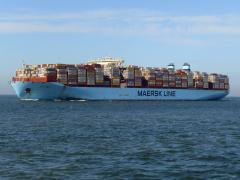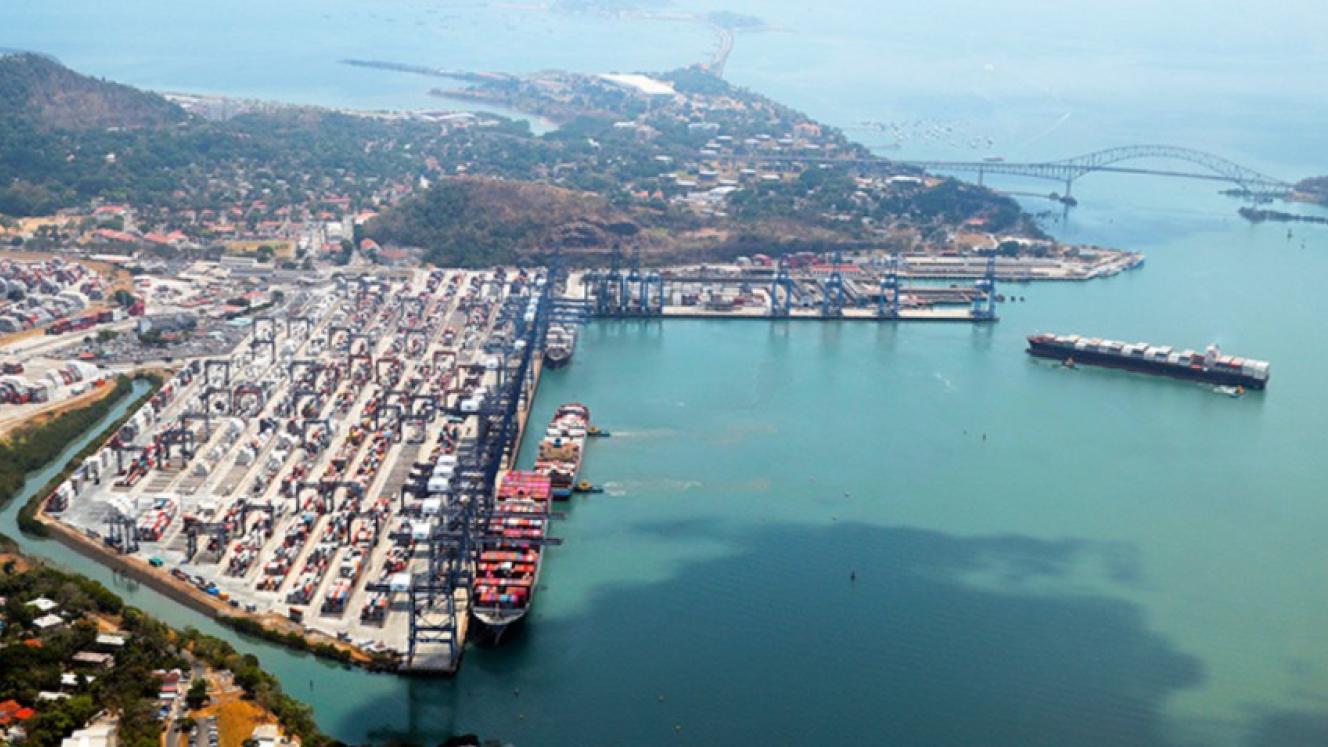
Maersk may have scaled back from its once globally dominant role as the largest container line by order of TEU capacity, but the Danish carrier is well on track to assume control of the Port of Balboa at Panama City.
On the Caribbean side of the canal at the Port of Cristóbal, MSC’s ports subsidiary, Terminal Investment Limited (TIL), is in control – for now.
If Maersk succeeds in securing terminal operations at the port, it would expand its influence to include about 6% of global maritime trade.
News of Maersk’s fortuitous position comes after Panama’s Supreme Court ruled against CK Hutchison, the Hong Kong ports operator whose concessionary control over Cristobal and Balboa has abruptly ended after about three decades.
Before the ruling, which had found that terminal infrastructure directly adjacent to the canal must be under Panama’s control, Hutchison had concession contracts in place valid until 2046.
With US$1.7 billion invested through diversified investments at the port, the January 30 verdict came as a shock to Beijing, which, since 2014, has increased foreign direct investment from $20 million in 2014 to $120m in recent times.
Canal improvements include a $1.4 billion bridge along with supporting metro commuter tunnels, all underscoring Panama City’s strengthened diplomatic relations with Beijing while scaling back relations with Taiwan.
Yet by 2014, reports Container News, “a government audit alleged Hutchison subsidiary Panama Ports Company had avoided $300m in payments through suspect tax exemptions”.
More or less at the same time, Panama also pulled out of the Belt and Road Initiative, China’s Silk Road-style multi-modal logistics network connecting Asia with Eastern Europe, the Middle East and Africa.
CNBC has reported that, following the court ruling that annulled Hutchison's concessions for Balboa and Cristóbal ports – citing unconstitutionality and the need for direct Panamanian oversight of canal-adjacent infrastructure – the Panama Maritime Authority (AMP) assumed interim control.
Maersk subsidiary, APM Terminals, was appointed temporary administrator for Balboa on the Pacific side, while TIL handles Cristóbal on the Atlantic side. These roles began after the ruling's February 23 publication in Panama's Official Gazette, ensuring seamless operations via government decree, Reuters reported.
The arrangement lasts up to 18 months, during which Maersk and MSC operate under short-term AMP contracts while a new long-term concession process (likely international bidding) is prepared. This maintains port functionality amid US-backed efforts to curb Chinese-linked influence, without full ownership transfer.