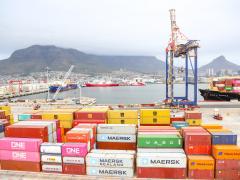
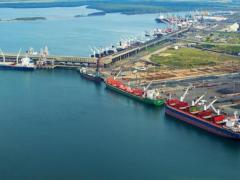
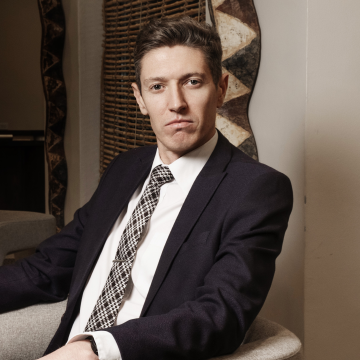
Éas infrastructure creaks under the pressure Hlumi Mzamo . . . 20% of vessels are turned away.Ray Smuts THE PORT of Cape Town is bursting at the seams and its inability to attend fully to the growing number of vessels seeking assistance could seriously impact on the Mother City’s goal of becoming a southern hemisphere repair hub of substance. Curiously, the National Ports Authority only recently started keeping accurate records of vessels seeking repair facilities so is unable to be precise as to the gravity of the situation, but marine services manager Hlubi Mzamo estimates 20% of vessels are turned away. It is not unusual for the Robinson dry dock in the Victoria and Alfred Waterfront to be booked up six months in advance and the larger Sturrock dry dock in Duncan Dock for a year ahead, on top of which quay space is at an absolute premium. The problem is further aggravated by the closure of the naval dockyard at Simon’s Town. The Mother City’s multi-million repair industry, already picking the fruits of the lucrative business that is to be had from the west African oil industry, is crying out for more space but there simply is none to be had. What is more, there are no plans to extend the port’s repair area. A R300 million concessioned ship lift which could possibly take 20 vessels is a few years from becoming a reality. Currently 34 vessels are crammed into the port - in some cases double and treble banked - the majority for repairs. Compounding in-port pressure is the giant floating storage oil production platform Glas Dowr, which arrived several months ago and has yielded an economic spin-off estimated at more than R200 million to the Western Cape.
Cape Town turns away lucrative repair business
Comments | 0
© Now Media. This content is protected by copyright and may not be adapted or republished. If you would like to discuss cooperation opportunities, please contact: editor@freightnews.co.za.