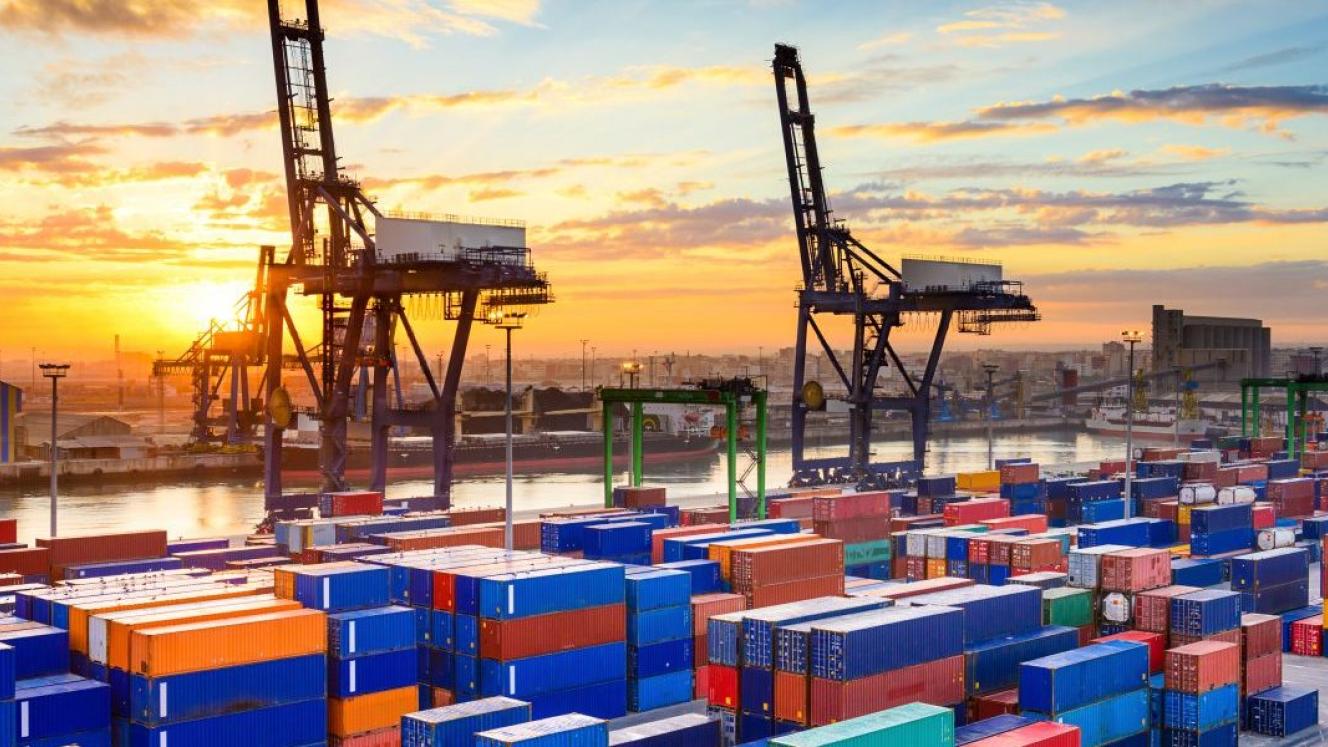
Against an increasingly bleak outlook for global container shipping, recent developments on the Far East–East Coast of South America route reflect a fairly upbeat mood. When the current joint service between PIL and Mitsui OSK Line ceases at the end of December, both lines will launch independent services, effectively doubling capacity from ten to 21 vessels. PIL will deploy ten 1250 teu vessels between Far East–South America–Cape Town and back to the Far East from January to June next year when it will enter a joint service with K Line on the route operated by ten 2 800 to 3500 teu vessels, each line providing five. While the port rotation is yet to be confirmed, it may be similar to the ports served by PIL’s independent service for the first six months of the year. 300 reefer plugs will also be available. MOL has already announced its intention to operate an independent service on the route, replacing some of the current 3 000 teu vessels with larger and faster ships calling Kobe, Yokohama, Nagoya, Pusan, Shanghai, Yantian, Hong Kong, Singapore, Santos, Buenos Aires, Montevideo, Paranagua, Sao Francisco do Sul, Santos, Rio de Janeiro,Cape Town, Port Elizabeth, Singapore, Hong Kong, Kobe. The increased capacity is clearly a sign that growth on the route is expected. Ivan Naik, managing director of PIL South Africa, told FTW the line was concerned about the expected downturn next year, but was hoping for an upswing by June, with good reason. “Certainly for the second half of next year a lot of the stuff we need as South Africans for 2010 will have to come in then, with the correct branding. And given the fact that China is the area that is most competitive price-wise, a lot would come out of there.” All of which is a positive beacon in a sea of negativity, well documented in the media. “Never in the half century of containerisation has the industry faced such a bleak future,” writes Janet Porter in the latest Lloyd’s List. “Ocean freight rates are under unprecedented pressure on most routes as cargo demand falters, with some now at record lows. Charter rates are rapidly heading towards levels that would push earnings for newbuildings below operating costs. Many large boxships are now at anchor while owners and operators consider whether to go for full layup, and speculation is rife that yards are being pressed to accept order cancellations, even though pulling out of a signed contract could land the client with a hefty lawsuit.” Much has been written about the vulnerability of smaller lines, with SA Independent Liner Service one of the early casualties. Most industry sources told FTW they were sitting tight in the hopes that the turnaround would come earlier rather than later. In the unpredictable global environment in which we operate, it’s all they can do.
Capacity upgrade on FE – South America route as MOL and PIL sail solo
Comments | 0
© Now Media. This content is protected by copyright and may not be adapted or republished. If you would like to discuss cooperation opportunities, please contact: editor@freightnews.co.za.