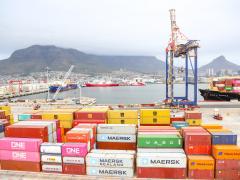
South Africa is gaining an international reputation as a domestic and regional hub for human trafficking – and with the 2010 World Cup in the offing, the need for live bodies for all sorts of nefarious purposes is expected to accelerate. Also, from a global perspective, the illegal international movement of people is a real money-making concern – and SA has its fair share of such dishonest moneymakers. People stowed away on ships is a major concern in the thriving SA seaport of Durban – which involves shipping lines, private sector investigation teams and the customs and immigration, police and public prosecutors in the city. The difference in moving stowaways and moving people against their will is not too clear, because stowaways are supposed to be moving willingly. However, a stowaway investigator told FTW, when someone has paid to be moved from the Congo to SA, for example, it may only be done on the promise of better things to come. But what hasn’t been revealed is that the “job” at the other end is the likes of prostitution or child or slave labour. And the number of publicly reported incidents is not too high, according to Durbanbased maritime legal specialist, Andrew Robinson, because the lines, for example, have got to worry about liability issues and their reputations. And, in the case of what are recognised as stowaways, there is seldom any sort of legal repercussion, with lines and the authorities tending to co-operate on quietly repatriating the stowaways – a function which is part of a process devised by global marine insurers, the P & I Club. But transporting the supposedly unwilling parties along the marine freight chain is certainly possible, Robinson added. There’s another reason why human trafficking has not been highlighted in the courts, according to the Durban public prosecutor’s office. Prosecutor Val Kotan told FTW that, until now, there had been little legislation directly aimed at it. This has meant that, although trafficking may be involved, the main charge that has been laid, and will be headlined in the press, is prostitution, for example. “People then don’t necessarily link the two things,” said Kotan, “but we believe that trafficking’s a priority item that requires attention.” However, she added, the prosecutors are happy that new legislation is in the pipeline. This was confirmed by Robinson, who added that this accompanied changes to legislation on prostitution, and its decriminalisation – considered a preparatory predecessor to next year’s World Cup. His legal team’s research revealed that the government has now released the 61-page draft bill – titled “Prevention and Combating of Trafficking in Persons” – which was published on May 8 in Government Gazette 32222 for public comment, said Denys Reitz’ librarian, Rosemary Hope.But, although amended and new legislation is under way, none of our commentators felt that this new human trafficking act was the be-all-and-end-all as far as trafficking was concerned. “There are answers,” said Robinson, “like sealing empty containers. There’s other methodology like the stowaway investigators’ search-and-sniff dog teams used to trace stowaways. “But these are basically stopgap measures, and the only guaranteed way of beating it is for customs to search every single box – an impossible undertaking. “But there are people dedicated to sorting this out – and they’ll find answers one of these days.” Part of the answer, according to Robinson, lies in the draft human trafficking bill. “In terms of this draft bill,” he said, “a carrier is any company, or any owner, operator or master of any means of transport. In my view it should include container operators, charterers and shipping lines. “In terms of Draft Section 9, a carrier that is involved in the transport of any victim of trafficking that does not have the necessary lawful documentation to enter or depart the RSA, may be guilty of an offence and is liable, on conviction, to a fine not exceeding R1-million or to imprisonment not exceeding 5 years. “The carrier will not be guilty of an offence if it reasonably believes the documents to be in order, or if the victim's travel documents were lawful at the time of boarding.The carrier will also have to pay the costs incurred in respect of the care, accommodation, transportation and repatriation of the victim.” It follows the United Nations (UN) protocol to prevent, suppress and punish trafficking in persons – a protocol dated 2000. “This draft bill seeks to give effect to that protocol,” Robinson added.
Bodies in boxes are big business in SA
Comments | 0
© Now Media. This content is protected by copyright and may not be adapted or republished. If you would like to discuss cooperation opportunities, please contact: editor@freightnews.co.za.