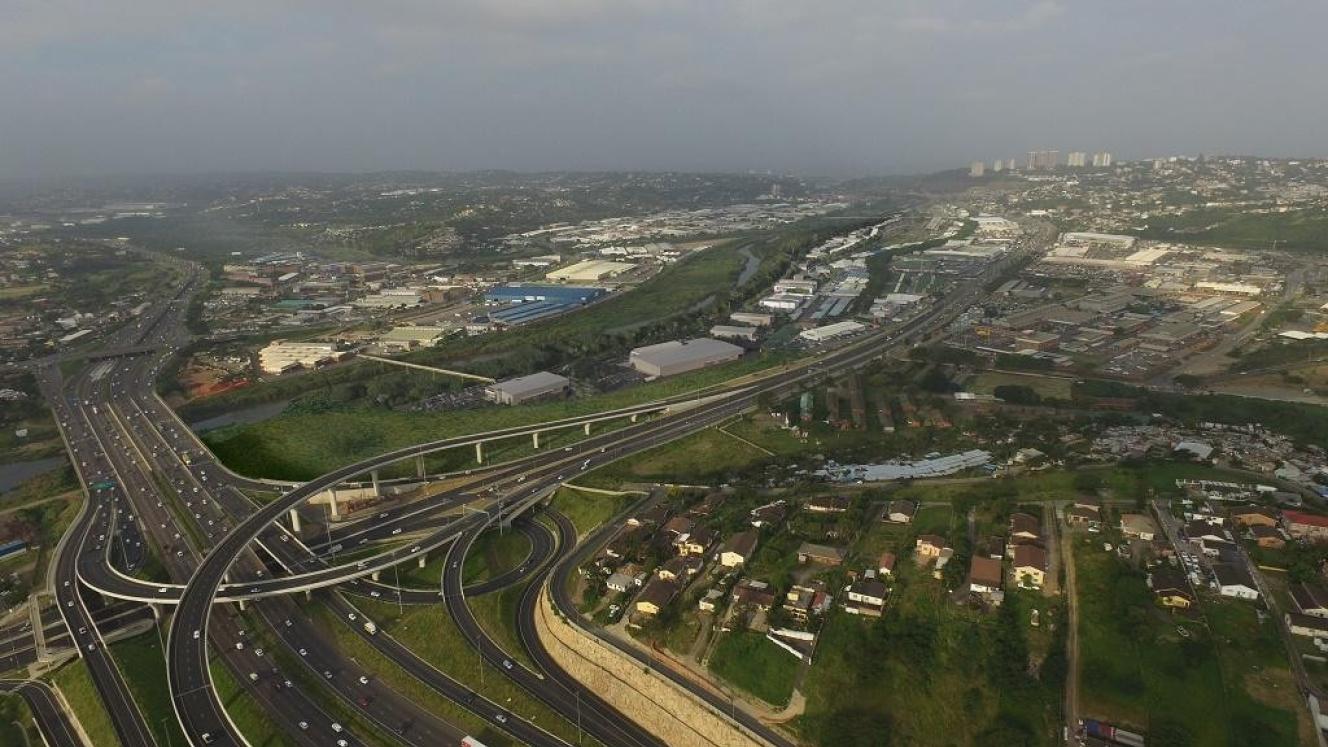
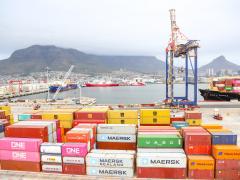
After the best part of R4 billion has been spent on widening and deepening the entrance channel to Durban harbour, you may be excused for thinking that Transnet National Ports Authority Port of Durban would consider taking a break while enjoying the luxury (and reward) of larger ships coming into the bay. Not so! It turns out that TNPA has 65 other projects either under way or on the books at the Port of Durban. Some are quite small and involve basic maintenance while others are fairly sizeable and run into tens of millions of rand. Just to list these would take more space than is available but some of them, such as the reclamation and refurbishment of Island View 6, which was completed in May this year, are quite significant and bring added advantage to port users. Even the entrance channel project is not quite complete. South Africa’s east coast experiences a phenomenon that is not unique and occurs in many other places across the world. Inshore currents cause sand to be moved in a north-easterly direction along the South African east coast. This is part of the littoral drift and it is this sand that helps form the infamous sandbars that have historically barred the entrances to ports such as Durban, Richards Bay and East London. Even the purely man-made harbours like Port Elizabeth and Ngqura are not immune and require preventative measures. If left unattended the sand would eventually accumulate across the harbour entrances and would block each port except to shallow draft vessels. Transnet engineers originally intended to introduce a sand bypass system that would automatically transfer sand accumulating on the south side of the Durban entrance over to the north side, where a series of pipes would automatically distribute the beach sand along Durban’s Golden Mile – actually a distance of about three miles. However, a pilot system installed at the new port of Ngqura revealed a number of unexpected problems, not the least of which was that the venturi pump system on which it is based attracted not only sea sand but all sorts of other debris including rocks and small stones which rapidly clogged the system. The decision therefore was taken to revert to the tried and tested form of control using dredgers that would regularly clear the accumulation of sand from the south side of the entrance. To this end Transnet has placed an order for a new dredger with a Dutch shipbuilder and this vessel, already named ‘Isandlwana’, is expected to enter service at Durban before the end of 2010. However, the municipality was not anticipating having to build a new pumping station on the North Pier and this requirement is now holding up final completion of the North Pier, as a permanent connection point will have to be built for the dredger for the transfer of sand dredged from the south side of the channel and placed into the municipal pump station on the North Pier. Construction of these facilities is expected to commence sometime later this year. Another major project being pursued is that of deepening some of the berths at the container terminal to accept fully laden ships with up to 8 000 or 9 000 TEU capacity. The entrance and access channels in Durban harbour now have a low water depth of 16.5 metres but alongside the berths the deepest facility remains at 12.5 metres. Most of the geophysical surveys and models for rebuilding the container quays have been completed and the project awaits the go-ahead from the Transnet main board, but following the recent economic downturn any real sense of urgency has been lacking in such decision making. In any event, before any deepening of the berths can take place, an environmental impact assessment (EIA) will have to be conducted, and this is likely to attract the strong attention of environmentalist groups and those that are concerned with the steady loss of water area in Durban Bay. Port management recently revealed that the models being looked at include the reclaiming of water space of up to 30 metres from the existing quays. If this formula is followed along the length of all eight container berths the water area of Durban Bay would become considerably reduced. Yet without deepening the container berths, the R4 billion project to deepen and widen the entrance channel will inevitably lead to question marks over why it was necessary in the first place. At the risk of speaking after the event, one might start hearing questions as to why wasn’t the berth deepening tackled in conjunction with the harbour widening project. Much the same challenge lies ahead should Transnet proceed with yet another pending project, that of modernising and rebuilding the historic Maydon Wharf area. As a longer- term project Transnet wants to deepen these berths to an average of 14.5m alongside to provide access for larger bulk and breakbulk vessels to what is rapidly becoming Durban’s last remaining breakbulk terminal area – a section of the port that also handles a considerable quantity of bulk cargo. Considering that the port handled approximately 5 million tonnes of breakbulk cargo in 2009, forming part of the 37 million tonnes of bulk and breakbulk (including liquid bulk) handled at Durban, the importance of retaining some facility for this type of cargo is self evident.
Another 65 projects under way at Port of Durban
Comments | 0
© Now Media. This content is protected by copyright and may not be adapted or republished. If you would like to discuss cooperation opportunities, please contact: editor@freightnews.co.za.