As hope fades for maize exports
– with less than half the usual
crop expected this year due
to the drought – horticultural
exports could save the day
if the water supply remains
stable, according to agricultural
economists.
AgriSA senior agricultural
economist, Thabi Nkosi, told
FTW that while the ongoing
drought conditions in certain
areas of the country were of
“extreme concern”, the likes
of Limpopo and parts of the
Western Cape still had a stable
water supply – which was good
news for strong agricultural
production in those regions.
“This, coupled with our everweakening
rand against other
global trading currencies, is
bound to create demand for our
fruit and beef exports,” she said.
Nkosi added that while
South Africa would need to
import maize to supplement its
domestic needs, local producers
could cash in on the escalating
prices of the product. “Those
who have maize supplies could
potentially make a killing in the
local market,” she said.
Should the rainfall levels
improve as predicted by April
this year, it would be too late
for maize crops but there is still
hope that it could help grow
fodder for livestock.
Absa Bank senior agricultural
economist, Wessel Lemmer,
pointed out that food prices in
South Africa could increase by
10% or more but that compared
to the rest of the world, South
Africa’s prices were still highly
competitive.
“Our agricultural producers
operate in an efficient business
climate and use world-class
technology that has created a
robust agricultural industry
that can bounce back,” he said.
Meanwhile South Africa’s
official political opposition, the
Democratic Alliance (DA), has
called on the government to
set up a national task team to
coordinate a disaster alleviation
plan.
Nkosi has also used her
Twitter feed to lobby for the
government to declare the
drought a national disaster,
noting that “the seriousness
of this matter should not be
under-estimated”.
According to the SA
Weather Service, South Africa
experienced its lowest annual
total rainfall in 112 years last
year – the fourth consecutive
year of low rainfall and the
longest streak since the 1940s.
INSERT & CAPTION
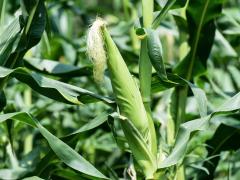
Local producers
could cash in on the
escalating prices of
maize.
– Thabi Nkosi
All is not lost for horticultural exports
Comments | 0
© Now Media. This content is protected by copyright and may not be adapted or republished. If you would like to discuss cooperation opportunities, please contact: editor@freightnews.co.za.