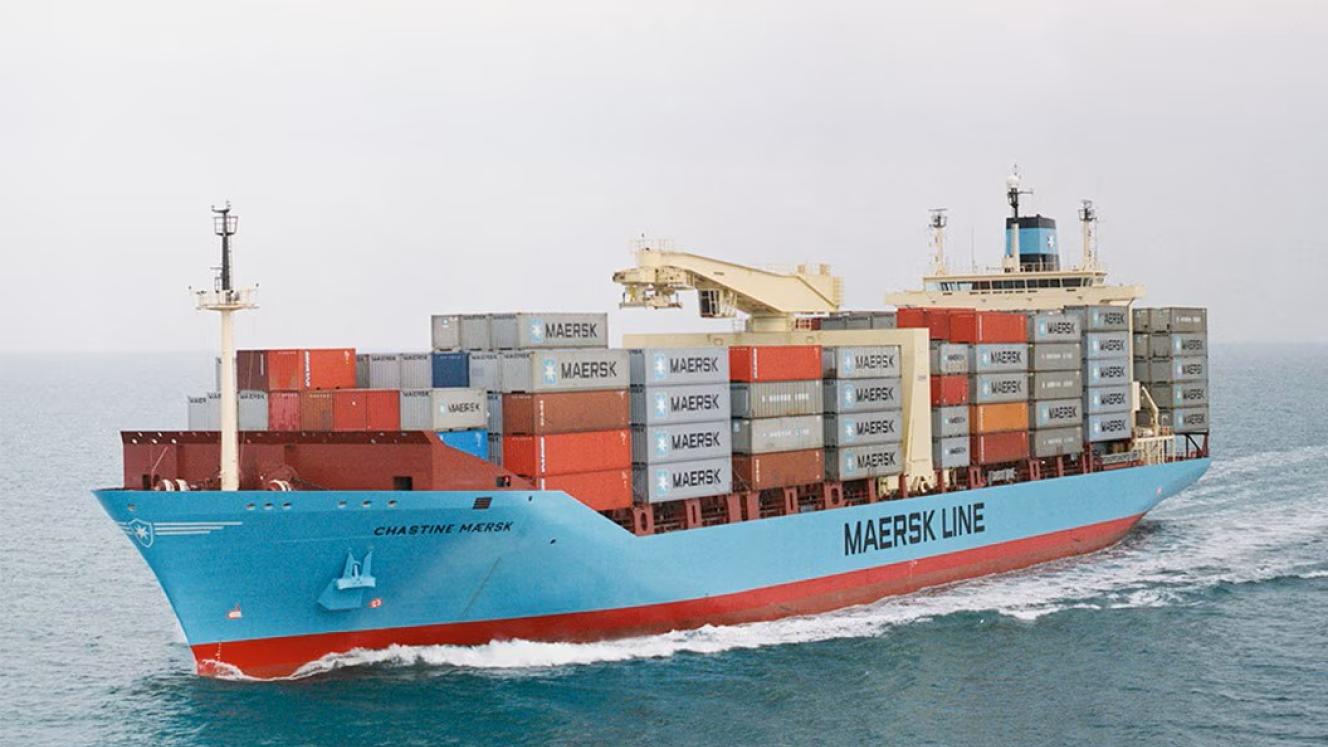
It remains imperfect in many respects but let there be no doubt Africa has become a true continent of opportunity, as Maersk Line is able to testify after a presence two years short of a century. Whereas the Danish carrier’s global trade grew 5% overall in 2007, it was up a remarkable 18% for Africa, Lars Reno Jakobsen, Maersk Line’s chief executive for sub-Saharan Africa told FTW. And he is quietly confident it can only get better in the year ahead. Having been involved in the continent’s trades since 1910, he says there is hardly a port not covered in some way or another by Maersk Line. Parent, AP Moller-Maersk, does not as a rule break down volumes into regions but Maersk Line globally transported 3.1 million FFE on all trades in the first half of the year, an increase of 4% over the same period in 2007. The group’s recently-released interim report for 2008 reflects first half profit up 58%, year-on-year, to US$2.4 billion for all business segments. Maersk Line’s first half revenue was up 16% over last year. Clearly, Maersk Line continues to focus on major areas of trade. Asia- Europe is one, while Africa also features strongly in the equation as some of the 38 newbuild containerships scheduled for delivery in 2010/12 are destined for deployment on these trades. “Africa,” says Jakobsen, “in itself represents a fast-growing, interesting market, but if one looks at it in a global context, it only represents around 2% or 3% of world GDP.” Jakobsen says, however, Africa has shown better growth of around 6%, as opposed to 2-3% by the rest of the world, primarily due to high oil prices and also voracious demand for raw materials by the economic giants of China in particular, which has stood mineral-rich African countries in good stead in terms of trade. “Because of China’s interest in trading with Africa, it is so far a winwin situation, given their ongoing investments and resultant high growth from almost all African nations they trade with.” There is, he says, a “global acceptance” of containerised cargo to and from Africa, with the continent understandably import-heavy – about five incoming containers to one outgoing. Jakobsen is not about to start speculating on where the oil price is heading – “if I knew that I would not be in shipping” – but believes the heady days of US$30 a barrel are gone forever. Understandably, high oil prices have impacted heavily on Maersk Line – 63% higher than the same period last year and an increase in bunker cost of US$ 1.1 billion. Maersk Line remains intent on implementing its “very transparent” bunker oil adjustment factor on all trades before the end of the year. “I must say the feedback from customers has been very positive thus far. They do not like the amount (payable by them) but understand somehow there must be a pass-through for some of these high bunker costs; it is certainly not possible for us to absorb them on our own.”
Africa races ahead of global growth
Comments | 0
© Now Media. This content is protected by copyright and may not be adapted or republished. If you would like to discuss cooperation opportunities, please contact: editor@freightnews.co.za.