Africa’s growth ambitions will remain constrained until the continent rethinks how it trades – starting with itself.
That was the message from Zambia’s minister of transport, Frank Tayali, who called for a decisive shift towards deeper intra-African integration for long-term continental prosperity.
Delivering the keynote address at the opening of the fifth annual Zambia Landlinked conference organised by Africacast in Lusaka, Zambia, on April 23, Tayali said that for too long borders had defined limits in Africa.
“Today, we must redefine them as points of connection. Africa's future does not lie in isolated national strategies. It lies in integrated regional systems, in corridors that do not simply move goods, but that unlock industries and create prosperity across nations,” he said.
At the heart of this vision, said Tayali, was the simple but powerful principle of the continent placing itself ahead of everyone else.
“Africa must trade with Africa first,” he said.
“We cannot continue to export raw materials across oceans while importing finished goods at higher costs. And we cannot continue to depend on distant markets when our neighbours present immediate opportunities. Just think about it. Brazil is having to supply the DRC with more chicken than Zambia can. Vietnam produces more rice than the whole of the African continent. That must be our wake-up call.”
He said Zambia had in recent years made a fundamental shift by embracing its geography, no longer viewing it as an obstacle but as an opportunity.
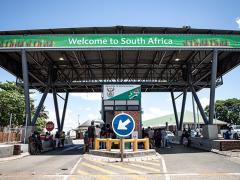
“We have made deliberate efforts to transform our country from a landlocked state into a land-linked country, having operationalised and strengthened key regional corridors, including the North-South Corridor, the Dar es Salaam Corridor, the Beira and Nacala corridors and the Lobito Corridor, which is by far the most consequential infrastructure project on the African continent in many, many decades.”
According to Tayali, the conference, themed Beyond borders - reimagining Africa’s transport corridors for prosperity, could not have come at a more opportune time. “These corridors are not just about moving goods and people. They are active channels of trade, investment and cooperation. Our approach has been clear. Connectivity drives productivity.”
He said corridors on land were as important as those in the air, with improving aviation connectivity high on the agenda for the Zambian government, which has expanded and upgraded provincial airports, opening up regions in the north and west of the country.
Of equal importance has been the rehabilitation of rail, with the $1.4 billion Tazara project hailed as a game changer for the country.
“The future of this country and our region means moving beyond borders and understanding that our transport corridors have to be turned into economic corridors. This means establishing logistics hubs and dry ports, developing agricultural zones along the corridors, turning peasant farming into commercial farming, encouraging industrialisation and manufacturing clusters and ensuring that communities along these routes benefit directly from trade.”