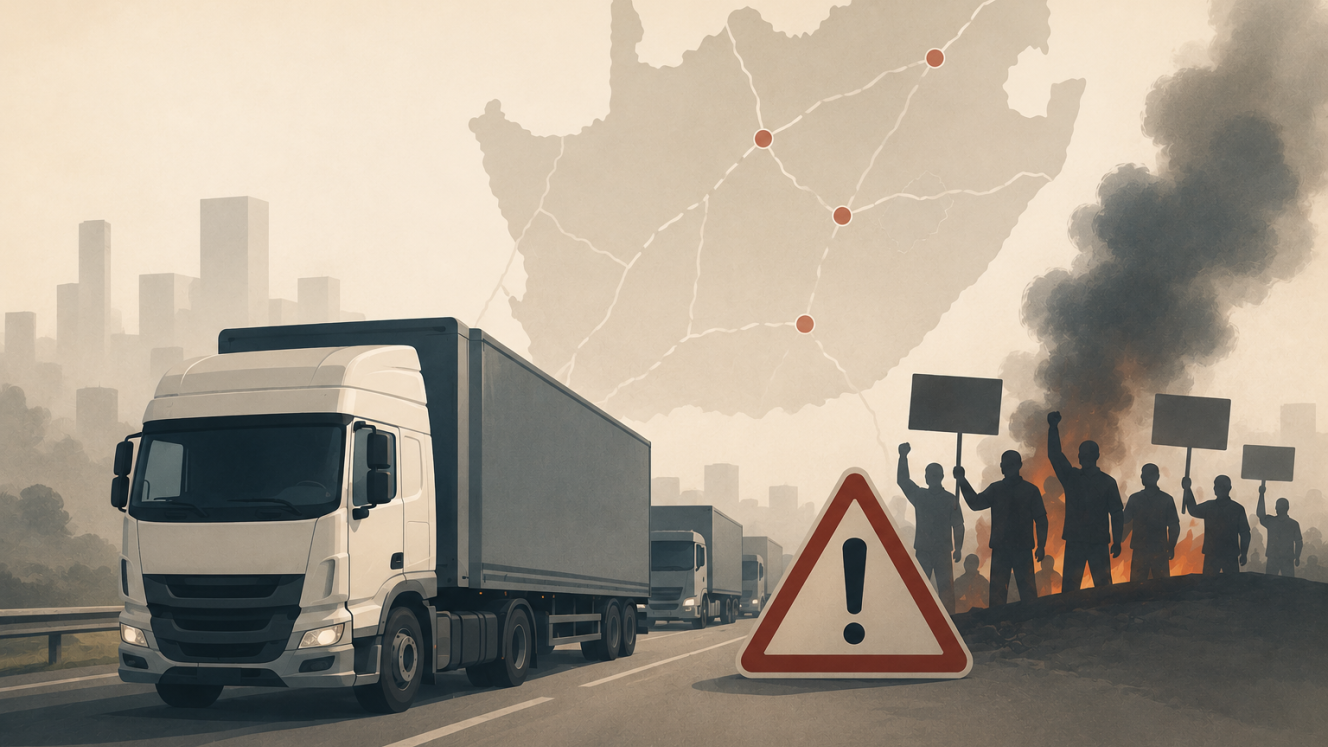
Eswatini truckers have named violent crime rather than xenophobic violence as their most pressing concern as they ply the roads to and from Durban and Gauteng. Speaking to FTW at Eswatini’s industrial centre Matsapha, at a dirt truck parking lot where the winter sun is filtered by dust stirred up by the big rigs, Colin Abner, Muzi Ndwandwe and Sandile Simelane are Swazi truckers employed by Maqalf Transport. The three have over 40 years’ combined experience on all roads connecting Durban and Johannesburg. All are married men in their thirties, with children, and they take their profession seriously. “We are driving Swaziregistered trucks. They don’t do anything to us because they know we’re not trouble,” said Abner. “But it worries me when you come to the burning tyres they put across the road to stop trucks because they don’t want foreigners to work in SA. They see the SD on our registration and it’s okay. Or they want to see your registration. But it’s still tough because anything can happen.” Thieves and hijackers are an immediate threat. “It’s safe to drive in South Africa during the day. Not at night,” said Abner. “If you drive at night you’re in danger,” Simelane agreed. “Sometimes you are on the road and you pass a truck and there are no wheels. They’ve taken the wheels, at night. This is when the drivers are asleep, where there are no truck stops. They must sleep at the filling stations or on the roads. That’s when the thieves pounce on you.” Hijackers may strike at any time, but thieves seem to keep regular hours, between 10 pm and three am. “Some routes are more dangerous. If you are using the Eskom road in Gauteng it’s dangerous because the hijackers can get you. Drivers take that road when they want to bypass the toll road. They do that so they don’t have to pay tolls,” said Ndwandwe. He’s given money for toll fees, unlike some other drivers in their own rigs or working for firms operating on such close margins that gambling with criminals is preferable to paying tolls. “If you clear the border at ten at night you have to sleep somewhere. You can sleep at the border but then you still have to drive far, so you get up at two in the morning, and then you feel tired. That’s why we drive half way and sleep at a truck stop. In the morning you wake up and continue on the road. If you leave Jo’burg at 2 pm you have to drive the whole five or six hours to get back to the border in time. If I’m late leaving Gauteng I have to sleep over. I call the company. It’s R150 a night at the truck stop,” said Simelane. A five-hour drive to Gauteng and a six-hour drive to Durban ensures that the truckers face longer than eight-hour workdays. But because of customs procedures, border delays can run to eleven hours in Abner’s experience, 48 hours in Simelane’s. The electronic clearing system is ineffective against the dreaded “queries” about shipment values and other matters, or the random inspections that make every visit to Sars, in Simelane’s words, “like going to the casino.” “They may have questions about what you are carrying. They take pictures, and send it to the hub (the Sars headquarters in Pretoria),” he said. “It takes time. When we ask them why we’re being inspected they always say that it’s being picked by the computer. It’s random inspections. It’s not every time, but you never know when it’s going to happen. If it’s winter and cold, you sit in the truck, buy tea. Nothing more to do.” With his regular route transporting Swazi-made canned goods and 20-litre buckets of jam, Ndwandwe should experience clearsailing through customs. “Going to SA sometimes you find at the Swazi side there’s only one person doing the work. Friday is a bad day to go into and out of Swaziland. Maybe they don’t put on enough staff, because many small vehicles want to cross on Fridays. This causes delays. You find there’s a queue of cars and you can’t go around so the truck is stuck in traffic,” he said. “If the cargo is coming from SA, the delay is on that side. Sometimes you can come early in the morning and they release you after lunch. The network has stopped. They want to check the load you are carrying. Then they say the system is down. It happens many times.” Parking remains a problem at all border posts. “You park at the side of the road, as near to the road as possible. Even a little time is dangerous. The police cannot be everywhere. They need to improve the system to make it faster,” Ndwande said, speaking for all the drivers.
If you drive at night you’re in danger. – Sandile Simelane