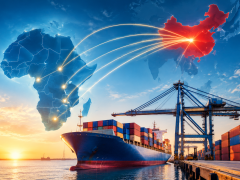
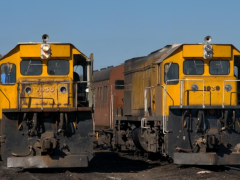
FTW: Do you agree there is a climate of optimism in the country? Warren Jayes, managing director of Leo shipping: This has been the case for quite some time since the US dollar replaced the Zimbabwe dollar. Zimbabwe has moved from strength to strength, with steady increase in volumes of cargo both in and out of the country. John Deans, SDV country manager for Zimbabwe: There is certainly a climate of optimism, but any upturn in volumes is hampered by the clouds hanging over the uncertainty of the Indigenisation Act. Whilst we believe everyone supports the idea of local empowerment, the consensus is that more needs to be done to stabilise the business environment – and the policy must be more clearly defined in order to inspire investor confidence. Gulshen Afridi, general manager CMA CGM Zimbabwe: The adoption of the US dollar as the official currency has contributed to the currency stability of Zimbabwe, resulting in early signs of economic recovery. Regarding the shipping sector, the Zimbabwean market for containers for export and import is growing, especially on the Asia trade. Alwyn Nel, Kingfisher Freight Services: There does certainly appear to be an optimistic outlook at the moment. Some sectors of the economy are experiencing growth, while others continue to tick over. This has been reflected in the increase in volumes relating to capital equipment imports, plant upgrades and raw material imports used for the manufacture of local products. It is anticipated that with the coming festive season the importation of luxury and consumable items will again increase as local spending improves. But here, as always, it is dictated to by the availability of disposable income by the local residents. Hazel Briggs, HB Services: Most Zimbabwe business people are very upbeat at present. Even though economies worldwide have taken a downturn, Zimbabwe seems to have retained a very steady flow of cargo from HB Services’ customer base perspective. All businesses in Africa are aware of the European and American economic crises and the domino effect cannot be avoided so capital expenditure may be curbed for as long as possible but day to day items still need to be manufactured, and raw materials and agricultural products still need to be purchased FTW: What are the major opportunities? Jayes: The agricultural and building industries are definitely seeing a good boost in volumes as a result of the increased cargo going in and out of Zimbabwe. Deans: Mining and agriculture are the two key areas for the logistics industry, but investor confidence brings a boom in retail sectors too, with new shopping malls, which also bring opportunities to the logistics industry. Tobacco and cotton production are up, yearon- year, resulting in larger export volumes. SDV has seen an upturn in a lot of sectors of the economy and the future remains positive for our company in Zimbabwe. Afridi: Mining output has risen spectacularly – 8.5% in 2009, and a record level of 47% in 2010 largely due to increased mining investment. Agricultural output rose 15% in 2009 and 34% in 2010, largely from a doubling of tobacco production. Minerals, tobacco, cotton and tea are the main commodities carried from Zimbabwe to Asia, while on the other leg, all equipment, machinery and general cargo are shipped. There is a significant increase in imports and exports from Asia especially China and India. Nel: Opportunities continue to be in the mining and industrial sectors and with the agricultural season having come to an end the exports of agricultural products will now increase. FTW: What are the major challenges? Jayes: As always, border delays. The efficiency of clearing agents must be managed properly to ensure that trucks do not stand unnecessarily. Zimra (the Zimbabwe Revenue Authority) has definitely increased requirements on importers such as proof of payments and correct tariffing of products. Deans: Unproductive rail network and insufficient road transport capacity at certain periods of the year. Investor confidence on a larger scale is needed. A ban on the export of chrome-ore and chromeconcentrates has caused a huge drop in export-related tonnages. Alfridi: Zimbabwe is a promising country and we should keep showing that it is not so difficult to do imports and exports in Zimbabwe. One of the main challenges is to improve the train efficiency/capacity to serve Zimbabwe through Beira, Maputo and Durban corridors. Investments in local packing facilities for tobacco, cotton and minerals will also be cost-effective for Zimbabwean exports. Nel: As always the challenge faced is that of foreign currency to enable development and capital expenditure. Allied to this is the availability of funds for the payments of duties and taxes at the time of importation. Vehicles and shipments are delayed at the borders while importers find currency to meet the revenue requirements. Constant power cuts add to the border post delays – and are as always a frustrating issue. Briggs: Always the border posts. It is imperative that each haulier has a competent clearing agent at each border post to handle their shipments efficiently to avoid delays FTW: What’s going right? Deans: One-stop-border posts have resulted in efficient border crossings. Briggs: The introduction of the SADC certificate is beneficial to Zimbabwean importers cost wise.
A climate of optimism reflected in growing volumes
Comments | 0
© Now Media. This content is protected by copyright and may not be adapted or republished. If you would like to discuss cooperation opportunities, please contact: editor@freightnews.co.za.