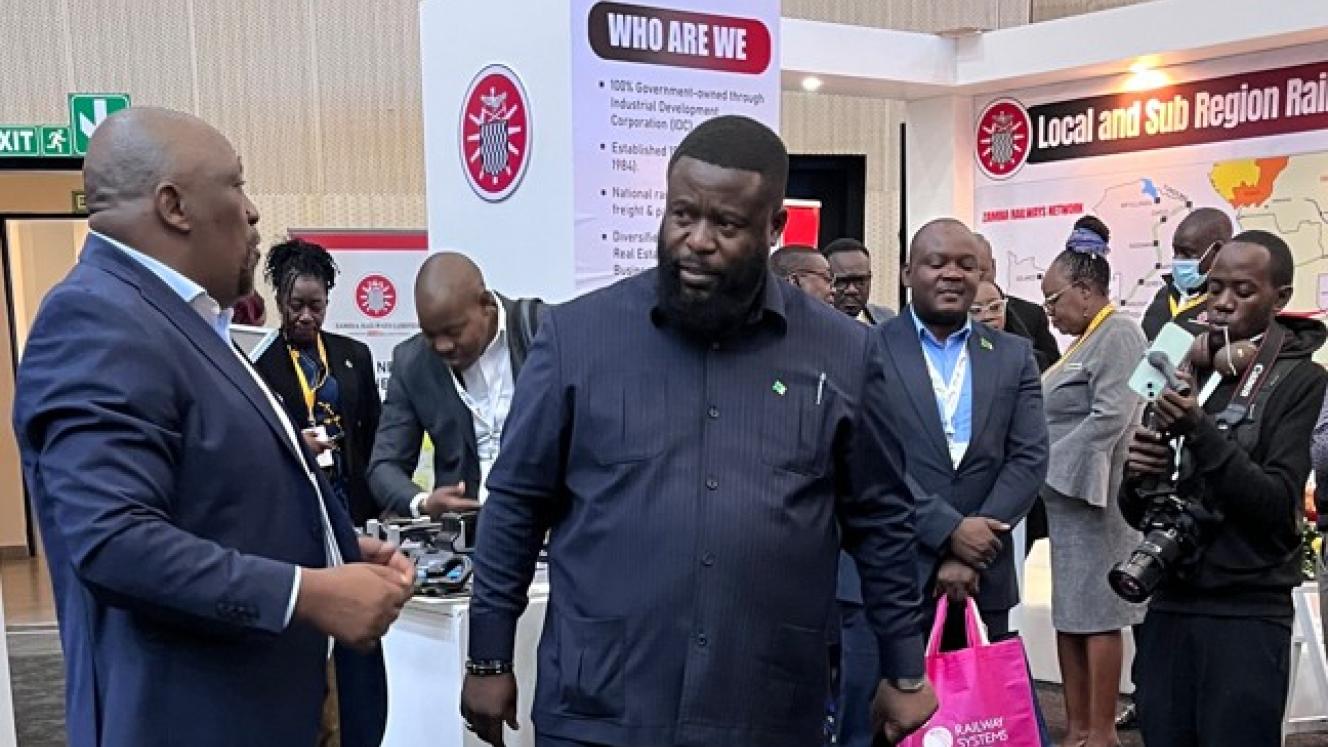
Zambia’s ambitious target of reaching three million metric tons of copper for export by 2031 depends solely on the country’s ability to revive its railway, says Cuthbert Malindi, managing director of Zambia Railways.
“Rail forms the backbone of Zambia’s copper expansion plans,” he told delegates at a ministerial breakfast on the sidelines of the fifth annual Land-Linked Zambia conference organised by Africast and currently under way in Lusaka.
“In this regard, we have certain advantages, including the six corridors that serve our country. We can move our copper out via the North-South Corridor or Dar es Salaam, Lobito, Beira, Walvis Bay or Nacala. There is also the developing Kazungula corridor.”
But there were also challenges, he said, describing the country as a wagon with three broken wheels – a rolling stock challenge, an infrastructure challenge and issues around operational efficiency. The fourth wheel – capital – was not a problem.
“It is not a money problem. We are talking to various FDIs and other institutions to bring rail back to its rightful place in Zambia,” said Malindi, indicating that the European Union had already granted the organisation €50 million.
“The reality is that we simply cannot move three million tons of copper on road. It is not feasible, and so rail is at the centre of any conversation happening around copper.”
According to Malindi, while the law requires that all companies move at least 30% of bulk cargo via rail, the government is not planning to enforce this but rather to achieve the target of moving more cargo to rail from road through collaboration.
“We do not want to fight with the private sector or beat them with a legal stick. We have to get more cargo on rail; there is no other option, but we want to do this in a way that benefits both the private and the public sectors.”
He said it was, however, not only a case of delivering better rail infrastructure but also creating a seamless movement of cargo from the hinterland to the ports.
“We cannot have a train or truck stopping at a border post and having to go through three or four stages before it moves on to the next country. We have to run seamlessly from the pit to the port.”
Rail was also critical to achieving the country’s agricultural targets. Zambia has set ambitious export goals, with plans in place for 10 million tonnes of maize, one million tonnes of soya and one million tonnes of wheat.
Zambian Minister of Transport Frank Tayali told Freight News that the focus on rail in the country was not about diminishing the role of road transport.
“We are very reliant on road haulage, but we also know that the road sector is quite expensive as a mode of transport.”
According to Tayali, reforms of the railway sector in Zambia have been pushed to the top of the government’s agenda.
“We are not doing this on our own. We have opened conversations with the private sector and are opening up access on our network for private operators. It is no secret that our railway company is struggling. We have to piggyback on the efficiency and finance accumulation capability of the private sector for us to develop the rail infrastructure we need to develop this country. Rail reform is about economic development.”
He said the government was putting its money where its mouth is, listening to the private sector and finding solutions that meet the needs of companies.
“It is no secret that we are a private sector-friendly government. Many of the innovations and creative solutions of our president have come directly out of the public-private dialogue forum he set up to cut red tape. We have to stop the perception that government does not listen to the private sector. We are working hard to deliver policy and legislation that will allow our mining houses to ramp up their production so we can meet that three-million-ton copper target.”
On the back of that, working closely with logistics is imperative. “It is going to be a nightmare if we don’t actively engage with the logistics sector now. Logistics, including a solid railway solution, is necessary for Zambia to reach its goals.”