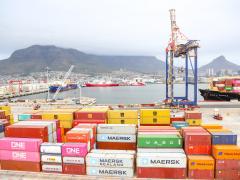
THE WEST African sea trades are now no place for a shipper in a hurry, and a disaster for shipping lines attempting to keep to their port rotation schedules. The port congestion along the coast is getting worse, not better, and the likes of a 30-day delay at Luanda, and 10-daysand- over at Lagos, are hitting all the shipping lines on the trade with similar cost problems – and bumping up shippers’ freight bills. Congestion surcharges – varying from port-toport depending on delays – have been there for some time now, but a number of the lines have been introducing even higher surcharges to try to compensate for the increased down-time costs faced by all the waiting vessels. Safmarine has just announced that, effective December 1, it will be charging the following surcharge rates: Luanda US$400/teu and US$800/feu; Tema US$105/teu (US$210/ feu); Onne US$105 and US$210; Cotonou US$140 (US$280); Dakar US$105 (US$210); Pointe Noire US$140 (US$280); Lomé US$70 (US$140). FTW was told the same rates apply to Maersk Line. MSC is in much the same boat, according to marketing manager, Glen Delve. His line has similar port delays up and down the west coast, with Lagos in Nigeria also causing it grief. “You can be there for over 10 days,” he said. MSC has also just increased its surcharges. Luanda is US$400/teu (and all rates doubled for feus); Tema US$100; Cotonou US$250; Dakar US$100; and Lagos US$400. The surcharges are not just extra ways for the lines to make money, according to Andrew Thomas, MD of Ocean Africa Container Line (OACL). He has calculated the cost to his line of running 1 100-teu capacity ships on the SA-West Africa trades. Container cargoes heading for West Africa tend to be much heavier than on other routes, he told FTW, rating at an average of 17/18-tons/teu as opposed to the more normal average of about 14 tons. Because of this, Thomas reckons that his vessels actually load about a maximum of 700 teus – to achieve vessel trim and stability. “That 30-day delay at Luanda therefore costs us about US$800/teu, and our surcharge at the port only gives us US$400/teu. “We are losing about 20%-25% of our annual voyage time on the Luanda run with these delays, and that cost runs to tens of millions a year.” Even Angola South Line, the small line run by Mehuizen Freight in Cape Town, suffers from port congestion. According to director Peter Meihuizen, the line applies a surcharge of US$150/teu (US$300/feu) on containers shipped to the port at Cabinda – and, if it called at Lobito on inducement, a surcharge would also apply there. “If you were sitting off Luanda just now, you’d be facing at least a three-week wait,” he said – noting that on a recent trip to Angola he had flown over the port of Luanda and counted 22 ships sitting at anchor off the port. Only CMA-CGM had avoided imposing port congestion surcharges, largely bound to the line’s Afex service – run in association with sister Delmas Line – calling at both Tin Can island and Apapa harbours at Lagos. “Calling at both these ports gives us some flexibility, and we are not so badly affected as the other lines on this trade,” said Pam Yerushalmy, GM of CMACGM Shipping Agencies.
West Africa port congestion reaches alarming levels
Comments | 0
© Now Media. This content is protected by copyright and may not be adapted or republished. If you would like to discuss cooperation opportunities, please contact: editor@freightnews.co.za.