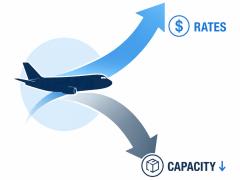
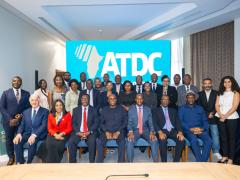
Apple exports to West Africa have more than doubled in the past seven years and industry commentators expect more of the same. With volumes up from around 11% of the country’s total apple exports to nearly 25% at present, it’s a huge success story, according to Iain McIntosh, general manager sales for MOL South Africa. “In 2009 only about four million cartons of apples and pears were being moved to West Africa in comparison to the nine million cartons in 2013. And the potential is there to increase to at least 18 million cartons by 2018.” With a total apple and pear crop estimated around 65 million cartons, this will mean at least 20% of the total apple and pear crop will be destined for this particular African market alone, he said. According to Stuart Symington, CEO of the Perishable Products Export Control Board (PPECB), the West African market offers major opportunities to local pome fruit growers. “It is a sleeping giant. We are exporting at least 25% of our apples to this market already and expectations are that it will continue to see growth. There is definitely a rush of trade though our supermarkets which have all expanded into Africa and that’s good news for our exports.” With most South African apple growers situated in the Western Cape, they are ideally placed to service the growing West African market, he said. Exports to Nigeria alone have shown a significant increase from 2009 when only 2000 cartons were delivered in comparison to the 2 million cartons it imported in 2013. According to McIntosh, while shipping capacity is adequate at present it will be under pressure as the volumes into Africa grow. “The Nigerian market has the capacity to grow to around 10-12 million cartons alone,” he said. Several West African countries have introduced high duties on South African fruit, making it one and a half times more expensive than other imports. And in light of the recent trade deal signed between the European Union (EU) and the Economic Community of West African States (Ecowas) that will see duty free access granted to both parties both ways, serious questions have been raised about why South African fruit is so heavily taxed in a region where pome fruit more often than not carries zero duties. The Department of Agriculture, Forestry and Fisheries (Daff) has said that apples are one of the most important deciduous fruits grown in South Africa, taking into consideration their foreign exchange earnings and employment creation. “One can only wonder where Daff is when these duties are implemented and hope they are actually in talks with the Nigerian government to stop this kind of nonsense,” said one exporter who preferred to remain anonymous. INSERT & CAPTION 1 The potential is there to increase to at least 18 million cartons by 2018. – Iain McIntosh INSERT & CAPTION 2 We are exporting at least 25% of our apples to this market already. – Stuart Symington
West Africa beckons fruit exporters
Comments | 0
© Now Media. This content is protected by copyright and may not be adapted or republished. If you would like to discuss cooperation opportunities, please contact: editor@freightnews.co.za.