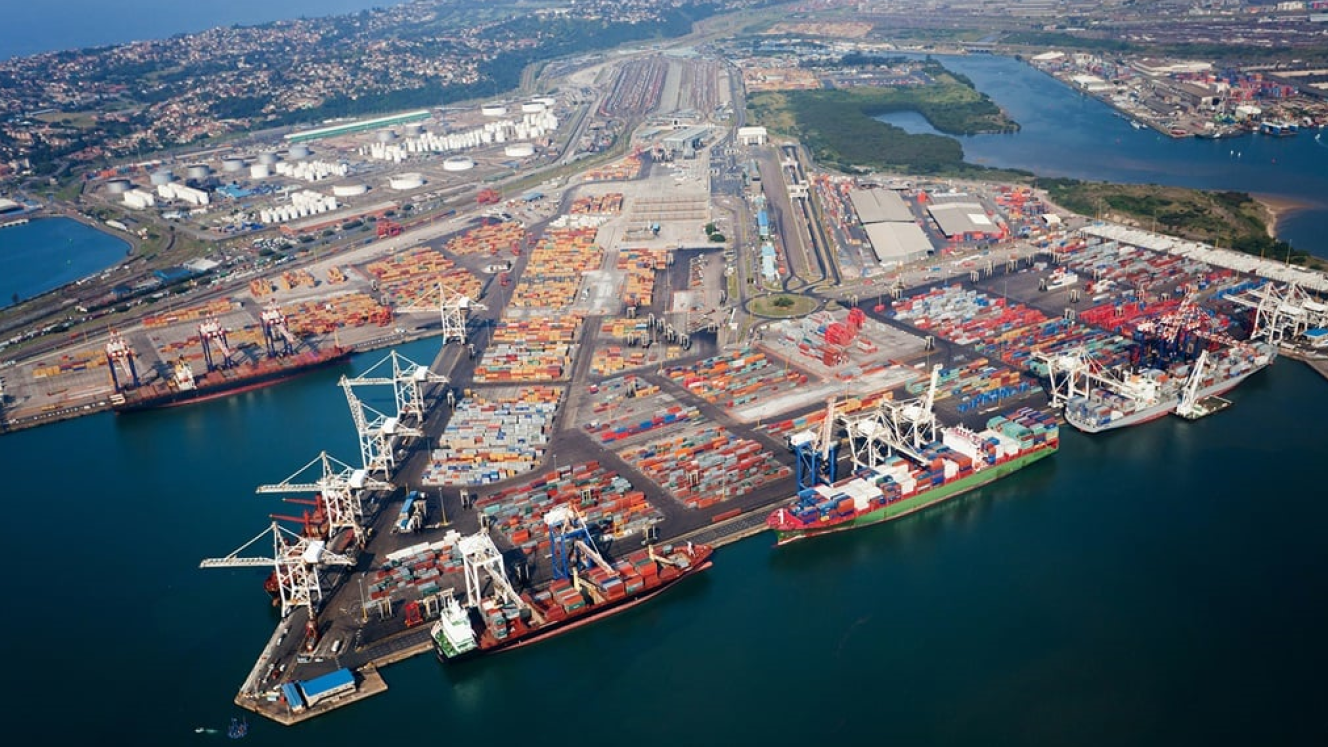
ED RICHARDSON WHILE MANY in the Namibia freight forwarding and transport industries are keeping a wary eye on the rebuilding of the Benguela rail link between Luanda and the Zambian and Democratic Republic of Congo copper belts, Heino Herrlich, managing director of Transworld Cargo, welcomes the development. There has been strong growth in freight from Walvis Bay through Namibia to Zambia and the DRC following the opening of the Trans Caprivi corridor, and there are concerns that the new rail link could take much of this traffic. “We in the region need all the routes we can get in order to move the quantity of exports we are able to produce. Our challenge is getting goods out, and we need to look at alternative routes” he says. The 1 300 km Benguela railway line runs from the Atlantic port of Lobito to the Democratic Republic of Congo’s (DRC) border. Transworld is also looking for growth from direct neighbours South Africa and Botswana. According to Herrlich, bottlenecks and delays in transporting freight inland through South African harbours can be reduced by making better use of the existing facilities in Namibia. He would also like to see more lines calling Walvis Bay to increase competition and reduce costs. The volumes are there, he says. The port can be used for the export of 10 000 tons of meat and 25 000 tons of grapes per annum, currently being shipped via Cape Town. Looking at the neighbouring countries, Herrlich describes Zambia as “very promising. There are new mines opening up and we are seeing some three thousand tons of copper concentrate a month being exported to Tsumeb for processing,” he says. The multi-modal warehousing, freight and logistics company is adapted to Namibian conditions. The company also handles the distribution of new cars north of Windhoek in Namibia. With drought and famine gripping much of the sub-continent, Herrlich believes Walvis is a viable alternative to Durban for relief shipments. “We had a successful trial where we transported 8000 tons of maize from Walvis to Lusaka. “The route is more economical for the transport of relief goods than Durban,” he says.
‘We need all the routes we can get’
Comments | 0
© Now Media. This content is protected by copyright and may not be adapted or republished. If you would like to discuss cooperation opportunities, please contact: editor@freightnews.co.za.