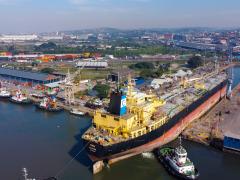
More and more cars are being imported from the European and American Markets for the Southern African Development Community (SADC) through the Port of Walvis Bay. There has been significant growth in second-hand car volumes via the Port of Walvis Bay destined for Namibia, Botswana, Zambia, Zimbabwe and the DRC over the past two years, according to port authorities. Walvis Bay is competing against the ports of Durban, Maputo and Beira, which also handle the importation of second-hand cars for landlocked countries. In 2012, transit traffic through the port amounted to well over 15 000 vehicles. One of the biggest single shipments was in November 2012, when the MSC Immacolata docked, carrying a record 972 transit cars earmarked for the land-locked markets in SADC, 70 more units compared to the 902 units delivered by Euro Spirit on July 20 last year. The rise in transit traffic to the SADC saw the “mushrooming” of second hand clearing agencies, creating more new jobs at the port town of Walvis Bay, including stevedores and customs officials, according to port authorities. There are several reasons for the growing volumes at the port, according to a spokesman. “These range from safety and efficiency of the port environment to transit time from Europe that varies from 17-21 days because of the port’s proximity to the European and American markets. Rail and road networks to its landlocked countries as well as continuous efforts by the Walvis Bay Corridor Group (WBCG) to smooth the flow of border trade are all contributing factors. The introduction of the Single Administrative Document (SAD) 500 by the WBCG fast-tracks the clearing of transit cargo at the neighbouring border posts. Cargo is cleared within 30 minutes of arrival at the border. CAPTION The Port of Walvis Bay ... significant growth in second-hand car volumes.
Walvis Bay vehicle imports accelerate
Comments | 0
© Now Media. This content is protected by copyright and may not be adapted or republished. If you would like to discuss cooperation opportunities, please contact: editor@freightnews.co.za.