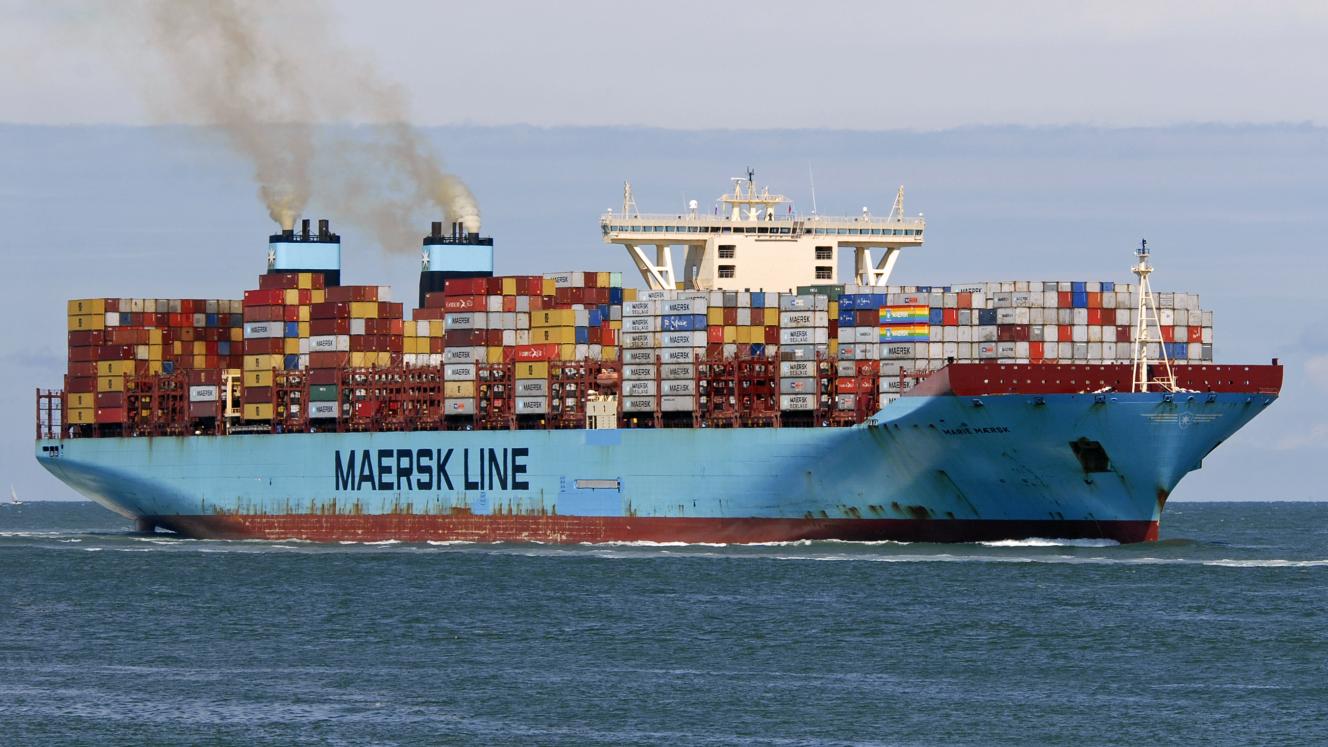
A row has brewed up about an article submitted to FTW which attacked the road transport industry – and which, FTW was telephonically told: “Reflected a matter of serious concern to the SA logistics industry”. This was followed by an e-mail from Andrew Stewart of DDL Equipment which introduced the story saying: “The transportation of high cube (hi-cube) containers on flat-deck trailers has created challenges in the materials handling and logistics industry.” But, on closer scrutiny of the rest of the article, FTW began to have doubts about some of the criticisms levelled at the road transport industry. So we submitted the story to Kevin Martin, MD of Freightliner and vice-chairman of the SA Association of Freight Forwarders’ Durban harbour carriers section. Martin’s first reaction was that the content of the article was about 20 years out of date. He also told FTW that the article had appeared in another trade publication in February. “And it was just as wrong then as it is now,” Martin added. “Whilst it was a nice history lesson – it is exactly that, history. “If he wants to be relevant, then speak to the modern market; modern transport; modern logistic chains – and not to a past that has long since come and gone. Decisions made then do not automatically make economic sense in today's marketplace.” According to Stewart: “The problem with the height restriction of the hi-cube containers is not the container height itself, but the (1 500-mm- 1 600-mm) flat-deck trailers that are currently used by some contractors to transport the hi-cube containers. “This not only creates a problem on the roads, where bridges have been designed in line with height restrictions as specified in the Road Traffic Act, but also at the premises of warehouses where these containers are delivered for loading and off-loading. “The trailers are simply too high.” His trailer height assumption, Martin told FTW, is in the main incorrect and a non-issue in the industry – by 15-20 years. “The super link trailer was specifically designed to carry containers some 15-20 years ago,” he said, “and they have always had 1.5-1.6 m decks. “By definition, this has meant that ramps have had to be built or adapted to accommodate them. So Stewart’s long story about ramp height and over 10% gradient etc has nothing to do with high cube containers – because, at deck height on these trailers, the height of a normal or hi-cube is exactly the same. “The dock seals at cold stores have also long been adapted to accommodate the hi-cube on a 1.5-1.6 m trailer.” Stewart’s argument about containers placed on flat deck trailers creating an effective double deck compared to a skeletal is also a non-issue, according to Martin. “Modern skeletal trailers have the same height as flat deck trailers,” he said, “due to modern designs on neck width to accommodate increased payloads, suspension heights, European fifthwheel heights, modern tyre size and the like.” Martin also decried Stewart’s “boogie man” story of massive infrastructure costs on warehouses and and increase in road vehicles turning over because of hi-cubes. “It would be of concern,” he said, “if it was relevant. “These changes have already – in the main – been done to infrastructure over the past 15-20 years. “In excess of 400 000 hi-cubes have moved on our nation’s roads every year for at least the past threeto- four years – growing to an estimated 500 000 last year, and with none of the predicted dire consequences having taken place. “The swing is also to 40 foot (12-m) containers entering SA – with the present ratio of 20-ft (6-m) to 40-ft (12-m) now being 50%-50%, up from a 70%-30% split of a few years ago. And about 90% of these 40-fts (12-m) are hi cube. Stewart also raised another beef about transporting contractors – whom he described as “the lorry brigade” – having 1 500-mm to 1 600-mm flat-deck semi-trailers with no twist locks. This is “absolute rubbish”, according to Martin. “About 99.9% of all the loading terminals and depots will just refuse to load a container on any trailer without twist locks,” he said. “In fact, if you only have three of the four twist locks you are supposed to have, they’ll also turn you down.”
Views differ over challenges of moving hi-cube containers
Comments | 0
© Now Media. This content is protected by copyright and may not be adapted or republished. If you would like to discuss cooperation opportunities, please contact: editor@freightnews.co.za.