As the US got its first
experience of the megaship
era in late December, the
North American press once
again warned that many
ports in the region were
incapable of accommodating
these sea-going giants.
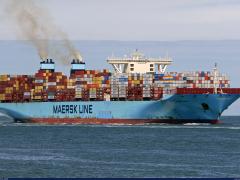
At the end of last year,
the two largest container
ships ever to unload in
North America called at Los
Angeles.
But, while these megaships
move more goods on less fuel,
and delight the shipowners
with their increased costefficiency,
they are putting
pressure on the North
American ports. Just as the
Port of Durban had to spend
billions of rand on port
development when faced with
much bigger ships flooding
into the port as the lines
cascaded former east-west
vessels onto north-south
trades, so are the North
American ports.
Having been built around
what was the status quo then,
this new megaship era is now
upping the ante.
The average container
ship being built today is
nearly three times the size
of the average ship a decade
ago (See accompanying ITF
graphic). Not only that, the
shipping yards have orders
for megaships of even larger
container capacity.
Yet, while ports in
Asia and Europe already
work with megaships,
North American ports are
struggling to catch up.
Studies have shown that a
lot of the bridges and docks
on the West and East coasts
are not designed to handle
megaships.
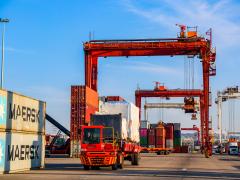
The Los Angeles Times
pointed out that the Port of
Los Angeles was undergoing
an R8-billion project to
expand the cargo-handling
capacity at one of its
terminals. And, across the
bay, two Long Beach port
terminals are in the midst of
a R20bn expansion that will
create one of the country’s
most automated docks.
These are just some of the
major investments under way.