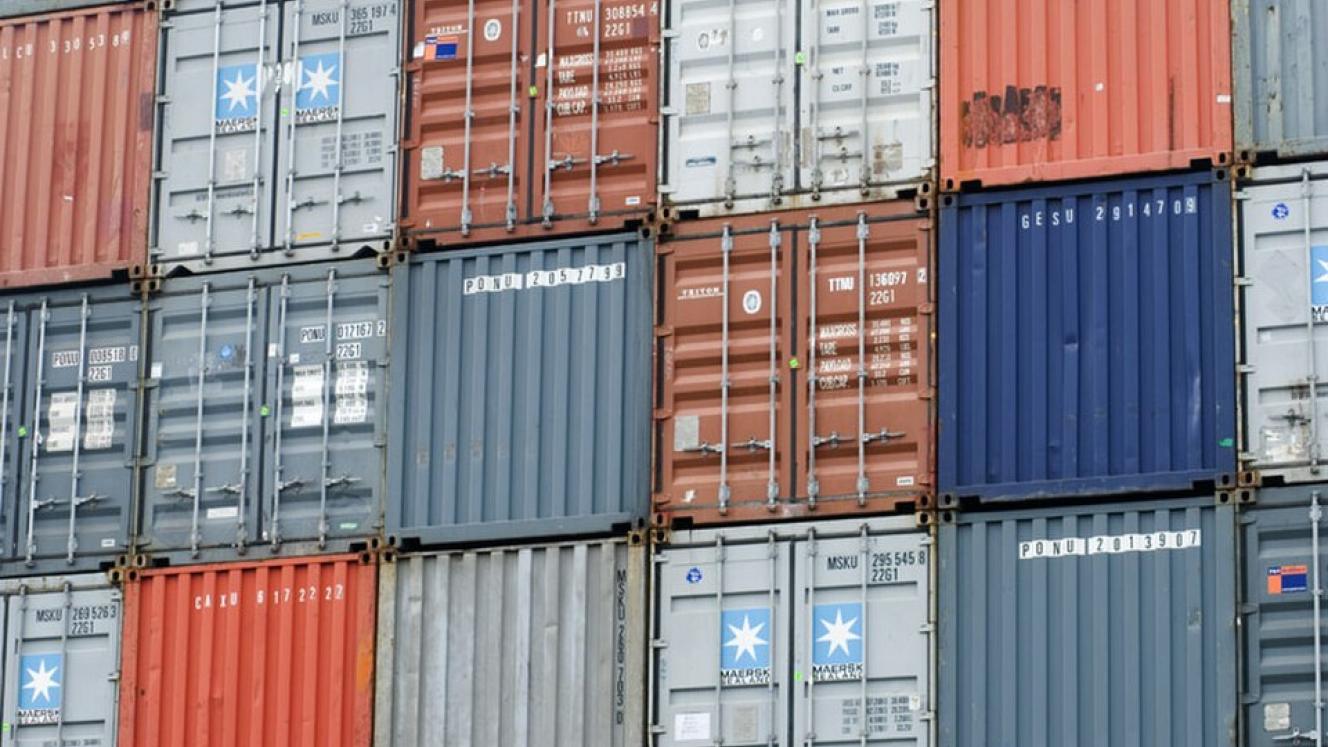
‘Goods in states warehouse should be unpacked’ ALAN PEAT THERE ARE some continuing problems underlying the content of the new draft rules for state-warehouse rent, according to Quintus van der Merwe, a partner in the international transport and trade department at the Durban-base solicitors, Shepstone & Wylie. “They remind me of an on-going problem with Section 43 of the Customs & Excise Act,” he said, “which has some inequitable provisions regarding how goods that go to the state-warehouses are to be dealt with - and the parties to be reimbursed for their costs. “I have for some time suggested that the act and rules should be amended to provide that - if containerised goods are moved to a state-warehouse - then the container must be unpacked on arrival at the warehouse and the empty container turned in to the relevant shipping line. “Alternatively the shipping line must be paid rent for the container by customs.” In an extension of this argument, Van der Merwe added, the container depots should be paid storage on a monthly basis for any goods stored at the depot instead of the state-warehouse. There are a number of reasons for this suggestion highlighted by Van der Merwe. Containerised goods are allowed three free days in the port, after which the container will be moved into overstay to a container depot. Where this happens, Van der Merwe added, the importer must - within 28-days from the date the goods were landed - make due entry of the goods, failing which the goods must be removed to a state-warehouse or other similar place that the controller may direct. “In practice - because there is so often a shortage of space at the state-warehouse,” he told FTW, “the goods are left in the container at the container depot. For practical reasons the goods cannot be unpacked at the depot where containers are constantly being moved by specialised equipment. “However as the container is now used as a storage device, the shipping line or container operator’s capital equipment is tied up causing the shipping line/operator inconvenience and a loss or revenue.” In many of these instances the importer disappears, and this further complicates the issue. The customs act provides that if the goods are not cleared within 60-days from the date of removal to the state-warehouse - or such other place designated by the controller - customs may sell the goods. However, in practice, this is seldom adhered to, according to Van der Merwe, and the goods remain in storage for much longer periods. Also, in instances where the goods are eventually sold, the proceeds are applied in a set ranking. And, under this, the container operator and depot operator only get paid after all the other more-preferential creditors on the list.
Uncleared goods tie up carriers’ containers
Comments | 0
© Now Media. This content is protected by copyright and may not be adapted or republished. If you would like to discuss cooperation opportunities, please contact: editor@freightnews.co.za.