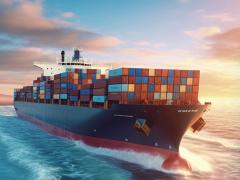
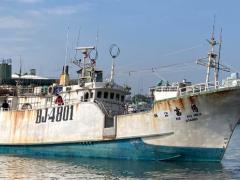
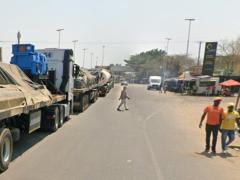
Despite Transnet assurances that the Port of Durban is able to successfully handle high-capacity containerships, container truckers are less optimistic. This follows the recent arrival of the 9 200-TEU MSC Chicago, the largest cargo vessel ever at the port (see story alongside). While the Transnet National Ports Authority (TNPA) loudly made the point that the turnaround of this vessel proved Durban’s ability to handle such vessels, the trucking industry raises some significant concerns. Peter Newton, director of Seaboard and an authority on port matters, has indicated signs of doubt about the ability of Transnet Port Terminals (TPT) to be able to handle this sort of highcapacity vessel. “The Chicago had 6 707 declared boxes (2 288 off and 4 419 to load),” he told FTW. “With those sorts of volumes the export stack and import ‘free’ periods of three-days need looking at. “Which, simple though it may seem, could lead to some interesting debate with the diehards on the TPT side of the equation. There is a lot of unjust enrichment (aka revenue) to be extorted from port users by keeping the windows narrow – and, in many instances, narrower than TPT itself can handle!” But, given the current three days’ free period, how would TPT be able to perform before the penalty periods came into being? Not too well at all, if you look at the current average figures handled by TPT, said Kevin Martin, MD of Freightliner and chairman of the Durban Harbour Carriers’ Association (DHCA). If you take the Chicago’s 4 400 export boxes, which, if they were all incoming exports (which they weren’t, with the majority being transhipments already stored inside the port), would have to be handled at a rate of 1 460 gate moves per day, just for that one vessel, to fit that three-day period. That excludes both the exports for other ships berthed alongside the container terminal, and the import boxes that also had to be handled for the Chicago and other vessels. “TPT is currently doing about 2 200 gate moves per day,” said Martin. “That, with 1 460 export boxes alone for the Chicago, is just too high a percentage for one vessel.” Extrapolate two to three years down the line, he added, to a time when these big vessels are the norm rather than the exception, and there would be more of these big stacks. “If, at that time, there was one vessel doing 4 000 exports (that’s 1 333 gate moves a day) and another with 4 400 (that’s 1 460/day), add the two together and you get a required rate of 2 793 gate moves per day – well over the present performance rate of TPT.” To make matters worse, there’s the Transnet plan to have the new deep-water port at the old airport site up and running by 2019 – eight years down the line. “Within that eight-year period,” Martin added, “we are going to get bigger and bigger vessels starting to call regularly at Durban, and our gates aren’t even coping at the moment. “Overseas, where such big vessels are the regular port callers, they are looking at about a 40-minute truck turnaround time. We are currently getting vehicles often sitting for 12-15 hours – and that’s with our present lower numbers of boxes being handled. “With the advent of these big ships, I’m foreseeing a major disaster just waiting to happen.”
Truckers question DCT assurances on high-capacity ships
Comments | 0