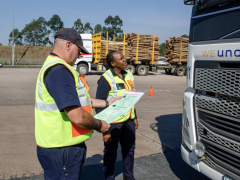
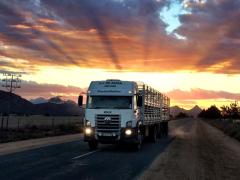
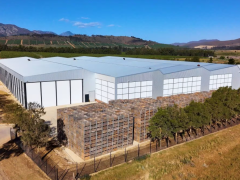
With a real shift to rail transport in the past year, any road transporter wanting to compete should have been busy adjusting his strategy, according to Sue Moodley, founder and MD of the Durban-based short- and long-haul carrier, Transport. com. “Road didn’t perform last year,” she told FTW, “but rail did.” Figures supporting this are contained in the 2012 SA freight transport report from Business Monitor International (BMI), which estimated rail freight growth in 2012 at 8.4%. But total trade growth for 2012 it forecast at 1.3%, a major drop down from the estimated 7.8% expansion in 2011. And, as the bulk of SA trade (in value, not weight) is in containerised transport – the forte for road hauliers – it must be assumed that road was faced with a severely diminished market demand. “Rail was also very efficient in terms of being timeous, and this has impacted on road transporters,” Moodley said. “At the same time, a number of clients opted for rail because of the attractively low rates.” Road transport, therefore, she saw as having battled last year. “A primary driving force was the recession which started in 2009,” she added, “and from which road has just never been able to recover. And that’s a widespread opinion across a spectrum of road hauliers, all of whom said they had suffered from clients choosing rail because of those factors of timeousness and cost.” Container hauliers were also blighted by a major swing to rail early last year of export scrap copper and other similar high-value products – with clients opting for rail to avoid the high theft of such products from road vehicles. This was then followed by snow on the N3 in mid-year, and a major truckers’ strike in September/October. “All these following one after the other added to ongoing congestion at Durban’s container terminals throughout the year. This slammed into the container cartage market, and road transport failed to pick up from this,” said Moodley. There are two things that truckers can do in such a situation, according to Moodley – sit back and bite the bullet or go out and fight for business. “We have opted for the latter course,” she said, “and from January to December we had to keep changing our strategy to match what was happening in the marketplace.” A significant example of this change was in Transport.com switching its focus from transporting containers. “When I went to my container clients, they told me that containers were still coming in, but that they’d changed to rail because of the lower cost and the fact that timelines were keener as rail was avoiding all the month-on-month problems that had hit road transporters.” The option for Transport. com was two-fold. “Because we are diversified – having both the appropriate transport rigs and the equipment to handle it – we moved our focus from containers to breakbulk,” said Moodley. “We also opened a container depot early last year, and when container cartage went bottomup, we started concentrating more on reefer boxes stored in the depot as an alternative income option.” The indicators for such an analysis are contained in a transporter’s records of vehicle usage, sales and income, and from customs and Transnet Port Terminals (TPT) records of cargo movement at the port, according to Moodley. “You must carefully analyse these figures and trends on a month-onmonth basis,” she said. “And, if you don’t adjust your strategy to match these trends, you’ll surely lose out.” INSERT ‘Container hauliers were blighted by a major swing to rail of export scrap copper early last year.’ CAPTION Sue Moodley ... container depot opened last year.
Trransporter switches focus from containers to breakbulk
Comments | 0
© Now Media. This content is protected by copyright and may not be adapted or republished. If you would like to discuss cooperation opportunities, please contact: editor@freightnews.co.za.