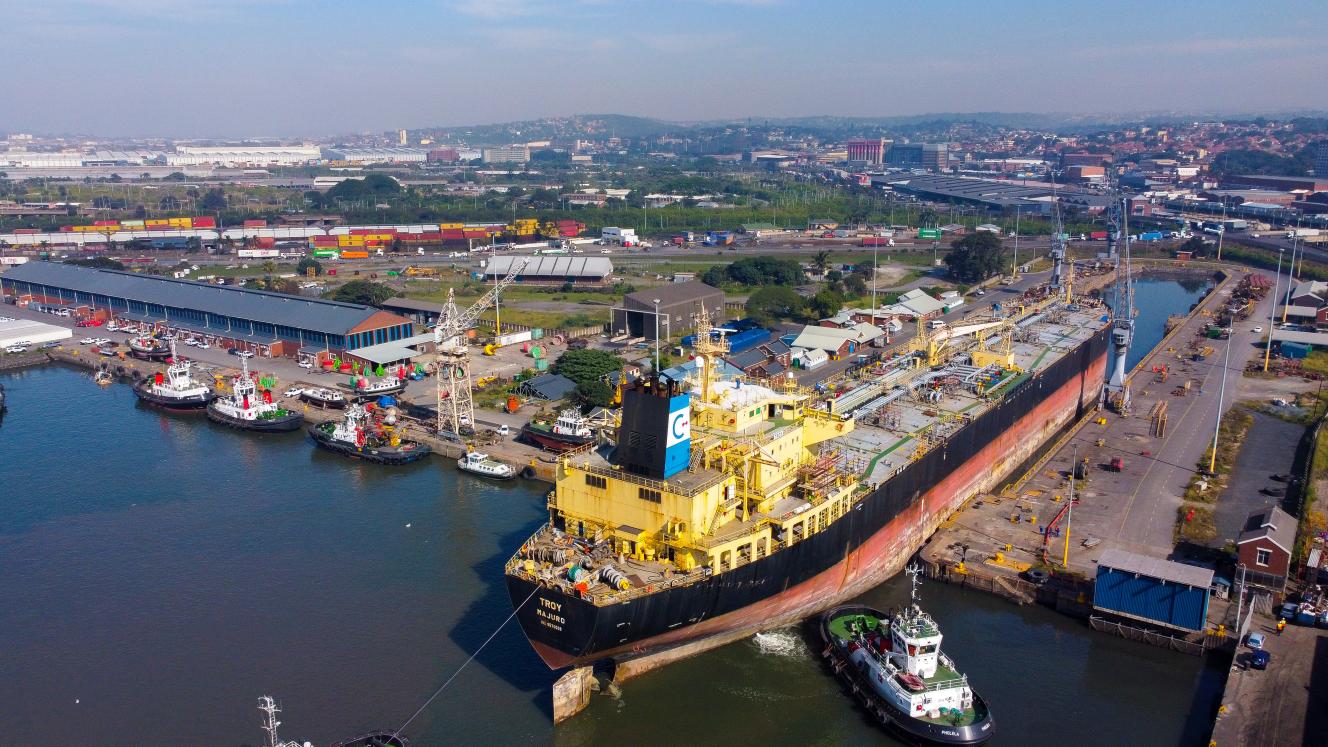
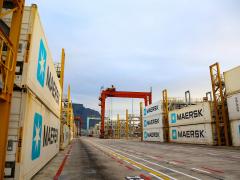
While container triangulation is achieving enormous cost and environmental benefits for the tobacco industry, a range of challenges is holding back its implementation in other sectors. Industry experts told FTW that while the concept in itself made sense in theory, in practice in the South African environment it was often just too difficult to implement. Triangulation reduces the number of drayage legs in a container’s cycle through the process of converting import containers to export containers. “It is not a common practice locally,” a fruit shipper told FTW. “Our core business is reefer containers, and these containers cannot be triangulated as all containers have to be inspected by the PPECB to determine if they are valid reefers and to ensure that all the necessary procedures have been followed and the protocols are in place. Practically it is just not possible.” For triangulation to be successful in the case of general cargo containers several elements need to be in place, said another industry role-player, including what type of cargo it is. “For certain specific cargo types triangulation can be successful, but as a general norm there are just too many variables that impact on the movement of containers in the country to make it a general practice,” said another source. According to Etienne du Plessis, general manager at Imperial Cargo Solutions, the tobacco and cigarette industry is an example of successful triangulation – reducing the high logistics costs of its inbound supply chain. British American Tobacco South Africa (Batsa) requires several tobaccorelated products used in the manufacture of cigarettes to be sourced outside of South Africa – including raw tobacco, filters, wrapping and packaging materials. According to Du Plessis, these products are imported into South Africa in containers. “The final tobacco element, manufactured locally, is then exported to various markets across the globe, primarily through the Port of Durban. Triangulation was an obvious solution to reducing the high logistics costs for this particular company and its products, with 324 containers triangulated over a one-year period. “In the case of Batsa it makes sense as the import and export volumes are very similar, there is only one port being utilised and the import and export products are all of a similar nature,” an industry source commented. “It’s very specific and that is why it is working. To apply that to general cargo being exported and imported in and out of South Africa would be very difficult, especially in an environment where shipping lines are tightly controlling containers and there is a huge imbalance of containers.” CAPTION Triangulation has reduced the high logistics costs in the tobacco industry, with 324 containers triangulated over a one-year period.
Triangulation achieves big cost benefits
Comments | 0
© Now Media. This content is protected by copyright and may not be adapted or republished. If you would like to discuss cooperation opportunities, please contact: editor@freightnews.co.za.