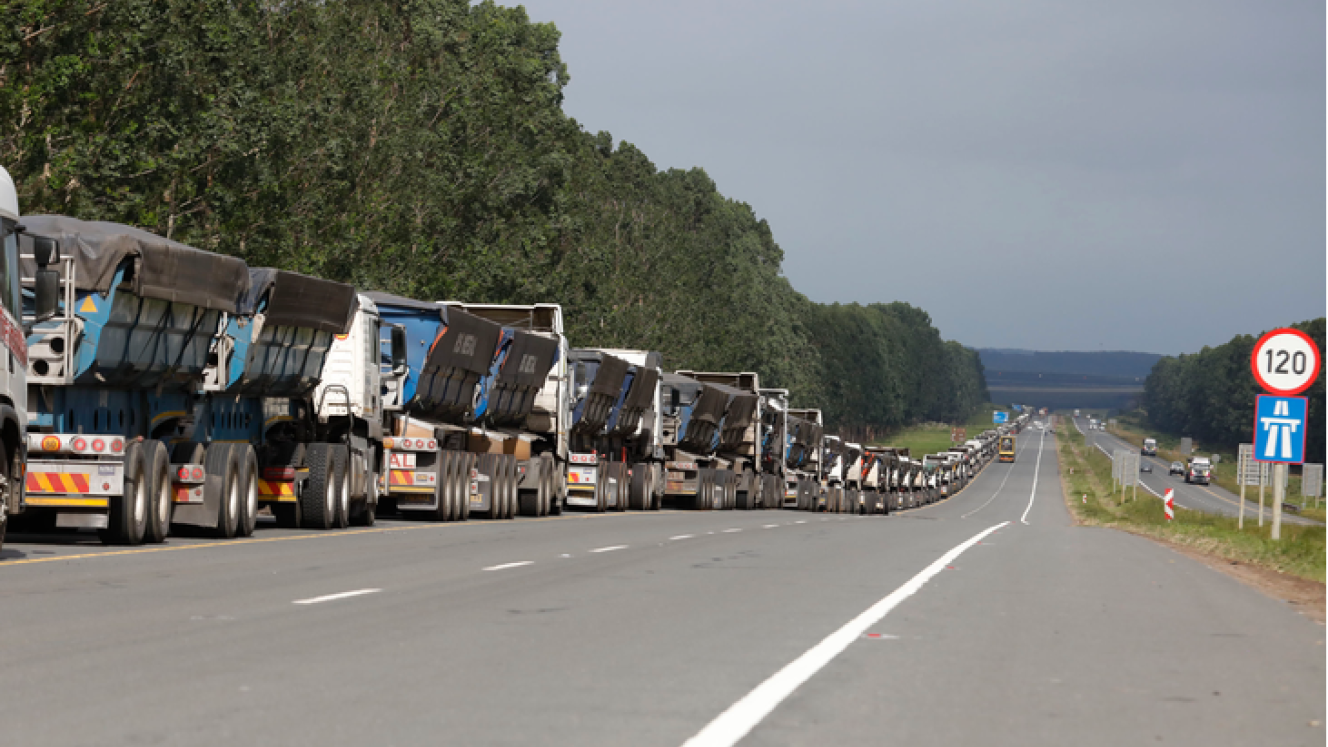
South Africa’s transport and logistics industry can ill afford any more increases. With fuel prices having sharply increased this month – to R13.08/litre for unleaded 95 petrol, R12.87 for unleaded 93 and R11.92 for diesel – experts are warning that the worst is yet to come. With a fuel levy increase of 23 cents expected in April, to coincide with the annual vehicle licence and toll fees increase, it could well be that these increases are the tipping point in the country, said the Automobile Association’s (AA) Gary Ronald. “Unfortunately, higher fuel costs are going to have a negative impact on production costs that will translate to all consumer goods and services where fuel is a factor.” According to Gavin Kelly, spokesman for the Road Freight Association (RFA), the road freight industry remains one of the highest taxed industries in South Africa – with ever-increasing road user charges, crossborder taxes, toll fees, vehicle licensing fees, inspection fees and other legal requirements. “The RFA remains concerned about the ability of the smaller truck operators in particular to pay all the taxes. Ironically it is these operators who will be most severely impacted – the very sector Government aims to support,” he said this week. While the RFA welcomed the fact that no new taxes were introduced during the National Budget Speech, Kelly said they were grappling with coming to terms with the increased costs. “At the same time, the new carbon tax burden will also fall largely on the road freight industry, which has low margins and keeps the wheels of the economy turning. Set for implementation from January 1, 2015, this new tax will reduce our country’s competitiveness even further. While the RFA supports all efforts to reduce greenhouse gas emissions and climate change, the association strongly believes that South Africa cannot afford another tax. More so, although much research has been done, there are no viable alternatives available for our industry and we are yet to hear of approved carbon project offsets from Treasury that can reduce the tax burden of operators,” he said. Of greater concern, said Kelly, was that many of these increased taxes, fees and licences were not ring-fenced for use in the road industry necessarily. With over 80% of the country’s freight moved by road, increasing fees could hardly be handled, especially in the light of transport costs already unacceptably high at 14.6% of GDP. According to Ronald, at the current rate it is becoming quite possible that the price of petrol could be close to the R14/litre mark by the end of the year – a fact that should concern every consumer. While the South African government has maintained that fuel in the country is not too expensive, the latest Bloomberg Gas Price Ranking has put the matter into perspective. The ranking – which sorts 60 countries by average price at the pump, and ‘pain at the pump’ measuring the percentage of average daily income needed to buy a gallon of fuel – placed South Africa 41st and 11th respectively. In other words, while fuel is not necessarily the most expensive in the world, it remains a heavy burden on South African pockets. CAPTION Gavin Kelly… “small truck operators could be pushed out of the market.”
Transport industry hard hit by rising costs
Comments | 0
© Now Media. This content is protected by copyright and may not be adapted or republished. If you would like to discuss cooperation opportunities, please contact: editor@freightnews.co.za.