The 10 228-kilometre Trans- African Highway 4 (Cape to Alexandria) project to connect northern and southern Africa by multi-lane highways is being delayed by conflict in Sudan and construction backlogs in Zambia and Tanzania. First scheduled for completion in 2024, it will enable a vehicle to travel from Egypt to South Africa in five days overland, averaging 2 000 km a day. Trucks would take twice as long with one driver. There has, however, been progress on some major stretches, with the road being classed as fully paved. It runs through South Africa, Botswana/Zimbabwe, Zambia, Tanzania, Kenya, Ethiopia, South Sudan, Sudan and Egypt. East to west highways, such as Beira to Lobito and Lagos to Mombasa, are planned to provide additional connectivity. A west coast route would run from Cape Town to Tripoli through South Africa, Namibia, Angola, Democratic Republic of Congo, Central African Republic, Chad and Libya. This is much less advanced and lacks the same institutional support from governments. Sudan is the only country on the route not to have ratified the Cape to Cairo Corridor agreement. Progress has been made on easing delays at border crossings through the establishment of one-stop border posts. They are at Beitbridge between South Africa and Zimbabwe; Kazungula (Botswana and Zambia); Chirundu (Zimbabwe and Zambia); Tunduma-Nakonde (Zambia and Tanzania); Namanga (Tanzania and Kenya); Moyale (Kenya and Ethiopia); and Qastal- Ashkeet (Egypt and Sudan). The only borders without one-stop posts are between Ethiopia and South Sudan and South Sudan and Sudan. Egypt has completed a multi- lane transport and military road between Alexandria and the border with Sudan. However, travel advisories state that the road is unsafe due to a spillover of conflict from Sudan and bandits. The route through both Sudan and South Sudan is affected by political instability, lack of maintenance, poor road conditions, and security risks. Instability has extended over the border into Ethiopia. Despite the civil war, Ethiopia in 2024 granted a $738 million loan to South Sudan to build its section of a 220-km cross-border highway which will link South Sudan with the port of Djibouti. The country has been investing heavily in its road infrastructure. The 505-km Isiolo-Moyale road section, a critical part of the Mombasa-Nairobi- Addis Ababa corridor, was completed in 2016. Work is due to be completed soon on the 202-km Modjo– Hawassa Expressway, a strategic corridor for domestic trade and cross-border logistics. Kenya has completed two major highway projects on the route. The African Development Bank (AfDB) is supporting a number of related road projects in Tanzania. The bank is a major funder of the corridor. Zambia is also busy upgrading the Great North Road (T2), as well as the Nakonde border post. Zimbabwe is upgrading the Harare to Kanyemba road, which will improve regional connectivity by linking to trade corridors with neighbouring countries, as part of its Emergency Road Rehabilitation Programme (ERRP). South Africa and Botswana do not have any road projects specifically linked to the corridor. ER
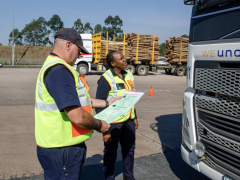
Trans-African Highway 4 remains under construction
Comments | 0
© Now Media. This content is protected by copyright and may not be adapted or republished. If you would like to discuss cooperation opportunities, please contact: editor@freightnews.co.za.