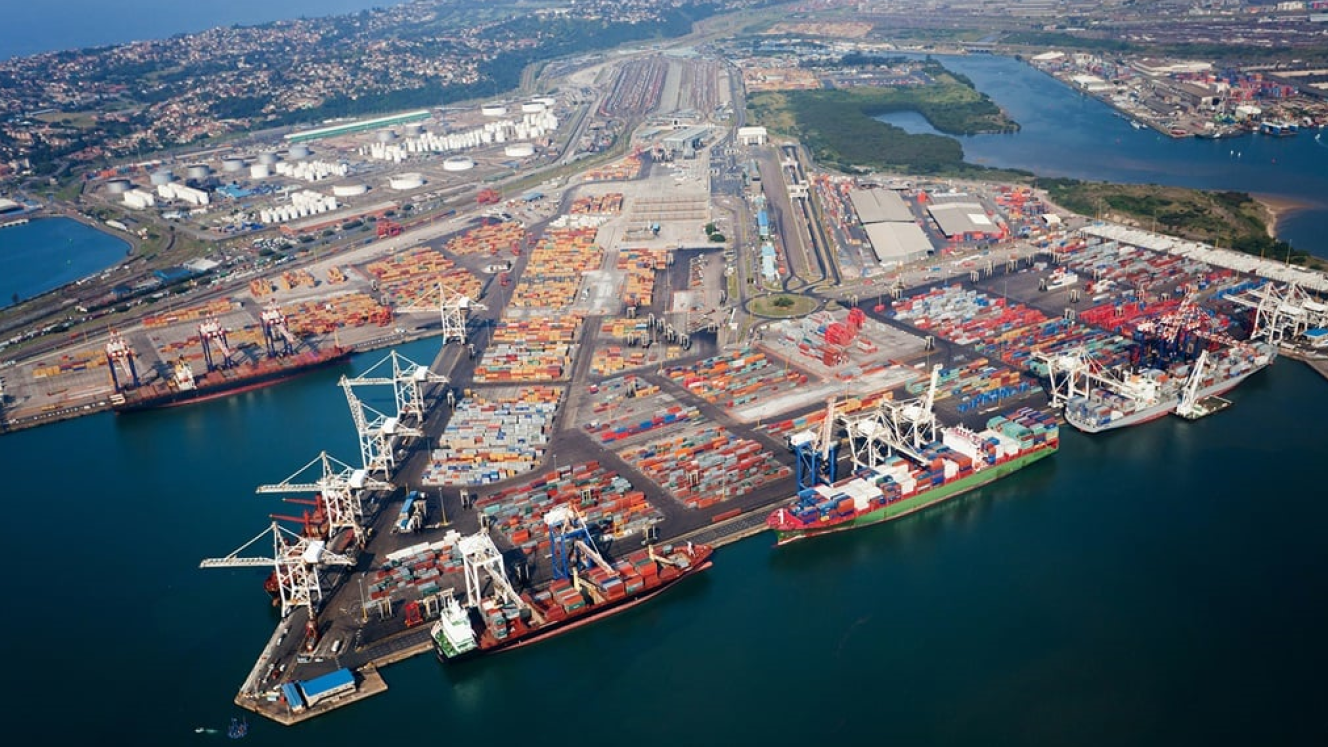
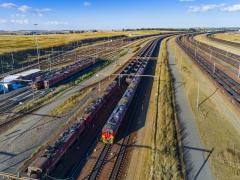
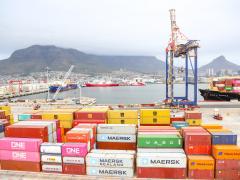
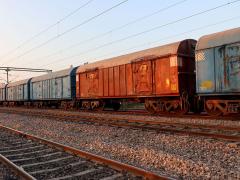
‘Rates not the issue – it’s about supply chain efficiencies’ Joy Orlek THE EFFICIENT movement of container traffic is not purely a Spoornet issue, says executive manager strategy Alex Masianoga. “It’s a supply chain issue that relies on a holistic approach that includes buy-in from the ports. “Moving freight in containers is a global trend, and is high priority for Transnet. The organisation has set up a team of individuals comprising the ports and Spoornet to examine container strategy in terms of corridor movements,” he said. “That is work in progress and in order for Transnet to achieve its fair share of this industry, a number of issues need to be dealt with.” The study will look at rates, container flows and all aspects related to the container business. “We will strategically look at the container and wagon pricing and the combination thereof to achieve the shift of traffic from road to rail,” was the diplomatic reply from senior manager strategy Francis Callard when questioned on the possibility of a downward revision of rates. “We don’t believe it’s a rates issue between road and rail – we’re talking about supply chain efficiencies which go way beyond freight rates.” And one of these efficiencies, which rail intends to exploit shamelessly, is its ability to move goods from terminal to terminal, without the problems of road congestion that are becoming increasingly onerous for hauliers. “We recognise, however, that there are inefficiencies between ourselves and our port hand-over and we are addressing this interface.” An issue which has already been addressed – and with major success, according to Callard, is the capacity issue. “A complaint levelled against Spoornet has been lack of capacity particularly on the Gauteng - Durban route. “In February 2005 we took the conscious strategic decision to disprove this false statement and put in five IMEX trains on a daily basis, irrespective of whether there was traffic or not. Recently this was rationalised to four regular trains and the fifth runs depending on demand. “The service has had its successes and over a period of a year train occupancy has increased from 50% to above 70%.” Spoornet executives are however under no illusions about the difficult task that lies ahead. “Once a customer has a bad experience and has shifted mode he will remain with that mode irrespective of the changes that have taken place in the previous mode he used,” said Callard. “It is only when he has a bad experience in his current mode that he will relook at the previous mode. “It’s a double challenge for us – not only do we have to improve the service that caused the customer to leave in the first place, but then to equally improve to such an extent that it provides something significantly better than the road service he is using.” Clearly, however, it’s not a competition between road and rail – but rather a joint initiative to achieve supply chain efficiencies by harnessing the strengths of both modes for the common good. To this end, serious efforts between the Road Freight Association and Spoornet are ongoing to ensure that the ultimate objective is achieved – and that’s all about lowering South Africa’s logistics costs in the interests of global competitiveness.
Train occupancy rises from 50-70%
Comments | 0
© Now Media. This content is protected by copyright and may not be adapted or republished. If you would like to discuss cooperation opportunities, please contact: editor@freightnews.co.za.