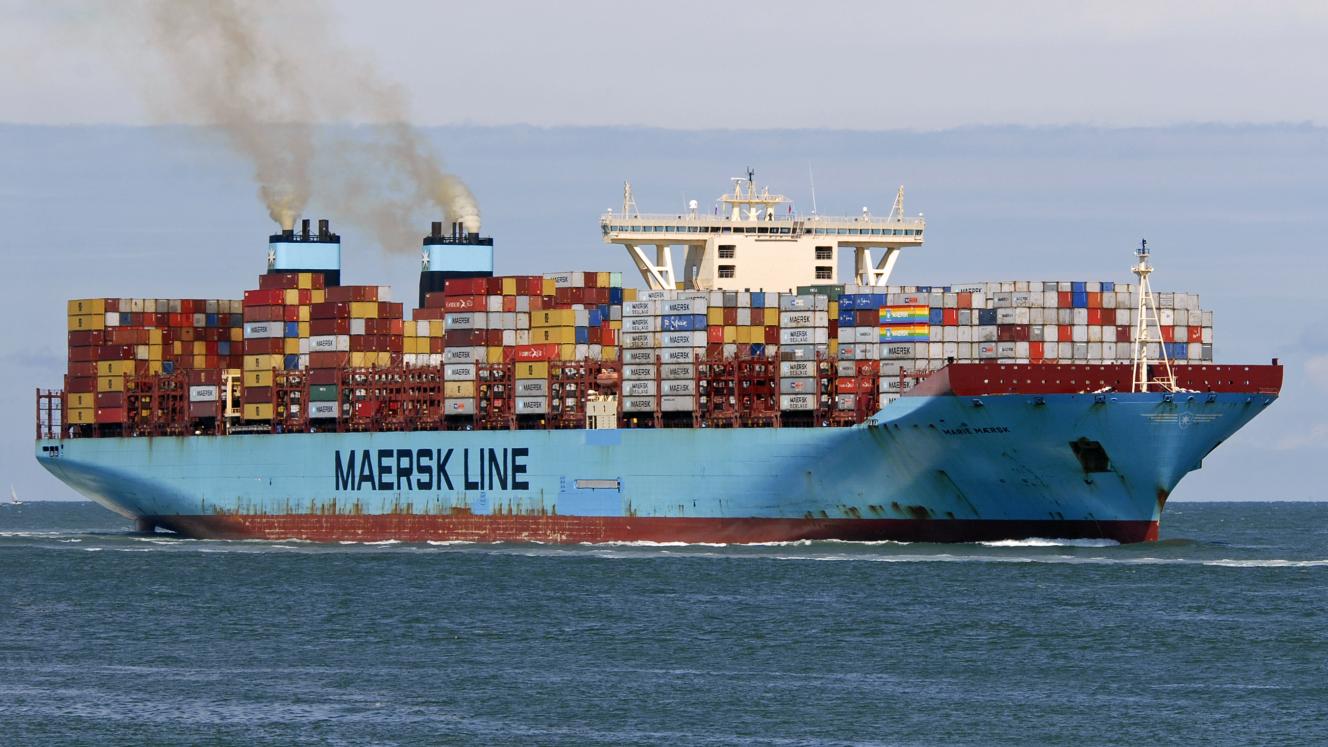
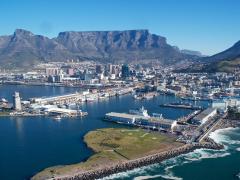
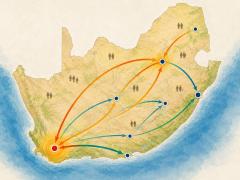
TRANSNET PORT Terminals is knuckling down to the serious business of determining the feasibility of creating Africa’s first container ‘hub’ to serve sub- Saharan Africa. Mark Gregg-Macdonald, TPT’s chief financial officer, and Mervin Chetty, TPT’s chief strategist, spelt out the plans at the organisation’s annual briefing to the Cape Town business community last week. Some of the finest Eastern academic minds have been engaged to participate in the study, only initiated about two months ago. The result will be made known before the year is out, but Gregg-Macdonald believes the time is right for a hub, given that container growth is set to double by 2015. Chetty makes the point that in creating a hub anywhere in the world, it is paramount to create capacity ahead of demand. The benefit for shipping lines is that they can rationalise calls, as has happened in Australia where a number of strings have been cut. “If you look at the demand in East and West Africa, there are a lot of transhipments, particularly on the West coast, including much of the salt trade to America, the Middle East and other parts of the world. If you consolidate that traffic, it is certainly to the long-term benefit of shipping lines. “Secondly, the fact that the ‘corridor’ approach in Southern Africa is now becoming embedded, means we need the equivalent on the waterside. “South Africa’s feeder system needs to become more dense and that it is one of the challenges.” Chetty says while a specific port needs to be identified for hub status, a port like Ngqura (Coega) with its developed infrastructure would be best suited. With its port draught of 18 metres and 16.5m at berth, “it is better than some Asian and European terminals”. Fortunate for South Africa is its location, in the middle of the world map, presenting an ideal opportunity for a hub in southern-Saharan Africa. Chetty says of the hub study: “Once we have determined where, we need to ask the question why; how will it benefit our developing economy and how will it benefit sub-Saharan Africa? “Becoming a hub port needs a whole lot of other economic support like policies and incentives for IDZs, which we already have, but we need to step up to the plate of developed nations, so a lot of work has to be done before we are able to say ‘here is the potential hub." As to why it has taken TPT this long to start thinking in hub terms, Chetty points to Transnet’s progress since 2000. “We needed to sort out a lot of things first. You are not going to create a hub when your house is not in order so putting our house in order is exactly what we have done.”
TPT spells out plans for sub-Saharan hub port
Comments | 0
© Now Media. This content is protected by copyright and may not be adapted or republished. If you would like to discuss cooperation opportunities, please contact: editor@freightnews.co.za.