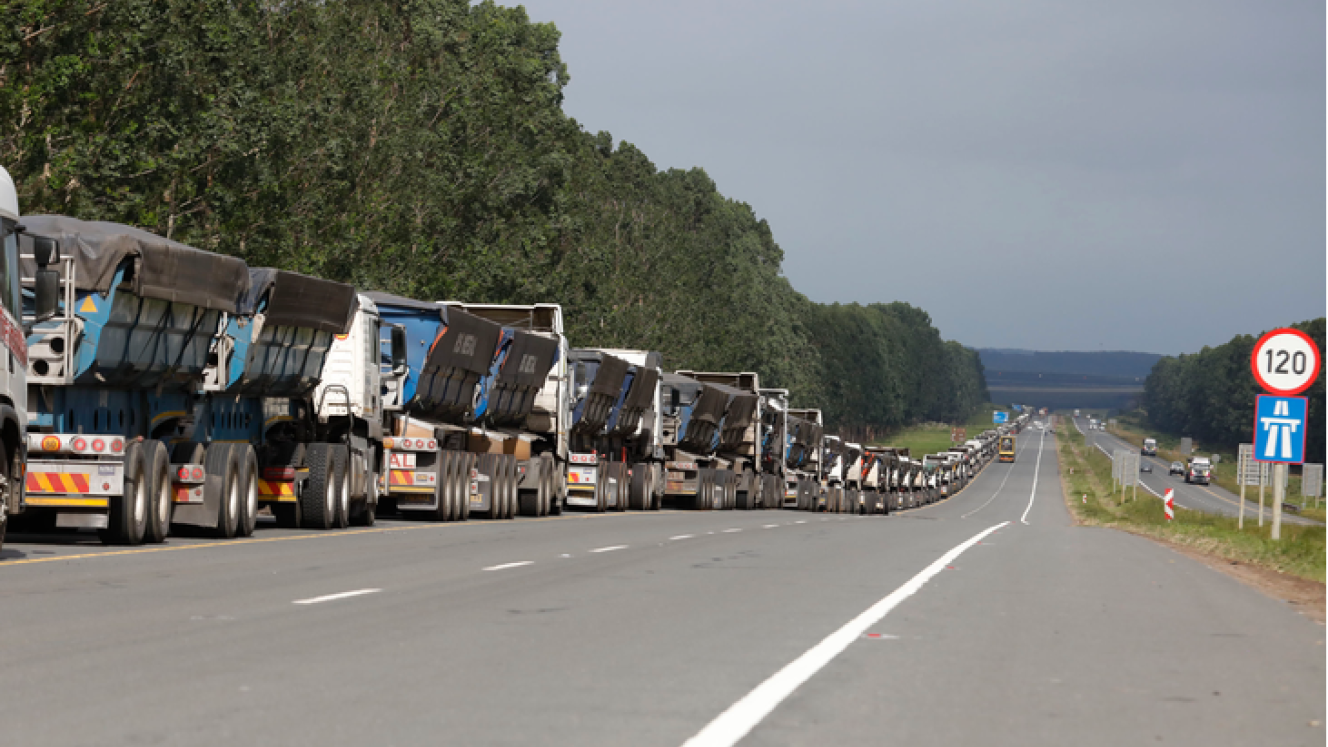
Road infrastructure in Africa is under pressure. In South Africa alone the road maintenance backlog is estimated to be anything from R149-R169bn per annum. To successfully address this backlog the country would need to spend at least R30 billion every year on maintenance alone, according to estimates. On average it spent this much on both maintenance and the construction of new roads last year – far too little to even dent its backlog. In neighbouring countries the picture is just as bleak as roads continue to deteriorate in the face of under-spending and under-investment. Southern African countries, however, realise the impact of this and have for some time been in agreement over the necessity of sound economic infrastructure as a precondition for economic growth, making transport infrastructure a key priority not only locally but across the region. And to achieve this more and more countries are looking at tolling as a solution. “There are not as many toll roads in the southern African countries as there are in South Africa, but it is a phenomenon that is on the increase,” said Gavin Kelly, spokesman for the Road Freight Association (RFA). “Also, while many countries don’t necessarily have a gantry and a tolling system they do have user charges that are payable up front on entering the country.” Kelly says these charges are dependent on the distances travelled and are payable at border posts. “But more and more traditional tolls are being erected over and above these user charges – all of which will add further cost to the transport of freight.” The user charge system in itself is questionable, he said, be it through a toll or a direct user charge as is the case in Swaziland or in Zambia. “When you enter Zambia they work out at the border post which roads you are going to use, over what distance, and then charge for the use of those roads. In South Africa the user charge is extracted through tolls,” he said. “The argument can be made that there are a variety of ways to raise money to pay for road infrastructure. It would seem in southern Africa the preference is for the user charge system, but it can only really work if there is a choice of systems in place. In other words you cannot charge fees for the use of something when it is the only option available.” According to Kelly, in South Africa operators are charged through the fuel levy. “The fuel levy is already in place where a charge is imposed per litre – and by definition you have to buy fuel to move your truck and so we are already paying a user fee,” he argued. “Operating heavier vehicles therefore means more fuel is bought, thus more fuel levy paid, and so more is paid by heavy vehicle operators for road maintenance.” But with the fuel levy not ringfenced, not all the money goes to road infrastructure, as is the case with tolling. According to the South African National Roads Agency Limited (Sanral), tolling allows it to pay back debt incurred to build a road and to maintain a road once built. But industry stakeholders have questioned this saying there are many examples of tolls in the country where the road has been paid off and the maintenance is not near the amount of money raised in tolls. Transport officials maintain the excess money is used for roads elsewhere. As a concept tolling is increasing in popularity across African states. With a need for about R1 trillion to fund different infrastructure needs across the continent, about $16 bn per year is spent on transport infrastructure alone. INSERT & CAPTION While many countries don’t have a gantry and a tolling system they do have user charges that are payable up front. – Gavin Kelly CAPTION Trucks waiting to enter Zambia … they work out at the border post which roads you are going to use and charge you upfront for the use of those roads.
Tolls on the increase to address dire infrastructure needs
Comments | 0
© Now Media. This content is protected by copyright and may not be adapted or republished. If you would like to discuss cooperation opportunities, please contact: editor@freightnews.co.za.