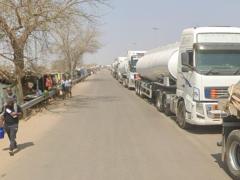
One way for a logistics company to insulate itself from an economic downturn is to take on commodities whose sales are “recessionproof.” A steady flow of trucks bearing one such product, tobacco, has allowed Aquarius Shipping to weather the ongoing storm. “We are a little different from other logistics companies in South Africa because we concentrate on fewer commodities, with tobacco being our major income source. Therefore, one could argue that we are controlled by what happens in the tobacco industry as well as the logistics industry. But as far as tobacco is concerned, we were far less affected by the slump in the economy. Volumes remained stable out of Malawi – after a record season in 2009 it has subsided slightly – but the Zimbabwe crop has grown substantially despite the ongoing problems being experienced there,” said Aquarius Shipping MD Robert Poverello. Aquarius Shipping roadhauls about 3 500 FEUs of tobacco out of Malawi per annum, 2000 FEUs out of Zimbabwe, 500 from Mozambique and 150 from Zambia along with handling various customers’ tobacco import requirements from around the world. But while tobacco output is stable, logistics consideration may yet wreak havoc. “The biggest challenges we face are generally from the port operations and transport operations. Fuel prices and freight rates are very erratic and the frequent strikes have to be carefully monitored. The tobacco we transport is in its raw state from Malawi, Mozambique, Zambia and Zimbabwe, and gets shipped out from Beira and Durban. “With special reference to transporters, the past two years have been very, very difficult in logistics, not only from an African point of view but a worldwide perspective. We have been very fortunate not to have had layoffs or working day cut backs because we were dealing with a product that had not been greatly affected. In fact, we are looking at expanding into other agricultural products, like sugar, tea, cotton, cocoa, coffee and ground nuts and have made great strides already. In addition to that we are looking at extending into East Africa – Kenya, Tanzania and Uganda,” Poverello said.
Tobacco focus provides recession-proof buffer
Comments | 0
© Now Media. This content is protected by copyright and may not be adapted or republished. If you would like to discuss cooperation opportunities, please contact: editor@freightnews.co.za.