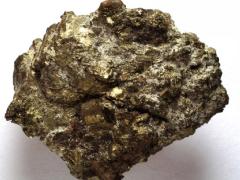
Sustainable jobs are being supported in the small town of Omaruru (population 14 000) by a logistics chain which stretches from Cape Town to northern Namibia. The award-winning Omuriro Firelighters company uses invader bush to make eco-friendly Omuriro (Otjiherero for “fire”) firelighters. There is a mix of 85% chipped invader bush, 10% edible wax and 5% cotton string in the firelighters, all of which are assembled by hand in a factory started by local resident Peter Till. He won the 2017 Sanlam Innovation Works prize for the design of the firelighters. Described as a “real Namibian firelighter,” they are waterproof, have an unlimited shelf life, and will burn for up to 20 minutes – meaning only one is needed to start most fires, according to Wallie Roux, who has the distribution rights for southern Africa. They are packed in boxes of six and 12. “The packaging is just paper. There is no plastic in the product or its packaging,” he says. There is at present a limitless supply of the chipped invader bush which makes up the bulk of the
product. Namibia has an extensive invader bush clearance programme – with much of the wood being converted to charcoal and packaged in the bags familiar to braaiers across
Namibia and South Africa. Namibian charcoal (lump wood) and briquettes are also being exported around the world, with the volume predicted to reach 200 000
tons a year by 2020, according to the Namibia Charcoal Association. The association points out that the production of lump charcoal is Namibia’s oldest biomass value chain and currently the most important contributor to the country’s wider effort of bush control. At present levels the charcoal industry uses around 600 000 tons of biomass a year. “Since charcoal production permits are typically only issued for bush encroached areas, this biomass demand translates into bush harvesting on up to 60 000 hectares of land each year,” according to the association’s factsheet. Omuriro Firelighters literally makes use of the scraps from the industry – the chips which are left in the veld because they are too small to be processed or to be used as braai wood, according to Roux. Thanks to Namibia’s dry climate in the regions where the bush is being cleared, the clippings are tinder-dry by the time they are gathered.
Another natural advantage is that, unlike South Africa’s invader Port Jackson Willow and rooikrans, the Namibian acacia invaders have hard, long-burning wood. The logistics of gathering the basic raw material therefore boils down to transporting teams to areas which have been cleared and then bringing the bags of twigs and shavings back to the assembly facility in Omaruru, which is located on the main tar road from Swakopmund to Otjiwarongo. This position on one of Namibia’s main logistics arteries simplifies the transport of the other components – printed boxes and cotton wicks from Cape Town and edible wax from Sasolburg. They are transported to the factory using existing logistics suppliers. Transport of the finished product to the market has been simplified by the certification of Omuriro firelighters as non-hazardous and non-flammable by Eurofins Umwelt of Germany. “This opens up the opportunity
for exports to Germany and other European Union countries,” says Roux. It also reduces the cost of local transport. With the company still ramping up distribution and production, much of the Namibian distribution in Windhoek, Walvis Bay and surrounds is done by Roux using his own one-ton bakkie. The first distributor is Jackey Hugo, who is responsible for Walvis Bay, Henties Bay and surrounds. Production can be quickly ramped up as demand increases, she says. The raw materials are readily available, and the patented process is designed for unskilled workers who quickly learn the art of wrapping and dipping the firelighters. Roux expects demand to pick up soon as a number of retail chains have shown interest in the firelighters. With no emissions there is not the same chance of cross-contamination as there is with conventional firelighters.