By introducing its small
ro-ro containership
Voorloper on the local
coastal trade in 1971,
Durban-based Unicorn Lines
pioneered the swing to full-scale
containerisation of South African
shipping services.
The extensive infrastructure
associated with containerisation
– terminals, depots, land
transport networks, vast computer
systems and the finalisation of
the associated documentation
procedures – was being developed
to operate the complex container
system.
Representatives of shipping
lines and the port authority
travelled extensively within
southern Africa to acclimatise
clients to the new system. Thus,
much of the preparatory work
had been done when Safmarine’s
SA Morgenster berthed at Cape
Town’s semi-completed container
terminal on 1 July 1977. She landed
one 20-foot container and then
returned to her discharge berth
to complete cargowork. That
symbolic operation marked the
official inauguration of the South
Africa-Europe Container Service
(SAECS).
Before the end of that year, the
first of three 1310-TEU custombuilt
containerships, and Table
Bay, the first of nine 2500-TEU
containerships built for the
South African service arrived.
Safmarine’s SA Helderberg
followed in January 1978, the first
of the four “Big Whites” that would
operate on the trade for more than
30 years.
Unicorn expanded its coastal
container service, initially with
four Durban-built Trampco-class
vessels and later with two small
containerships to act as feeder
ships for SAECS.
By 1981, the Far East service –
“Safari Service” – had also been
containerised and the US service
followed as well.
The troubled 1980s in South
Africa affected shipping. Apart
from widespread anti-apartheid
protests, President PW Botha’s
“Rubicon” speech in 1984 brought
great despondency as many had
believed that
he would signal
apartheid’s end
and the release of
Nelson Mandela.
Instead, the
speech plunged
the country
into greater
crisis. The rand
tumbled in value
against foreign
currencies
and the country faced serious
financial difficulties caused by
stricter trade sanctions. As cargo
volumes declined, shipping lines –
particularly those operating from
South Africa to North America
and Europe – felt the effects as
disinvestment and other trade
sanctions took effect.
February 1990 saw radical
political changes in South Africa
with the unbanning of several
political organisations, and later,
the announcement that Nelson
Mandela would be released
from prison. A groundswell of
hope improved the country’s
economic welfare and as trade
sanctions disappeared after
1994, trade escalated, bringing
new containership operators to
South African ports, and boosting
existing services.
Containerisation enabled
vast amounts of cargo to be
moved extremely efficiently,
but it required global transport
networks involving feeder service
networks that dovetailed with
trans-continental
logistics systems.
To achieve
greater efficiency
amid increased
competition
and rising costs,
even the largest
shipping lines
had combined
their systems,
expertise and
assets with those
of others to form huge consortia
offering clients global door-to-door
services. Numerous shipping lines
– including the once-giant P&ONedlloyd
group – were swallowed
into these consortia; some others
simply stopped operating.
The need to operate within large
partnerships affected Safmarine.
Although it had tried to move
into complex European logistics
networks by acquiring a Belgian
shipping company, a further
restructuring of the company in
1999 saw Copenhagen-based A P
Moller buy Safmarine’s container
division. Despite local misgivings
that the doyen of South African
shipping had passed into foreign
hands, and it headquarters moved
first to Antwerp and then to
Copenhagen, its fortunes improved
markedly.
New, larger vessels with greater
reefer capacity for the carriage of
larger volumes of containerised
perishable cargoes replaced the
30-year-old 2500-TEU “Big
Whites” and other older vessels,
and as shipping boomed in the
wake of rapid Chinese economic
growth, Safmarine ships carried
good cargoes at favourable
freight rates. Some of the whitehulled
ships were transferred to
Australasia-Asia trades where their
reefer capacity moved meat and
fruit to the huge Asian markets.
The combined effect of the
credit crunch and the flattening of
the Chinese economy from 2007
reduced demand for cargo slots and
therefore freight rates dropped, a
trend that was aggravated by the
introduction of numerous larger
ships. Safmarine was not exempt
from the slump in rates.
In 2016, Safmarine symbolically
moved its head office to Cape
Town, and although its structure
and role had changed since it
became part of the AP Moller
Group, the South African shipping
community welcomed this move.
The familiar brand with its unique
cursive logo had returned home
where it had begun operations
seventy years earlier.
Containerisation required
global transport networks
involving feeder service
networks that dovetailed
with trans-continental
logistics systems.
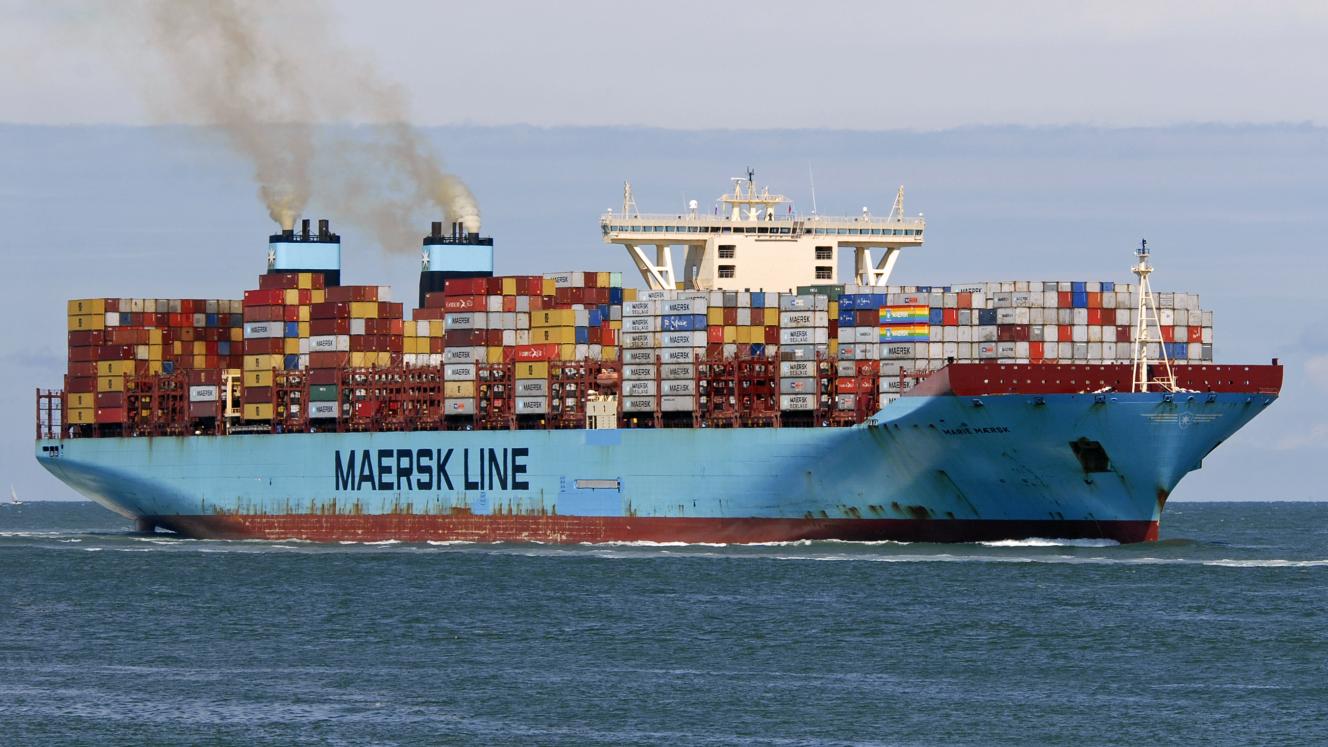
Korean-built Safmarine Mulanje represented a class of larger vessels that were introduced to the company’s fleet in 2007. Photo: Brian Ingpen