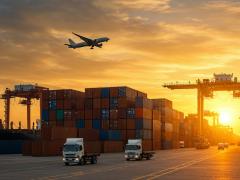
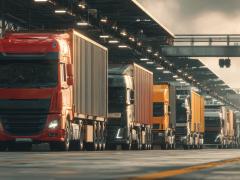
The Port of Cape Town has identified equipment upgrades as a key priority to ease congestion in the midst of challenging weather conditions.
David Davids, acting terminal manager: Cape Town Terminals, told FTW that four straddle carriers had been deployed from the Port of Durban to support the wind impact mitigation strategy for the reefer peak season.
“Our technical team has developed a straddle carrier reliability improvement plan and scheduled it to be executed and completed by the end of this year to maximise the windfree season,” he said.
The port had faced a number of challenges during January and February, including terminal landside congestion and vessel backlogs due to weather-induced delays and slow work during strong winds, he added.
“In the last three years we’ve experienced significant changes in weather patterns affecting our terminal operations. The wind peak season affects us from November and lasts up to and including March,” he said. “During this peak season we have experienced major weather challenges where the wind was sporadic and blew for prolonged periods which had a major impact on productivity – which was beyond our control.”
In December the port lost 266 hours (about 11 days), in January another 164 hours or 6.8 days, and in February 190 hours (7.9 days).
It was important to note, said Davids, that these hours were limited to times of complete operation stoppage, not including the slow working in strong winds.
“Whilst the terminal was wind bound, it still accepted reefers through the straddle areas (501 and West Coast) – which forms part of the wind strategy,” he said.
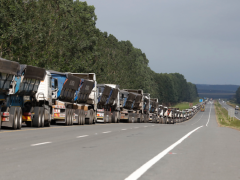
The port has been under pressure in recent weeks with increased complaints of slow operations and congestion. With vessels waiting around five days to berth, the strain on equipment has become noticeable, leaving port users worried.
According to Davids the terminal equipment planned maintenance, particularly for stationary equipment, was also impacted by weather as maintenance at heights cannot be conducted when there are persistent strong winds.
“Further to that, it becomes a challenge to release equipment for planned maintenance when the terminal is in recovery mode,” he said. “This predicament exacerbates the equipment breakdown challenges which the terminal experiences from time to time.”
He said due to the number of days lost in December 2017 some shipping lines had omitted the Port of Cape Town and left their cargo behind.
“This congested our stacks and compromised the productivity and fluidity of the terminal, creating longer port stays for vessels with the result that they started to bunch up at anchorage. This unfortunately had a knock-on effect for January and February 2018 vessel turnaround. A stowage that is not conducive to maximising cranes becomes counterproductive to quick recovery.”
INSERT
It becomes a challenge to release equipment for planned maintenance when the terminal is in recovery mode. – David Davids