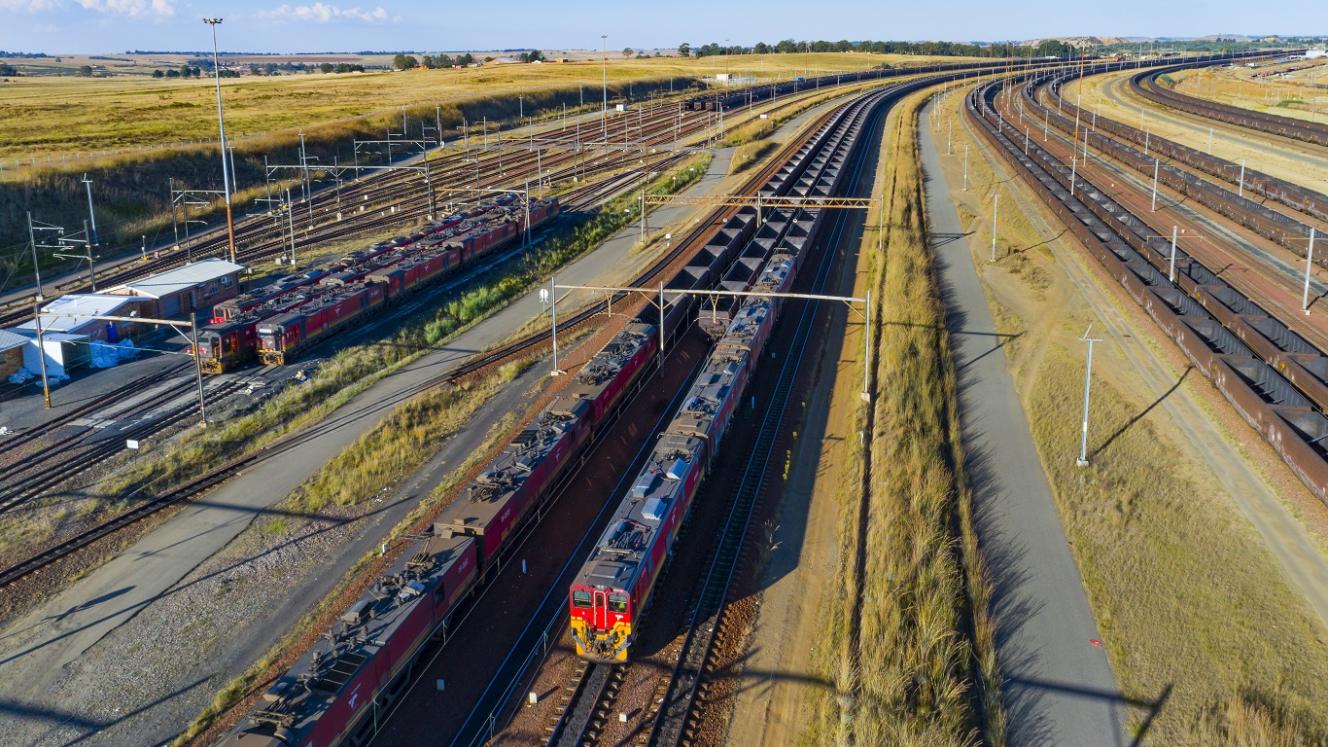
The myth that rail is cheaper than road needs to be exploded – sooner rather than later, says transport economist Andrew Marsay. “It’s a very expensive myth that has almost bankrupted massive economies – and there’s a massive pool of debt heading our way in South Africa,” he told FTW. “Transnet Freight Rail is under huge pressure to increase its high-revenue container business. “But they know internally what the cost realities are and they want private sector involvement. Yet there appears to be no understanding that the private sector will not buy into anything where there is no real economic value and a profit to be earned.” According to Marsay, virtually no railway in the world gets by without a subsidy – apart from South Africa where the ports cross-subsidise rail. “Quite a few may get by without operating subsidies but huge capital subsidies have been required to bring about the radical transformation of rail strategies in Australia and Germany. And in the UK the freight rail industry still needs an operating subsidy of 50% on its infrastructure cost, for example.” The rest of Africa has suffered in a different way, says Marsay. “Because they’ve not been able to afford to cross-subsidise their railways, the terrible cost of maintaining railways has hit governments hard which is why many of them have gone to the private sector and got into concessions to run the railways. But virtually every one has failed or at best disappointed because the governments have not been correctly advised as to what is possible.” The reason these railways have got into trouble is not necessarily because they are inefficient (though most are!) but because roads are more efficient and people will pay more to get their goods to the right places at the right time, he added. In South Africa we have examples of the bad and the good, he said. “Our iron ore line is excellent and could become far better yet. The coal line is improving steadily but all its gains could be lost if Transnet does not focus more fully on where rail adds true economic value.” Which is why he believes that rail should focus on bulk, and by segregating and optimising the road corridor between Gauteng and Durban for high-value container traffic, everyone would be well served. CAPTION: Andrew Marsay ... ‘Massive pool of debt heading our way.’
The ‘cheap rail’ myth exploded
Comments | 0
© Now Media. This content is protected by copyright and may not be adapted or republished. If you would like to discuss cooperation opportunities, please contact: editor@freightnews.co.za.