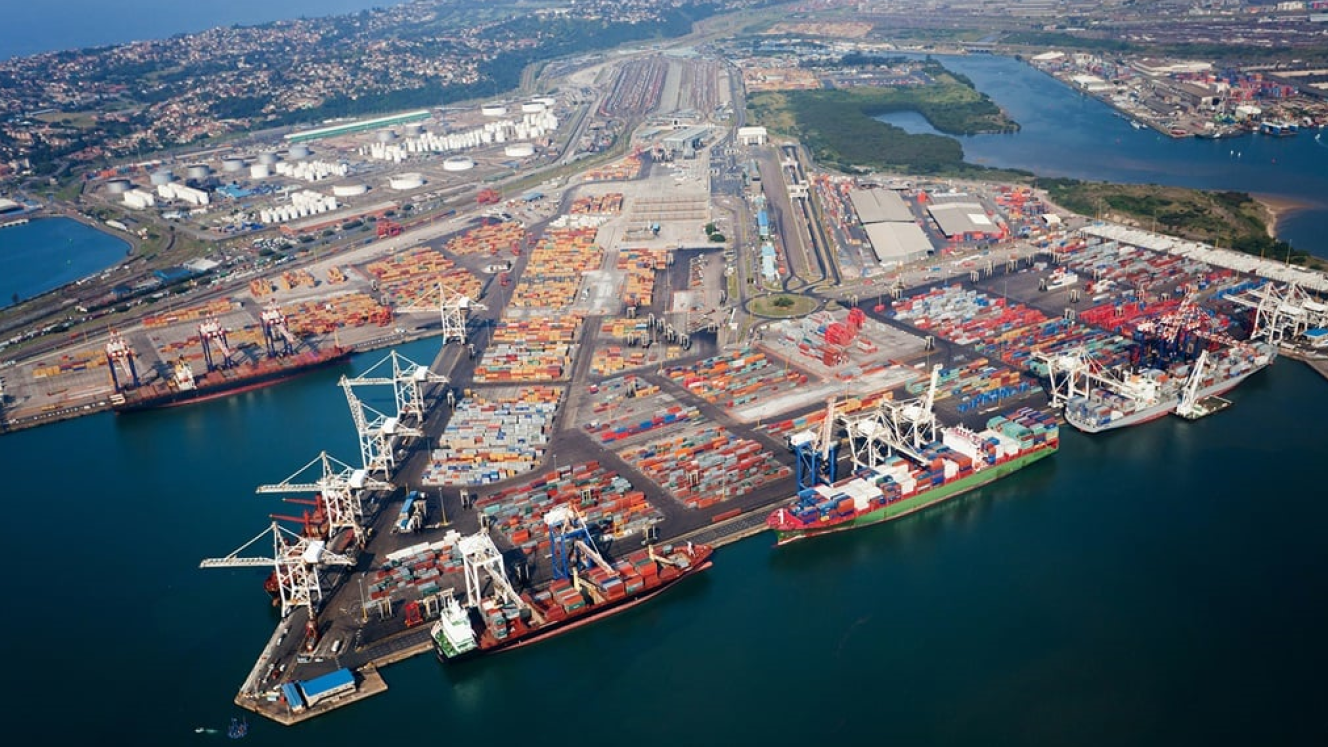
Although much of the beleaguered export industry in the southern hemisphere is taking a “Look East, young man” stance as the destination option with the main potential, is this really the answer for South Africa, asked trade specialist Duncan Bonnett of consultants Liz Whitehouse & Associates. Examples, he told FTW, were Australia – “Once again being seen as a leader to follow” – and Brazil, which have both hitched themselves to the Chinese train. “They are cited as countries that have weathered the global economic crisis relatively well,” Bonnett added, “by focusing their exports on Asian countries less affected by the global crisis.” With its guaranteed export markets in the European Union (EU) and the US having dried up – as have local markets, to a degree – SA is in a similar quandary about which export market options to chase. According to Bonnett, financial analysts and government officials are actively pursuing Asia and Latin America. “This,” he added, is joined by talk of South-South trade, emerging market solidarity, and much else, as they gaze across the oceans in search of the panacea for a battered manufacturing sector in this country.” The fact that China has recently been declared SA’s largest trading partner would seem to reinforce the “Look East” policy, and vindicate its proponents. “However, is this really the answer for SA?” he again asked. “After all, a cursory glance at our trade with China shows that while exports are indeed growing rapidly, SA’s export profile to China is very similar to that of just about any other African country – dominated by raw materials, with little valueadd in the mix.” Supporting this are figures that 61% of our exports to China are in the form of mineral products (basically coal, iron ore and other metallic ores), with a further 20% being base metals – and, therefore, 81% of our exports to China have very little value-added. “Since China needs these commodities in any case,” Bonnett queried, “is there any real value to be gained from spending time and effort nurturing this relationship to the degree that we do?” Contrast that, he added, with our exports to Africa – remembering that this excludes trade with our Southern African Customs Union (Sacu) partners (Botswana, Namibia, Lesotho and Swaziland), which would add another 15% to 20% to the figures. Exports to the rest of Africa, with a population only about 75% of China’s, were almost three times the size, according to Bonnett’s statistics. “If the Sacu trade is added,” he said, “SA would have exported more machinery and mechanical appliances and electrical goods into Africa than mineral products to China. “Base metals and mineral products do constitute a strong percentage as well, but many of these exports are in support of project activity being undertaken by SA companies cross-border, thus adding to the national value.” Producing African trade figures (see Table overleaf), Bonnett stressed that it showed a far morebalanced and broad export basket – with a high percentage of valueadded products in the mix. “This suggests,” he added, “that at a policy and strategic company level SA should be far more aggressive in cementing her position in the rest of the continent. “This is not to say many companies are not doing this already, but too many companies and policy makers have badly underestimated the rest of Africa as a strategic destination. And, whilst we look to ‘easy’ developed markets for exports, the BRIC countries (the Brazil, India, China trade grouping) we so prize are moving into our natural space with ever-increasing speed and sophistication.” It is Bonnett’s opinion that SA companies have, for years, treated the rest of the continent as something of a sponge – to absorb excess capacity when local or traditional export markets have declined. This is changing, he added, as more of our blue-chip companies expand into the continent. “But it’s not happening fast enough, nor with the degree of co-operation and vision that it should.” Citing other figures, Bonnett noted that exports had shown robust growth to the rest of the continent in recent years, with exports for the first half of 2009 almost reaching the level of the whole of 2005. “In addition to this,” he said, “whilst analysts and commentators have navel-gazed at the meltdown of the US and EU, a forgotten story is the relatively robust nature of Africa’s economy during this time. “Whilst growth forecasts for Africa have been downgraded by the International Monetary Fund (IMF) and others, many countries are still showing robust growth levels. Mozambique has forecast growth in 2009 of 6.1%, down from 6.9% in 2008, but impressive nonetheless. Others are in a similar position.” Bonnett suggests that the focus of analysts has been on the fact that many African countries are primarily producers and exporters of a limited range of primary products – energy minerals, metals and agricultural commodities – and thus the global downturn should have resulted in sharply contracting growth in these countries. “However,” he told FTW, “most countries were insulated from the crisis in the west by continued exports to Asia and a lack of exposure to the financial crisis. “Growth continues apace and the meltdown in areas such as mining has just not materialised. Many projects were delayed and expansions scrapped, but a cursory glance at the papers in the region shows that many have since come back on line.” The result? After several years of relative decline in terms of our exports, other African countries (excluding Sacu) now account for 20% of our exports by value. “This is up from barely 15% during the middle of the decade,”said Bonnett. “Add in Sacu, and the figure is probably closer to 25% of the total – and most of these are value-added products.” Summarising his pro-Africa argument, Bonnett said that other African markets continued to offer a great opportunity for SA manufacturers and exporters – although he suggested that this seemed to be taken for granted, rather than nurtured and developed. “The resilience of the continent, and the fact that economies in Africa have diversified far more than analysts give them credit for, provides fertile ground for those companies willing to develop these markets.”
The argument for choosing Africa over Asia
Comments | 0
© Now Media. This content is protected by copyright and may not be adapted or republished. If you would like to discuss cooperation opportunities, please contact: editor@freightnews.co.za.