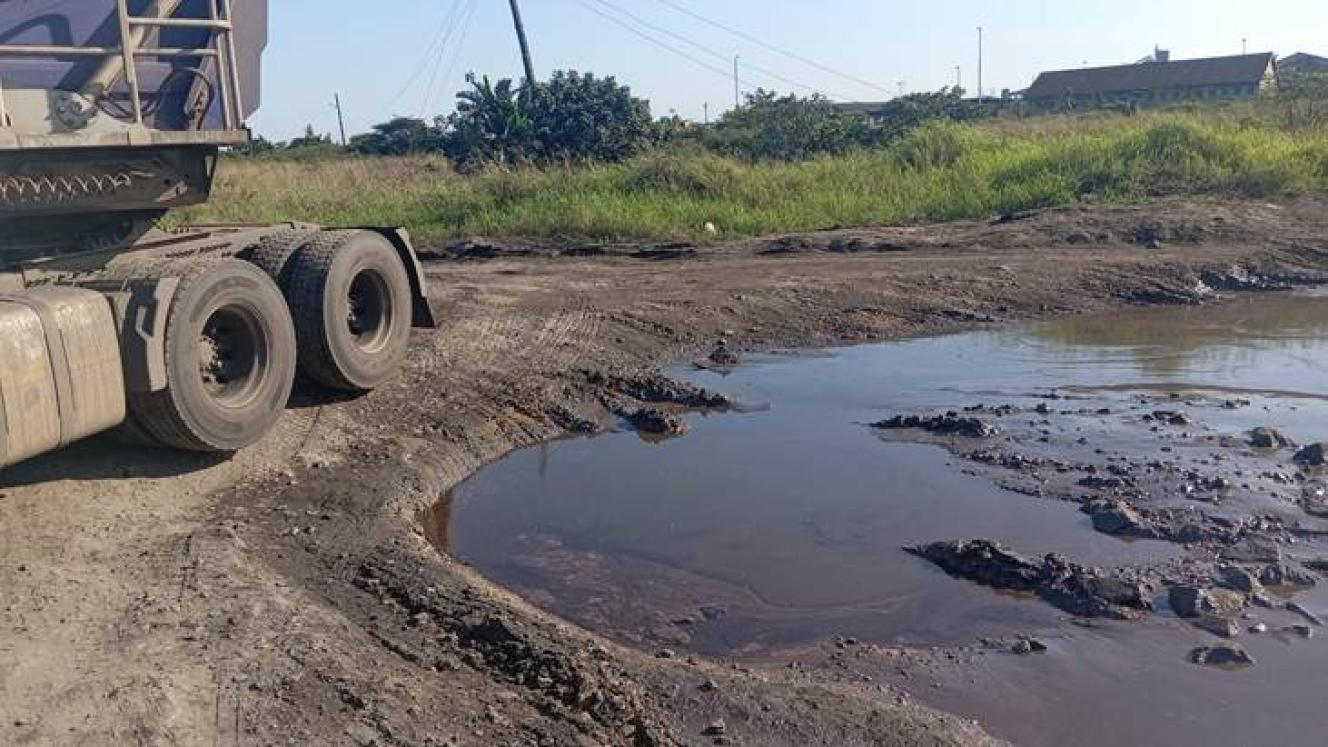
Delays to trucks hauling containers to and from the Port of Durban are costing well over R200 million a year. That’s the shocking estimate tabled before the Port Consultative Committee (PCC) in Durban by SA Shippers’ Council (SASC) port representative, Mervin Webb, and released to FTW last week. And extending that basic cost along the inland supply chain to the end-consumer indicates that the total overall cost to the SA economy could easily be up to a billion rand a year. It all results from inefficiency at the Durban container terminals, according to Kevin Martin, MD of Freightliner Transport and chairman of the Durban Harbour Carriers’ Association (DHCA). “A model that has been created of the entire supply pipeline from the overseas cargo supplier to the SA cargo owner shows that it is wide and smooth-flowing on the water side and inland transport side at the SA end,” he told FTW. “But at the container terminals, it narrows seriously. This causes delays to road transport from the harbour to the cargo owners. “Extrapolate this to the delay costs to warehousing, production lines, product distribution through the wholesale and retail industries, and all the way to the endconsumer – and you can multiply the cost to road transporters many times over.” And this detrimental impact on the import industry is matched by that to the export trade, according to Webb. “The basic cost of delays here is aggravated by the distinct possibility that exporters could very well lose major contracts because of their inability to stick to scheduled timing of their cargo movement,” he said. “That’s an incalculable, but potentially massive, cost to the economy in its own right.” These road transport delays are not a new issue. But what makes it headline news at this moment is that the whole issue has been put before the Durban PCC – along with that frightening estimate of an annual cost of R200 600 000. Quoting from the PCC minutes, the basic complaint was that: “With everything done in the port and all the monies spent over the last few years the efficiency of the terminal has not improved. In fact, from a user perspective, it has gone backwards.” Translated into vehicle utilisation, this lack of efficiency means that, on average, transporters are currently only managing to do four trips per vehicle in a 24-hour period – or six hours per trip. But, taking into account the distances and times involved in these local deliveries, the transporters calculate that, in reality, they should be able to do eight trips a day – or three hours per trip. This would be a vehicle utilisation that would lead to decent profits for road transporters, along with major cuts in freight rates – which, extended all the way along the supply chain, would mean lower product prices for the end consumers. And that desired three hours per trip is more than feasible, working on actual figures from truckers and terminal operators, Transnet Port Terminals (TPT). The travelling time and the loading/unloading of the trucks takes an average of half an hour, and TPT reports figures of turning a vehicle round within 30 to 35 minutes – although this is only the time the vehicle is actually in the terminal. So, on average, each trip should take an hour and a half. But that’s an impossible dream, with each trip currently actually taking six hours. “So we will have a deeper port capable of taking bigger, wider vessels with more containers and more berths, but we will not have addressed the landside issues in the terminal,” says the PCC, which is demanding that TNPA and TPT submit a master plan on how to improve efficiency. CAPTION
Terminal truck delays cost R200m a year
Comments | 0
© Now Media. This content is protected by copyright and may not be adapted or republished. If you would like to discuss cooperation opportunities, please contact: editor@freightnews.co.za.