The Swaziland government
has finally declared the
drought that has ravaged
the country since 2015
to be a national disaster,
compelling ministries
to free up funds for
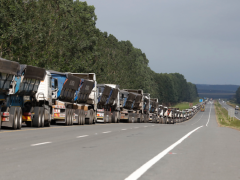
emergency relief. Rail
and road transporters are
preparing to handle food
deliveries for at least a
third of the country’s
1.2 million people who will
be without anything to
eat by April due to cattle
deaths and widespread
crop failures.
Spending on food
aid is only a part of the
drought mitigation effort
government must quickly
manage. Drought has
dried up dams used for the
generation of electricity.
Last week Maguga Dam,
which was partly built and
owned by South Africa,
ceased generating power.
Maguga produced 12 of the
60 megawatts normally
generated by Swaziland’s
four hydroelectric stations,
the others being dams at
Edwaleni, Ezulwini and
Maguduza. All stations
are now incapable of
generating power. Some
sugar estates in the eastern
lowveld also feed power
into the national electricity
grid as Independent
Power Producers (IPPs).
They generate power from
ethanol distilled from
sugar cane, but are not
doing so now and do not
expect to provide power
until April.
80% of the country’s
electricity needs are
purchased from Eskom. Of
the 221 megawatts burned
in 2014, 177 megawatts
were imported from South
Africa. R20 million is
being requested from
parliament to purchase
more electricity from
Eskom.
“We are looking at a total
national blackout, which
we naturally wish to avoid,”
a source at the Swaziland
Regulatory Authority
(SRA) told FTW.
Swaziland seeks funds to avoid national blackout
Comments | 0
© Now Media. This content is protected by copyright and may not be adapted or republished. If you would like to discuss cooperation opportunities, please contact: editor@freightnews.co.za.