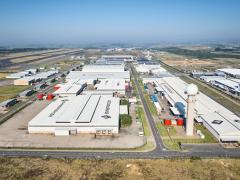
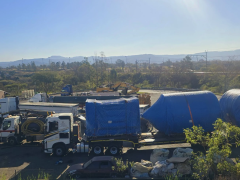
Risk management is key to railway profitability, and accident avoidance has been one reason Swaziland Railway has enjoyed a profitable year in 2011 compared to some other regional railways. “Cost containment is one reason for our profitability, and we do a lot of risk management. Rail accidents can be very expensive. We do risk control to avoid all possible crises,” Gideon Mahlalela, CEO of Swaziland Railway, told FTW. Matsapha industrial estate outside the central commercial town of Manzini is both the core of Swaziland’s manufacturing and the site of the railway’s Inland Container Terminal, informally known as the kingdom’s dry port. Ever-rising road and pedestrian traffic in proximity to rail lines that have existed for 40 years is raising the risk of accidents. “We are working with the town board to take safety measures, like putting up railway crossing gates,” said Mahlalela. Transit traffic from SA, such as rock phosphate and magnetite from Phalaborwa en route to Richard’s Bay via Swaziland, continues to boost the railway’s bottom line. Due to the continuing global recession, it has been an “up and down” year for the delivery of inputs to the country’s textile industry and the exporting of finished product, Mahlalela said, but profits are coming this year from sugar exports taking the short haul to Maputo (“It’s cheaper by rail because it’s bulk”) and Swazi coal to Witbank. The latter is a “coal to Newcastle” situation, because there is no shortage of coal in Witbank. “But Swazi coal is better quality, and it’s good for boilers,” Mahlalela explained.
Swazi Railway records profitable year
Comments | 0
© Now Media. This content is protected by copyright and may not be adapted or republished. If you would like to discuss cooperation opportunities, please contact: editor@freightnews.co.za.