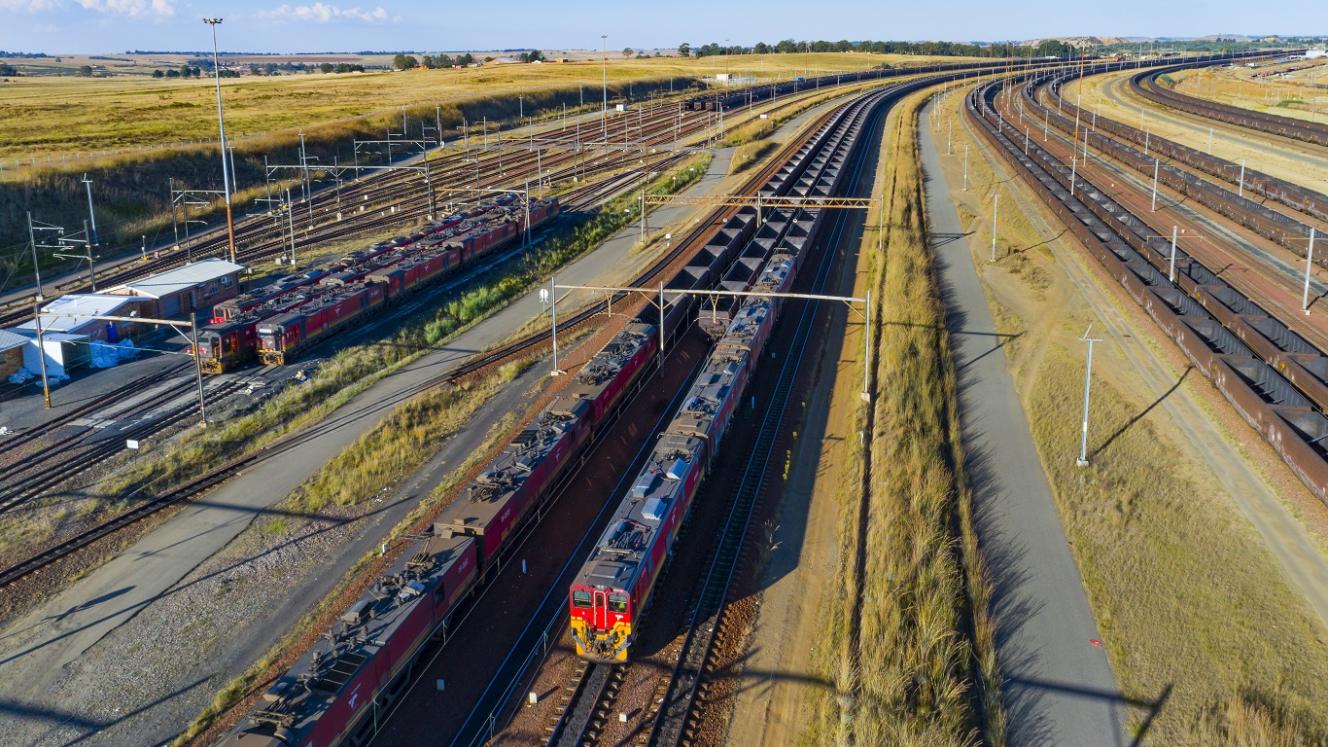
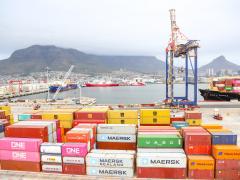
Swaziland Railway’s performance in terms of freight volumes improved a significant 25% during the current business year soon to conclude. “There has been strong growth in all four traffic categories: imports, exports, container traffic and transit traffic,” Stephenson Ngubane, CEO of Swaziland Railway, told FTW. “We are seeing a much higher demand for imports by rail into Swaziland, and exports also. Containerised (freight) is all imports into Swaziland. Minerals from South Africa make up the bulk of transit traffic cargo,” he said” An increase in freight volumes moving into and out of the country would suggest a more robust economy at work. By current economic measures, however, Swaziland’s economy is struggling. The chief rail executive explains the anomaly by noting that rail is absorbing a larger share of existing and not necessarily expanding freight transport volumes. “In context, our volume growth means that Swaziland Railway is gaining a larger market share from our competition. It may not necessarily mean more consumption here but rather a shift in freight movement more favourable to rail,” he said. Swaziland Railway’s dry port in the country’s industrial site at Matsapha, outside Manzini, has proved key to rail growth. “Importers make the decision to go to Matsapha, choosing to go by rail. Transit time has improved by rail to Matsapha and that has attracted more business. There are some projects going on in Swaziland – some are private and some are parastatals that require construction material and certain components. Industrial inputs arrive by container,” Ngubane explained. The reduction by one third in the rail transit time from Durban, the SA port linked to Swaziland Railway, has shaved an entire day from the shipping time. Clocked when a loaded train actually departs Durban, the trip that took 72 hours two years ago takes 48 hours today. The secret is longer trains and the clout these behemoths command. “We maintain bigger trains, 40 wagons and above. These move faster than a train of 20 wagons because they get preferential treatment at the border. Smaller trains are bumped and they wait on the side while the big trains go through. It’s the way the rail business works,” Ngubane said. INSERT & CAPTION Clocked when a loaded train actually departs Durban, the trip that took 72 hours two years ago takes 48 hours today. – Stephenson Ngubane
Swazi Rail records 25% increase in volumes
Comments | 0
© Now Media. This content is protected by copyright and may not be adapted or republished. If you would like to discuss cooperation opportunities, please contact: editor@freightnews.co.za.