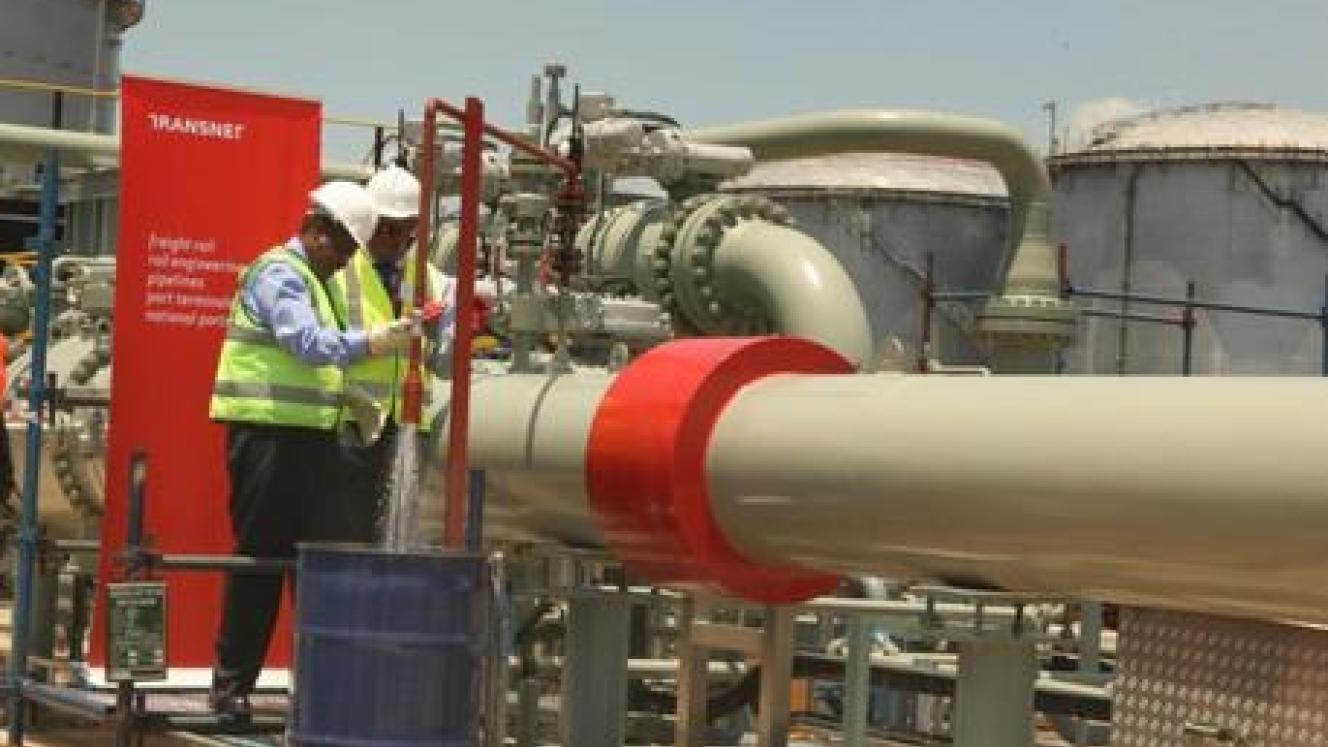
W Shipping Solutions ith a good railway infrastructure and wellrun operations in place, the biggest challenge facing Swaziland Railway is maintaining or even cutting costs at a time of volatile fuel prices. “Fuel costs have affected us this year. They went down, but may go up again. We want to reduce our costs wherever we can to compensate,” said Stephenson Ngubane. Like all cargo moving firms, the railway will be impacted by other global conditions, such as the world financial crisis that may affect purchases of Swazi exports. From Durban, the railway brings in inputs for the garment-makers at the Matsapha Industrial Estate, whose heart is Swaziland Railway’s ever-expanding Inland Container Depot or “dry port.” The rail line takes out finished product to port, while also exporting timber products, paper pulp and coal to South Africa for use by industry – all of which may be influenced by world demand for products. If Swaziland’s economy is affected, another of the railway’s big customers, importers of cement, may cut back. But these are still concerns rather than realities, and the rail line, now in its 44th year of operation, is a well-oiled mechanism prepared for all challenges. Currently, five locomotives are leased from Transnet Freight Rail, but Swaziland Railway owns its own oil wagons (Swaziland imports all its petroleum products via SA, and this is a major client for the railway), sugar wagons used to move Swaziland’s top agricultural export, and general wagons. “We are geared to move bulk cargo, with our specialised wagons or in containers,” noted Ngubane. And moving bulk cargo by rail is still the most economical way to transport such material.
Swazi Rail focuses on keeping costs low
Comments | 0
© Now Media. This content is protected by copyright and may not be adapted or republished. If you would like to discuss cooperation opportunities, please contact: editor@freightnews.co.za.