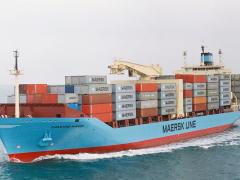
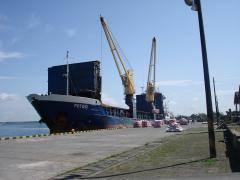
Time, they say, waits for no man – that is except in Africa where many will find patience to truly be a virtue. Patience, patience and more patience, says Stephan Steyn, managing member of Regal Fruits and Hanspack, is what makes the difference when exporting in Africa. And this 31-year-old Johannesburg-based businessman should know. Having exported to more than 17 African countries, understanding this often-complex market is key to success. “We currently export monthly to 11 countries in Africa, but we are continuously heading into new markets and opportunities. Our growth the past few years has been superb, and we want to build on that and establish ourselves as the supplier of choice for Africa, by Africa.” Regal Fruits, a supplier of ingredients, equipment, packaging and technology to small and medium scale dairy and juice processing farmers in Africa, first launched in 2005 when it combined offices and infrastructure with Hanspack, a plastic bottle manufacturing company that has been successfully exporting in Africa since its inception in 1997. “We penetrated the export market immediately after our launch in 2005,” says Steyn. “It was not easy at first as it was difficult to get customers used to new products, but through perseverance and patience it was possible to grow the business into what it is today.” Having grown up on a dairy farm in the Eastern Transvaal, Steyn never thought he would be exporting to Africa. In fact, it was a career in tourism that he envisioned for himself. Having spent many school holidays working for his father it seemed a good idea to take up a job offer to pay back student fees in 2001. “My father had sold the dairy and subsequently started a service company to dairies and also a marketing company for various ingredient companies that didn’t have the infrastructure to deal with smaller dairies. My mother was working as the financial manager and my brother as the operations manager, so it made sense for me to pay back my study debt before going into tourism – but fate took over and led me down another path.” An accident in April 2001 changed Steyn’s life forever. “My father was always responsible for the customer training, factory commissioning, technical backup and service, but on his way back from a customer in 2001 he was involved in a serious car accident, which left him a quadriplegic. My role in the company changed overnight as I was given the opportunity to be immediately trained into my father’s position.” A mere three months later Steyn found himself in Libreville, Gabon installing, commissioning and training at a factory. “I was really thrown in at the deep end, but luckily had a fantastic support system in my family and suppliers to pull me through.” Steyn says he has learnt many lessons since then and strongly believes in Africa’s potential. The company, whose biggest markets are in Zimbabwe, the Democratic Republic of the Congo and Mozambique, exports not only for profit.” “For us it is imperative to export,” says Steyn. “South Africa has so much knowledge and expertise that it would be wrong not to share it with Africa. We compete in quality with Europe in our product supply and our pricing is competitive. But more than that, we have an understanding of African conditions. Our equipment is therefore also built for African conditions and we do not reply on cheap Eastern imports.” Steyn says individuality is key in the African market. “You have to be able to adapt your products and product supply and give individual care to each customer. Doing business in Africa is much more about personal relations, than just supplying products.” The continent, without doubt, offers challenges, such as pricing and payments. “Sometimes customers want invoicing in ZAR and other times in USD, so it can be challenging, but if you have the ability to adapt while not losing your competitiveness, you will be successful. With growth in nearly every market segment, Africa offers ample opportunity. “There is a lot of investment in food production and basic food supply. Foodstuffs are usually imported at high costs and local companies can compete by manufacturing good quality products for the masses. But anyone wanting to take on the African market must have patience, lots of patience,” advises Steyn. “No decision is made fast, but once a decision is made it is usually good and means long-term business.” And never forget logistics – a factor that can prove to be very challenging not just because of the infrequent shipping to some destinations, but also because of lack of infrastructure such as roads and communication. “Africa has some great opportunities and there is a lot of cash available in the markets. The informal market segment is big and if your customer has a foot in, business opportunities are superb,” says Steyn. “But there are aspects that one must be able to deal with such as expensive airfreight charges, especially to countries that are landlocked like Uganda. In East Africa we are having to deal with a lot of cheap imports from India and China. This makes South Africa a bit uncompetitive, but they cannot compete on our quality.” He believes that service excellence makes all the difference in the end. “If you don’t keep the customer happy with your service levels you will lose him. This means that even though you might be higher priced than competitors, if you are reliable they will support you.” In the process of tendering for a new facility in Luanda and expanding a customer’s production site in the DRC, Regal Fruits has, no doubt, taken the African continent by storm.
Success in Africa is all about patience
Comments | 0
© Now Media. This content is protected by copyright and may not be adapted or republished. If you would like to discuss cooperation opportunities, please contact: editor@freightnews.co.za.