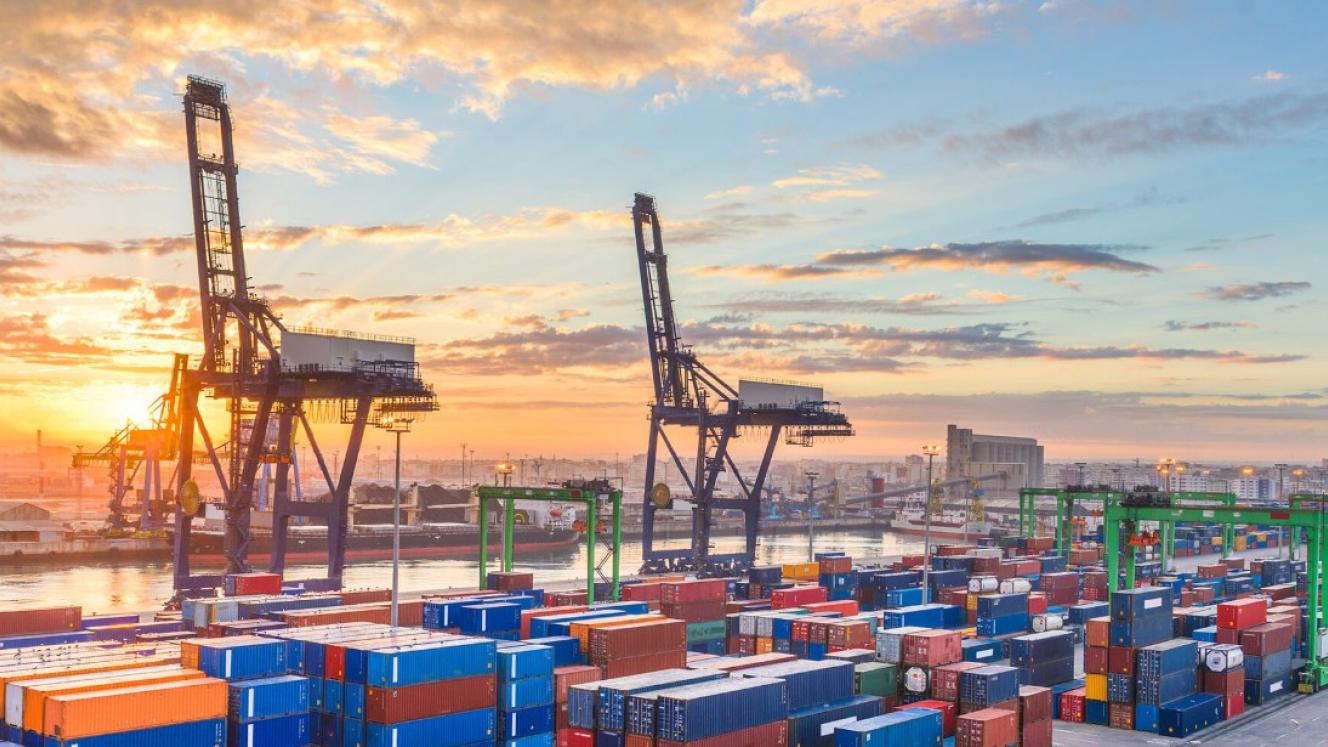
Satellite observations over more than three decades show that sea levels around Africa's coastlines are rising at a pace exceeding the global average, with significant implications for maritime trade, port infrastructure, coastal logistics and the livelihoods of shipping-dependent communities.
Dr Franck Ghomsi, a postdoctoral fellow at the Nansen-Tutu Centre for Marine Environmental Research in the Department of Oceanography at the University of Cape Town, recently shared these findings in The Conversation.
Ghomsi is a physical oceanographer and geophysicist specialising in sea-level variability, ocean heat budgets and satellite altimetry, with expertise spanning climate science, coastal risks and earth dynamics across African and polar regions. He holds PhDs in Geophysics and Geoexploration as well as Physical Oceanography.
Ghomsi said his research team had analysed ocean height measurements collected by radar instruments on orbiting satellites from 1993 to 2024 for all waters surrounding Africa.
“Our analysis revealed that African seas have risen by approximately 11.26cm since 1993. This process is driven by warming waters and melting ice.”
The long-term rate is 3.54mm a year, surpassing the global average of 3.45mm a year (mm/yr). Acceleration is evident and intensifying in key areas vital to African shipping and trade.
“The Western Indian Ocean, including waters around Mozambique, Madagascar and the Comoros Islands, shows the highest acceleration of sea level rise at 0.16mm/yr with a trend of 3.88mm/yr,” the study found.
The Eastern Central Atlantic, including the Gulf of Guinea and waters off west African nations like Senegal, Ghana, Nigeria and Cameroon, records 3.90mm/yr.
“Perhaps more troubling is that the pace of rise is speeding up, especially in African waters. This acceleration is a long-term trend driven by ongoing ocean warming and ice sheet melting, and it persists regardless of whether any individual year features an El Niño or a La Niña,” said Ghomsi.
The 2023-2024 El Niño, amplified by other climate patterns, produced a record 27mm anomaly – the largest ever in African waters – contributing 2.34cm of rise, or 19% of the total increase since 1993, in just two years. Thermal expansion from trapped surface heat accounted for over 70% of this spike.
“Africa’s 38 coastal nations are home to over 200 million people living near the shore. Rising seas threaten these communities with flooding, coastal erosion, and saltwater contamination of drinking water and farmland. Rising and warming seas also disrupt fisheries that millions of Africans depend upon for food and livelihoods,” he noted.
Low-lying hubs such as Lagos (over 20 million residents) and Dar es Salaam face escalating flood risks, while disrupted upwelling affects nutrient flows critical to fisheries and marine supply chains.
The primary drivers remain thermal expansion of warming oceans and added water mass from melting Greenland and Antarctic ice sheets, linked to fossil fuel emissions.
“This rise is not a natural cycle. While sea levels have fluctuated throughout Earth’s history, the current rate of rise is far faster than anything seen in thousands of years, driven by the burning of fossil fuels and the resulting build-up of greenhouse gases in the atmosphere,” he explained.
Ghomsi highlighted the need for drastic global emissions reductions toward carbon neutrality by mid-century, alongside enhanced monitoring, protective infrastructure like sea walls, mangrove restoration and improved drainage systems.
Regional initiatives, such as the World Bank-supported West Africa Coastal Areas Management Programme, provide models for coordinated adaptation.
The article was first published here.