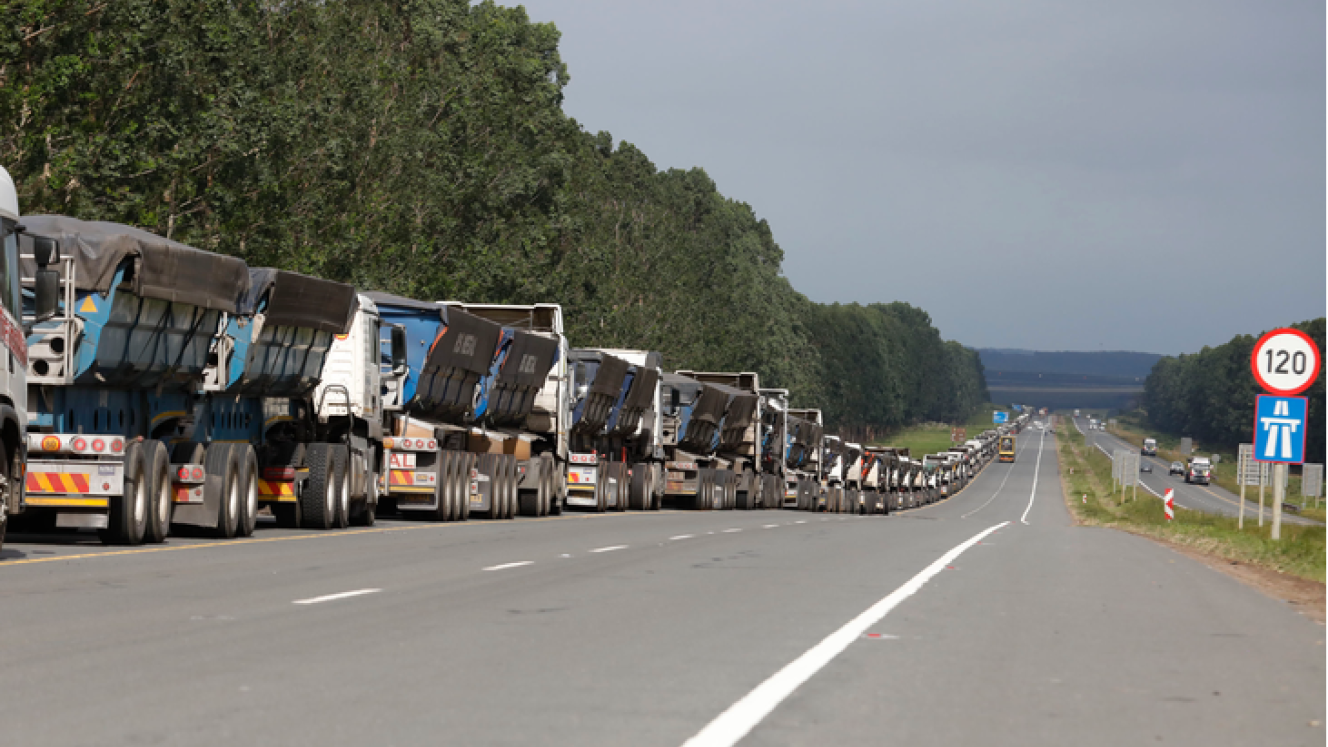
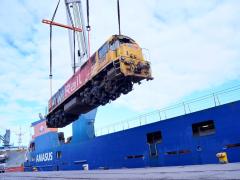
Millions of dollars are being invested by the Zambian government into putting freight back onto rail. The government took back control of the rail system in September 2012 after privatisation through a 20-year concession did not deliver the expected results. “There was huge deterioration in the rail infrastructure and the general operations of the system,” says Zambia Railways (ZamRail) director of operations Godfrey Chibunde. Rail is recognised by government as being one of the keys to economic growth. “Our mandate is to contribute to lowering the cost of doing business in Zambia by providing an inexpensive but efficient mode of transport,” says Chibunde. “As management our first priority was damage control through the rehabilitation of the track,” he says. Average speeds had slowed to 20 kilometres an hour across much of the network as the sleepers needed replacing. Since 2012 ZamRail has rehabilitated hundreds of kilometres of main line and reconnected some of the larger mines to the rail grid. We had the situation where the mines were disconnected from rail. They had to rely on road for all inputs and outputs,” he says. It is estimated that the rehabilitation of the track network will have been completed by “end of 2015”. Freight trains will then be able to run at 60 km/hr and passenger at 80km/hr. “Our focus is on asset utilisation. The faster the train goes, the quicker we can turn it around to carry another load,” he says. Chibunde is confident that bulk and heavy traffic will return to rail. “Road has filled a void left by the private rail operators over the past 10 years. But the mine traffic traditionally travelled by rail. I believe we will get it back.” Supporting rail is the government’s policy to get bulk off road and back onto rail in order to extend the lifespan of the roads, reduce congestion and improve road safety. Road haulage will, however, continue to move freight in Zambia alongside rail. “The damage to the rail system over the past nine years has been massive. It will take time before it’s fully operational. “We also have to refurbish and replenish the rolling stock and locomotives in line with our Business Strategic Plan,” he says. ZamRail – and the Zambian economy – are already seeing a return on the investment. Tonnages carried on rail grew from 500 000 tons in 2012 to 740 000 tons in 2013. The projection for 2014 is 1 000 000 tons. INSERT & CAPTION Our focus is on asset utilisation. The faster the train goes, the quicker we can turn it around to carry another load. – Godfrey Chibunde
State adds steam to rail regeneration
Comments | 0
© Now Media. This content is protected by copyright and may not be adapted or republished. If you would like to discuss cooperation opportunities, please contact: editor@freightnews.co.za.