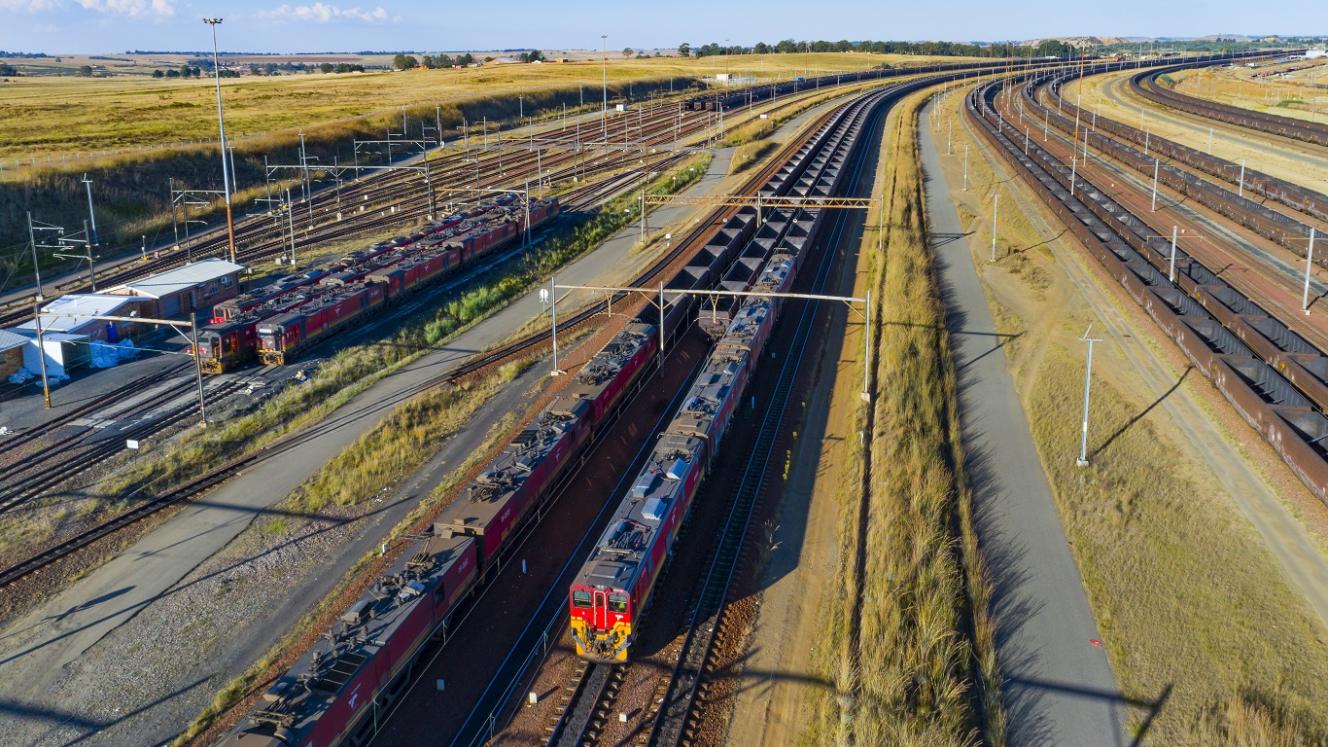
ALAN PEAT ALTHOUGH THE aim for Spoornet is to more than double its freight business over the next five years, according to Transnet CEO Maria Ramos, its aspirations and the reality of the marketplace are poles apart, according to the road transport industry. Spoornet – the rail alternative to road transport – saw its general freight business lose about 2.3-million tons in the last financial year over the 2004/05 figures, and carried less than 10% of SA’s general freight. But the company is now targeting between 20% and 25% of the market. Ramos felt that, while it was cheaper than road, rail fell short on reliability and turnaround times – but said that Transnet intended to overcome this through investment in physical infrastructure and staff, and was planning for growth. It certainly has a theoretical case. US studies have found that, not only is rail more efficient (both economically and environmentally) over long hauls, but it has the high potential freight density of rail corridors to suggest a significant role for rail in serving ports and distribution centres – particularly in congested metropolitan areas. But, the reports concluded, despite these advantages, a truck has the enduring advantage of being better able to serve the dispersed points of supply and demand. However, there is a feeling in the SA private sector transport industry that competition between the two modes should rather be replaced with a balance between them – and that rail-road intermodalism is an attractive way forward for ground transportation. Barlow Manilal, chief operations officer of the Automotive Industry Development Centre (AIDC) and president of the Chartered Institute of Logistics and Transport (CILTSA) suggested it was indeed vital. “There is an urgent need to integrate road and rail transport, especially through the ports,” he said. And, as Sharmini Naidoo, the acting CEO of the Road Freight Association (RFA) put it, road hauliers would work with Spoornet if efficiency levels improved and customers were not prejudiced. She added that rail was a good option for some commodities, such as granite and dangerous chemicals, and it was important to cut congestion. But goods still needed to be carried to and from stations and the two sectors of the transport industry could work effectively together. But that’s possibly not part of the strategy for Transnet and Spoornet. Tolls are a point of contention among hauliers. Colin Bowring, MD of Kodiak Shipping, feels that toll fees are now “exorbitant” and that toll gates are tending to grow apace in numbers, even on already existing highways. “This is just revenue generation,” he added. “Although the roads do need upgrading and maintenance, I feel it’s not fair to put a number of gates on one section of toll road.” If a company is facing a toll bill of over R100 000 a month, using alternative routes could turn out to be significantly less expensive. But, said Bowring, that is only putting undue strain on structurally less-advanced alternative roads. Monitoring and managing these and the other road transport fees is not easy, according to Sagren Naidoo, optimisation manager of Wardens Cartage – with vastly different toll charges on different toll road sections. “And it’s a major cost for us in the overborder road transport industry,” he said. He also feels that government is putting undue capital cost pressures on road transporters with restrictions on the import of second-hand commercial vehicles to SA – and controlling the competitive advantages of being able to get technically advanced vehicles cheaper. “You’re getting less value for your capital buying trucks here,” he said. The intermodalism argument also doesn’t get much support from Arnold Reddy, MD of Reddy Cargo Services, who backs road in a competitive environment. Although the fuel price is acting negatively on road transporters’ costs, he feels that industry still prefers road over rail. “The road transport sector’s service levels are much better than Spoornet,” Reddy told FTW, “and customers still prefer paying the extra to get their containers delivered timeously.” Promises of improvement in Spoornet also don’t hold much water with Peter Lewin, director of major rail users, MSC Logistics, and chairman of the Container Rail Operators' Forum (Crof). “Although Ramos keeps making statements of improvement,” he said, “we haven’t seen any sign of it. “It’ll take time for them to get new locomotives and trucks, so the public continues to look at capacity shortfalls in rail transport.” But Spoornet’s way forward is also not clear to Crof, having seen no input from the railways management in the last 18 months. “So,” said Lewin, “it’s difficult to see progress.” Any thoughts of intermodalism are wasted, because there’s just no private/public sector co-operation, Lewin added. “We’re offering our experience as a help,” he told FTW, “but ideas and solutions on shortcomings are ignored.” He suggests that the rail market share is “almost freefalling” at the moment. “We are waiting to see when it reaches a critical enough situation to require co-operation. “But I’m worried it will only come when it’s too late.”
State accused of putting unfair pressure on hauliers to further Spoornet aspirations
Comments | 0
© Now Media. This content is protected by copyright and may not be adapted or republished. If you would like to discuss cooperation opportunities, please contact: editor@freightnews.co.za.