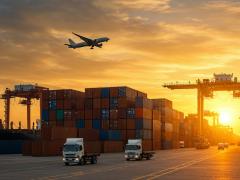
A SHORTAGE of seafreight capacity is one of the biggest constraints on the Far East route and it’s likely to get worse before it improves as the ‘silly season’ approaches. “The season peaks every year from August to the end of November, but in general we’ve seen year on year increases in volumes and it’s a challenge getting space on vessels and not getting cargo rolled,” says ZA Trans chief international forwarding officer Paul Lawrence. “The result is pressure on rates with the lines also imposing a peak season surcharge from August to November. “To ensure that our clients aren’t compromised we are constantly refining our supplier management programme and we are very transparent with our clients who need to understand that you can’t get the cheapest rate and still expect to be assured of space. “From the shipping line’s point of view they want to take the highest paying cargo and you have to educate some of the clients on that basis – there are agents out there offering rock-bottom rates but importers should not be misled; the question is whether they can get space on vessels.” While the lines are bringing on more capacity, the China – US and China – South America routes are far more lucrative. “That’s understandably their priority, particularly with a worldwide shortage of capacity. As much as the lines will service South Africa from a strategic point of view they’re unlikely to put priority on the SA route if they can make more money elsewhere,” says Lawrence. For ZA Trans furniture is a big commodity, with technology, clothing and apparel making up the bulk of its inward-bound cargo, mainly from Indonesia and Mainland China. “We’ve established a strong independent agency network and also belong to FFSI, a network of agents around the world who are particularly focused on the Far East. This powerful network gives us strong buying power as well as the agility of quick decision making and exceptional responsiveness. “All our Chinese partners speak very good English which is a big advantage for a local customer who needs to communicate with his supplier in the east.” While the Far East accounted for 20% of the company’s business five years ago, it’s now up to 30% and growing. But India is knocking on the door, says Lawrence. “They’ll soon be competing strongly with China and we are well placed to take advantage when that happens.” Commenting on the impact of the quota system implemented on textile imports from China, Lawrence believes, along with a number of industry commentators, that it’s done little more than change the manufacturing base from China to the likes of Vietnam and other areas.
Squeezed seafreight capacity puts pressure on rates
Comments | 0
© Now Media. This content is protected by copyright and may not be adapted or republished. If you would like to discuss cooperation opportunities, please contact: editor@freightnews.co.za.