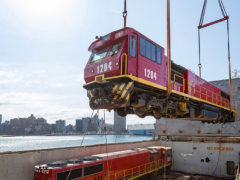
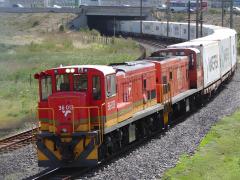
Joy Orlek AS THE freight industry increasingly embraces the concept of partnerships and joint ventures in its quest for the most cost-effective solution for its customers, it's a principle on which Spoornet is keen to build its future commitment both inside and outside South Africa's borders. Recently appointed general manager restructuring, joint ventures and procurement, Harry Mashele believes the challenge is to come up with a more effective operational model both in Spoornet's relationship with other Southern African rail entities as well as its major customers in South Africa. "Spoornet operates in most countries in Africa through two fundamental models," Mashele explained. "We are a shareholder in Comazar, which is a successful operator in a number of countries particularly francophone, and we are also part of a consortiium in Spoornet/NLPI (North Limpopo Project Initiative)." The rail utility has also been considered for the Ressano Garcia Ð Mozambique line, a deal which it hopes to conclude shortly, and is in the process of bidding for several other joint ventures in the rest of Africa. Its vision in terms of overborder involvement is clear cut. "We provide technical and operational expertise and we rehabilitate assets." Spoornet is responsible for more than 85% of the network in Africa and, through refurbishment of locomotives which are no longer used in this country, makes a sizeable fleet available to the rest of the continent. These initiatives clearly promote the primary objective of the New Partnership for Africa's Development (Nepad). Another area which is less obvious is its provision of locomotives to a number of entities within South Africa. "There is a big network that falls outside of Spoornet belonging to mines and other companies who often prefer not to tie up capital in procuring their own locomotives." And it's the customers within South Africa where Spoornet, with its joint ventures, is looking at doing things differently. "The challenge is to make capacity available to our customers, but to encourage them to share the capital outlay. "Industries need to commit to a percentage of the investment so that we don't land in a position where we buy wagons at the request of the customer who maybe two years down the line chooses to do business differently while we in Spoornet remain encumbered, having acquired assets which are often difficult to utilise elsewhere. "We don't feel that Transnet should be the only risk-bearer. We will commit the funds where we have commitment from our customers. This business model, we believe, is the best way forward."
Spoornet gets serious about joint ventures
Comments | 0
© Now Media. This content is protected by copyright and may not be adapted or republished. If you would like to discuss cooperation opportunities, please contact: editor@freightnews.co.za.