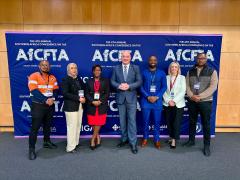
Finding staff and getting them to work productively is harder than getting business. That was the general consensus at a meeting of international network group, Global Logistics Associates (GLA), held recently in Holland. According to Alwyn Nel, president of GLA, representatives from across the globe complained of a huge skills shortage across all sectors - air, road and seafreight. This is mainly ascribed to a lack of new people coming into the industry. “While there is a huge pool of very experienced people, there is a lack of people in the middle and at the bottom, which means we don’t have a progressive flow of skilled people. When the industry went into a slump a few years ago the people who left or were retrenched weren’t subsequently replaced,” Nel explains. “Coupled to this is the problem of specialisation or people being divisionalised. They simply do not have the qualifications to handle or conclude other portions of the workflow,” he adds. To rectify the situation some companies are investing in learners and doing in-house as well as outsourced training of staff on a monthly basis. There is, however, a major concern about finding learners who are willing and able to do the job. “We are all frustrated, my colleagues and peers. We are all facing the same dilemma and point of frustration. That is why we at Kingfisher (the South African representatives of the GLA) have taken the initiative to train all staff in every aspect of the business. They are now all multi-skilled and can handle everything from A to Z. We are no longer channel controlled,” says Nel. “We have doubled the size of our company in the past two months due to increased volumes and I have nightmares employing people to do the work. There is a huge apathy in the market from the unemployed. We have become a ‘take-away’ society like McDonald’s where everything is moving fast and new employees want to be the boss tomorrow. They don’t understand that you first need to learn to do the job before you can become a leader,” he concludes.
Specialisation aggravates skills shortage
Comments | 0
© Now Media. This content is protected by copyright and may not be adapted or republished. If you would like to discuss cooperation opportunities, please contact: editor@freightnews.co.za.