Weak demand
and surplus
capacity
is a lethal
combination – and unless
shipping lines take remedial
action, something’s got to
give.
That was the message
from Philip Damas, director
of Drewry Supply Chain
Advisors, during a webinar
aired last week on container
freight rates and the
shipping market outlook.
“Recent spot freight rate
trends in headhaul trades to
Europe, US and Asia – the
highest volume trades – have
fallen dramatically, hitting
rock bottom in March,” said
Damas.
“The underlying factor
is not just a rate war but
weakness in demand and
carrier behaviour – or how
they try to undermine each
other in terms of rates,” he
said.
On the backhaul routes –
Europe and the US back to
Asia – there has also been
a reduction but not to the
same degree.
“An interesting
phenomenon,” said
Damas, “was the fact
that in April rates from
Shanghai to Rotterdam
($606 per 40-foot) were
lower than in the opposite
direction ($632), which is
unprecedented.”
In terms of global rates
– calculated over 600 trade
routes – the index has
deteriorated for two years,
according to Damas.
“Rates saw a small
recovery in January ahead
of the Chinese New Year
– where exporters moved
goods ahead of the New
Year – but crashed down
again in February and
March, reaching a new
record low in March of less
than $1200 per 40-foot.”
Damas pointed out
that rates in March were
47% down year on year.
“I don’t know how many
industries can survive a
price reduction of 50%,
particularly if you consider
that spot rates are now
only half of the long-term
average – and we have been
tracking spot rates for more
than 10 years.”
In the intra-Asia sector
rates are down 19%,
showing less volatility
compared to east-west trades
overall.
Clearly these rates are not
sustainable, and remedial
action is therefore the only
solution.
Damas used the example of
the Asia to Brazil trade route
to demonstrate his point.
“In January rates were
weak in the short term
but not sustainable in the
medium term. In March
there was a 50% increase
from February – which is
what happens when you have
a non-profitable rate for the
carriers. They reduce capacity
substantially which is what
they have done.”
Contract rates, in the
meantime, have also declined
but not to the same extent as
spot rates.
“We expect fuel costs
to remain relatively low
and the surplus capacity
to continue so the trend of
very low contract rates will
continue for now."
CAPTION
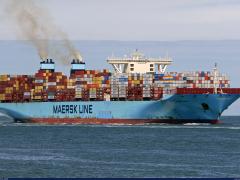
Surplus capacity, weak demand... a lethal combination.
'Something has got to give'
Comments | 0
© Now Media. This content is protected by copyright and may not be adapted or republished. If you would like to discuss cooperation opportunities, please contact: editor@freightnews.co.za.