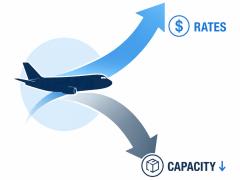
The advent of a shipping ‘oligopoly’ could work in shippers’ favour in the short term as merger and acquisition (M&A) activity concludes through the course of this year. That’s according to Drewry Shipping Consultants who believe that in the shorter term the predatory pricing practices of certain carriers undergoing M&A activity to protect market share and to limit customer attrition will keep rate rises at a moderate level. “In the longer term we expect the increasing concentration to lead to rising rates, but this year inflation will be very moderate,” said Drewry’s head of research products Martin Dixon. Stronger cargo growth supported by restocking pushed global demand to 6% in 2017, and it's expected to slow to 4% in 2018. Last year, on average, overall rate levels grew by 15% – and driving this recovery was the bankruptcy of Hanjin in 2016 which changed pricing practices of carriers. “There was the fear factor that another carrier could go – and then there was strong demand through the course of last year driven by restocking – while higher fuel prices at end of year were a factor.” For the year ahead, there could however be a turnaround in the supply/ demand ratio. “In 2014/15 supply outpaced demand,” said head of Drewry Supply Chain Advisors, Philip Damas. “This trend reversed last year where we saw demand growing faster than capacity – so the overcapacity was absorbed. In 2018 the forecast will be supply growing faster than demand, putting greater pressure on carriers to repeat the deployment juggling act,” he said. But while there will still be a high level of deliveries of new ships in 2018 – supply pressures are not as hazardous as it would appear, according to Damas. “And one reason why overcapacity is not as critical is that the idle fleet is currently very low at 2% so it is possible for carriers to call on a number of capacity relief valves to mitigate the pressure. They could reactivate the idle fleet, defer deliveries and increase scrapping.” Another reason, said Damas, was that with increased consolidation in the carrier industry managing capacity would be easier for carriers than previously. Carrier profitability is also expected to continue, according to Drewry. “We estimate that in 2016, the industry lost $5bn. In 2017 it rebounded to record a collective profit of $7bn. By the third quarter all carriers had returned a profitable result with the exception of Hyundai Merchant Marine. “We believe that in 2018 profitability will continue. It may rise a little but will be similar to 2017. Moderating that will be the lower rise in freight rates and higher fuel costs.”
INSERT
In the longer term we expect the increasing concentration to lead to rising rates, but this year inflation will be very moderate. – Martin Dixon