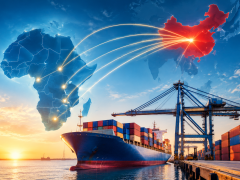
The Copperbelt is set to play a central role in meeting rapidly rising global copper demand. According to Juan Ignacio Diaz, chief executive officer of the International Copper Association, global demand for copper is expected to increase from approximately 23 million tonnes per year today to 41 million tonnes by 2040. “This growth is happening faster than many anticipated and is being driven by electrification, urbanisation and the global energy transition,” he said. Within this context, Africa, and specifically the Copperbelt spanning Zambia and the Democratic Republic of the Congo (DRC), is emerging as increasingly important to global supply. “The Copperbelt is home to long-life mines and high-grade copper deposits, which makes production more efficient and supports lower emissions and a reduced carbon footprint,” said Diaz. “It is a good story for the global copper industry.” He noted that the region was already seeing strong industry participation, with members actively involved in projects across the Copperbelt, including some of the fastest- growing copper operations globally. Cobalt, produced as a by-product, further strengthens the region’s strategic importance. He stressed, however, that the world should not view Africa as an alternative source of copper supply. “The copper industry is not balanced. Africa is not an alternative resource. It is a fundamental pillar in meeting future demand, which is significant,” he said. Demand, he added, was being shaped primarily by societal needs rather than industry expansion alone. “Society is demanding electric vehicles and renewable energy. This is about improving quality of life globally. Governments and mining houses are responding as economies shift from fossil fuels to more material-intensive systems,” said Diaz. As a result, competition for materials is intensifying, with end users increasingly influencing market dynamics. “The end user is setting the tone. Price will remain an important factor, but availability is becoming equally critical,” he said. According to Diaz, copper’s unique properties are underpinning its long-term demand. “It is 100% recyclable, highly conductive – both electrically and thermally – and is safe, reliable and durable. More than 60% of all copper ever mined is still in use today across various forms of infrastructure,” he said. According to Susannah McLaren of the Cobalt Institute, the DRC’s position as the world’s second-largest copper producer is expected to strengthen further in the years ahead. President Hakainde Hichilema of Zambia said recent economic indicators in his country – as well as in the DRC – pointed to recovery and growth. “Zambia is projected to achieve 6.4% GDP growth this year, a dramatic reversal from the -2.8% recorded not so long ago. Inflation is also declining,” he said in Cape Town. LV
Societal needs shape demand for copper
Comments | 0
© Now Media. This content is protected by copyright and may not be adapted or republished. If you would like to discuss cooperation opportunities, please contact: editor@freightnews.co.za.