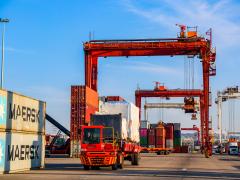
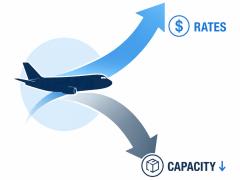
A new study has revealed the extent of the pronounced shift from air to sea for perishable cargo over the past decade, with 100 000 TEUs per year transported by ocean carriers. Maritime adviser Derek Brand, who authored the report for shipping consultancy Seabury, said the shift was particularly pronounced in certain perishable commodities such as tomatoes, capsicum, fresh fish, lettuce and pineapples. “New technology in controlled atmosphere containers, such as Star Cool SA, has the potential to increase the trend. CA’s ability to slow down the ripening process opens up ocean transport as a viable alternative to air cargo on some of the longer trade routes,” said Brand. The Seabury report noted that air freight had lost about 5.4 million tonnes of cargo to ocean freight since the year 2000 and had lost over half of its growth potential due to that shift. However, Safmarine’s regional head of refrigerated trade, John Macdonald, said there would always be demand for airfreight in the perishables industry. “The choice to use air or ocean is driven by so many variables in global market conditions and it is hard to predict year-on-year which mode will be most selected,” he said. He said that the introduction of live temperature management in reefer containers had minimised risks of prolonged transport and increased the quality of the product upon delivery. “Ocean transport for perishables – especially citrus, apples, pears, avocados and grapes, which Safmarine transports – is extremely reliable and of course much more cost-effective,” said Macdonald. Furthermore, vessels can usually make a plan to free up reefer space to transport larger volumes whereas airfreight is limited in terms of the volumes it can transport in the belly hold. Bernd Jülicher, managing director at Skyservices – which specialises in perishable transport – told FTW that the nature of the products they transported mostly required airfreighting, with volume and timing dictating the need for this. He conceded that ocean was far more cost-effective and offered better long-term temperature control but added that airfreight offered a quicker transit time and required lower minimum volumes. To stay competitive in an industry that has seen a modal shift, Jülicher said that the air cargo industry needed to focus on its strengths and optimise those to full potential. “Air cargoes will always have an advantage with respect to high value goods because of the security associated with air travel, so while numerous fresh/frozen goods have made the modal shift to sea freight, the increase in volumes of cell phones and computer items has come to the aid of the airfreight industry,” said insurance specialist Mike Brews of Horizon Underwriting Managers. He noted that the risks between the two modes of transport were very different. “Airfreight items are seldom refrigerated and more likely to be chilled cargo and there is therefore no risk of machinery breaking down.” However, these cargoes are also often much more fragile and any break in the cold chain is likely to cause a high-valued loss, added Brews. “The cost of replacing goods damages is also very high.” INSERT & CAPTION New technology in controlled atmosphere containers has the potential to increase the trend. – Derek Brand
'Significant' modal shift for perishable exports
Comments | 0
© Now Media. This content is protected by copyright and may not be adapted or republished. If you would like to discuss cooperation opportunities, please contact: editor@freightnews.co.za.