Durban’s dig-out port plan
was dragged into the debate
on government spending and
students’ victory of a zero fee
hike in 2016 after an economist
called the project a “white
elephant” with many economic,
environmental and social risks.
But other analysts and
freight and shipping industry
stakeholders, while agreeing
education should be prioritised,
have suggested that existing
port capacity must first be
optimised to meet demand
from larger vessels ahead of
what they view as a necessary
long-term investment in the
R100-billion dig-out port
development.
University of KwaZulu-Natal
political economist Patrick
Bond, who has long highlighted
the risks associated with the
proposed development, this
week told FTW the project was
a “white elephant that should
be chopped”. He said there were
huge economic, environmental
and social risks, given the slowdown
in the national and global
economies and climate change
risks on an already perilous
coastline as well as vociferous
social and environmental
activist opposition to the plan.
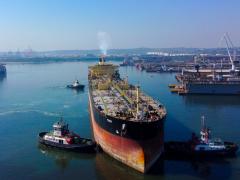
Freightliner Transport MD
Kevin Martin said Durban port
needed to expand as a one-call
port to accommodate larger
vessels and eliminate the need
to part-load in Port Elizabeth,
East London and Richards Bay.
“They have widened the
harbour mouth and deepened it
and they will be deepening the
berths. In future, ships visiting
will be in the middle band
between 12 000 and
14 000 TEUs, which have been
operating in the US and China
while the smaller vessels have
been operating in SA, South
and India,” he said.
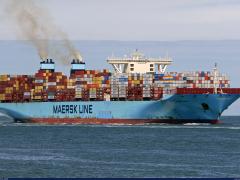
“But now they are building
vessels that are 22 000 TEUs
and the vessels in the middle
band are being kicked down,”
he said.
Professor Jan Havenga, head
of Centre for Supply Chain
Management at the University
of Stellenbosch, estimated that
the development would become
a necessity between 2028 and
2032.
“No actual construction has
started yet and I don’t think
it will in the next five years.
Transnet is careful with the
business demand forecast and
is taking great care to get the
timing just right,” he said.
“Education is our biggest
single long-term failure in this
country. It is the one thing that
may be our ultimate downfall if
we don’t get it right. And it has
two sub-problems. Quality of
basic education and funding of
university education,” he said.
Transnet National Ports
Authority chief executive
Richard Vallihu said the
purpose of the parastatal’s
R300-billion Market Demand
Strategy (MDS), which
includes the dig-out-port
development, was to create
jobs, develop skills and deliver
lasting value.
CAPTION: Photo: Tony Carr